


There is a very specific kind of panic that hits when someone texts, “We’re nearby, can we stop by for a few minutes?” Suddenly you notice everything. The shoes by the door. The crumbs on the table. The blanket twisted into a heap on the couch. The bathroom that is not disgusting, exactly, but definitely not ready for company. It is amazing how fast your own house can start looking suspicious when guests are ten minutes away.
I used to respond the wrong way every time. I would try to clean the whole house at once. That never worked. I would start dishes, then run to the bathroom, then start picking up toys, then notice the floor needed vacuuming, and somehow I would end up sweaty, annoyed, and halfway through five different jobs with nothing fully done. That is when I realized I needed a reset, not a full cleaning session.
Now I use a 15-minute guest panic reset, and it works because the goal is not perfection. The goal is calm. Presentable. Good enough that someone can walk in and feel comfortable without me acting like we live inside a home staging ad. Real homes are allowed to look lived in. They just do not need to look chaotic.
The first thing that helps is having a sequence. If you move randomly, you lose time fast. I start with the spaces people will actually see first. Entry, living area, bathroom, and the visible parts of the kitchen. Bedrooms can wait unless somebody is definitely headed there. That one decision keeps me from wasting five minutes on a room no guest is even going to step into.
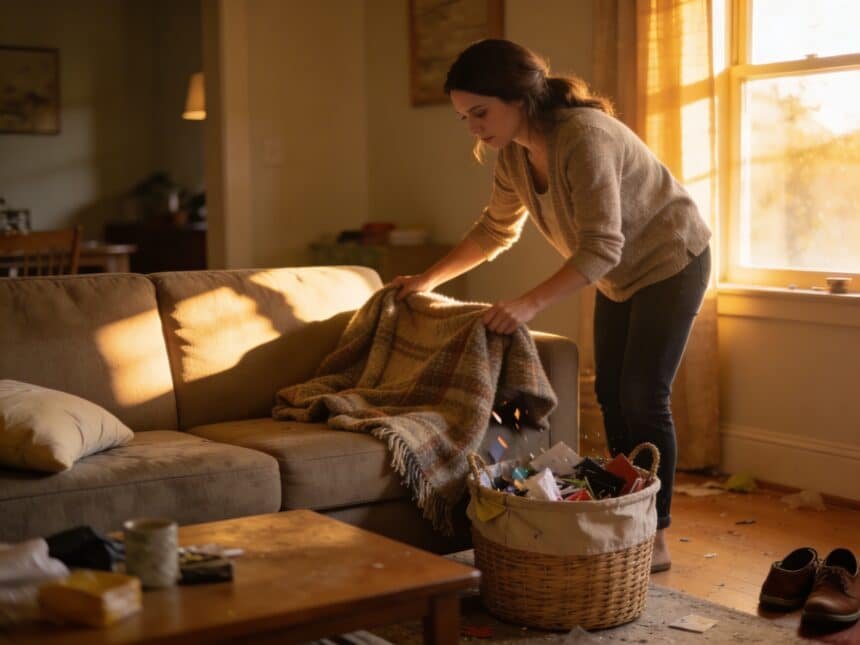
The next thing I grab is one basket or tote. That basket is the hero of the whole reset. It is not for organizing. It is for fast visual cleanup. Anything random that does not belong in the main living area goes in. Papers, chargers, small toys, hair stuff, water bottles, socks, receipts, all of it. Then I move the basket out of sight and deal with it later. That little move alone can make a messy room feel halfway under control. If clutter is a bigger ongoing issue in your house, it helps to work on decluttering the things that make the biggest visual difference first, but in a guest panic, the basket is faster.
After that, I go straight for surfaces. Not every surface. The ones that set the tone. Coffee table. Kitchen counters. Bathroom sink. Toilet seat. Dining table if it is visible. Wiping those areas down changes the feel of the space fast. It tells the eye the house is being looked after, even if the laundry basket in the hallway would tell a different story. That is why having cleaning supplies organized in a way that makes them easy to grab matters so much. If the spray bottle is missing and the cloths are buried, you waste your best minutes hunting instead of resetting.
Then I do the bathroom. Not a deep clean. Just a realistic guest reset. Wipe the sink. Check the mirror for obvious splashes. Make sure the toilet is okay. Put out a decent hand towel if I have one. Empty the trash if it is looking rough. Done. That is more than enough for most drop-in visits. This is where a four-minute bathroom cleaning method really earns its keep because it focuses on what actually changes the feel of the room instead of turning into a whole scrubbing project.
Floors only get attention where people will notice. The entry. The main walk path. The bathroom if there is hair or dust staring at me. I am not vacuuming under beds because someone is stopping by for fifteen minutes. That is how people lose the plot. Visible crumbs matter more than hidden dust during a time crunch.
The kitchen can go one of two ways depending on how bad it is. If it is mostly fine, I wipe the counters, load or stack a few dishes, and move on. If it is rough, I focus on what is visible from where guests will stand or pass through. A sink full of dishes is not ideal, but if the counters are clear and the room smells fresh, most people are not judging as hard as you think they are.
That brings me to smell, which matters more than people like to admit. A house that smells neutral or freshly aired out feels cleaner immediately. Crack a window for a few minutes if the weather allows. Run the bathroom fan. Take out the trash if something smells off. You do not need a cloud of artificial fragrance trying to convince people something suspicious is going on. Fresh is better than perfumed.
I also stopped trying to hide every sign of life. A few shoes lined neatly by the door are fine. A folded blanket on the couch is fine. One neat stack of mail is fine. In fact, that kind of normal lived-in detail makes a home feel more welcoming than trying to erase all evidence that anyone exists there. The goal is not sterile. The goal is settled. That is the same reason a quick closing shift at night helps so much. It lowers the baseline mess so that surprise guests do not feel like a personal attack.
The more often you do this reset, the better you get at knowing what matters and what does not. That part is huge. You stop wasting time on low-impact chores. You stop panic-cleaning rooms no one will see. You stop trying to create perfection in fourteen minutes. And honestly, that mindset shift matters just as much as the actual cleaning. Most last-minute stress comes from unrealistic expectations, not just mess.
If your house tends to get messy fast, it also helps to have a few daily routines already doing some of the heavy lifting. Things like a short daily cleaning routine or a five-minute evening reset make surprise visits less dramatic because the mess never gets quite as out of hand in the first place.
So when that text comes in and your nervous system starts sprinting, do not try to deep clean the whole house. Clear the visible clutter. Wipe the main surfaces. Reset the bathroom. Straighten the couch. Hit the obvious floor spots. Freshen the air. Then stop. That is enough. More than enough, honestly. A guest panic reset works best when it stays realistic. People are coming to see you, not conduct a white-glove inspection. A home that feels calm and cared for will always land better than one that was cleaned in a frenzy and still feels tense.