


Pantry Organization on a Budget: 10 Cheap Fixes That Look High‑End
I used to look at those beautiful pantry photos on Instagram and feel so defeated.
- Pantry Organization on a Budget: 10 Cheap Fixes That Look High‑End
- Fix 1: Start by pulling everything out and tossing expired stuff
- Fix 2: Use cheap clear containers for the stuff you use all the time
- Fix 3: Group like items together in bins or baskets you already own
- Fix 4: Add a lazy susan for oils, sauces, and bottles
- Fix 5: Use shelf risers to double your space
- Fix 6: Hang an over‑the‑door organizer for snacks or small stuff
- Fix 7: Add a tension rod for hanging chip bags or cleaning gloves
- Fix 8: Label everything, even if it’s just masking tape and a marker
- Fix 9: Use the “first in, first out” rule to stop wasting food
- Fix 10: Keep one “overflow” bin for bulk or rarely used items
- The whole system for under 50 dollars
- Your pantry doesn’t have to be perfect to work
Matching glass jars with perfect labels. Uniform baskets. Everything lined up like a tiny upscale grocery store. And I’d think, “That would be so nice, but who has 300 dollars to spend on pantry bins?”
Not me. Not even close.
But here’s what I figured out. You don’t need designer containers to have a pantry that works. You don’t even need everything to match. You just need clear categories, stuff you can actually see, and a few cheap fixes that make the space function.
I redid our entire pantry for under 50 dollars. It’s not perfect, but it looks clean, I can find what I need, and food doesn’t go bad hiding in the back anymore. That’s a win.
Let me walk you through exactly what worked.
Fix 1: Start by pulling everything out and tossing expired stuff
I know you want to jump straight to buying cute bins. Don’t. Start with what you have.
Pull everything out of the pantry. Every box, bag, random can, mystery sauce from 2023.
Sort into piles:
- Keep and use regularly
- Keep but rarely use
- Expired or stale, toss it
- Duplicate items you forgot you had
When I did this, I found three half‑empty bags of brown sugar, two bottles of vanilla extract, and canned beans that expired during the last election cycle.
Getting rid of what you don’t need is free, and it instantly makes your pantry feel bigger. This is the same principle I walk through in what to declutter first when you’re overwhelmed. Start with obvious trash, then move to the organizing part.
You’ll also realize what categories you actually need containers for. Maybe you eat a ton of pasta and rice but never buy cereal. That changes what you buy.
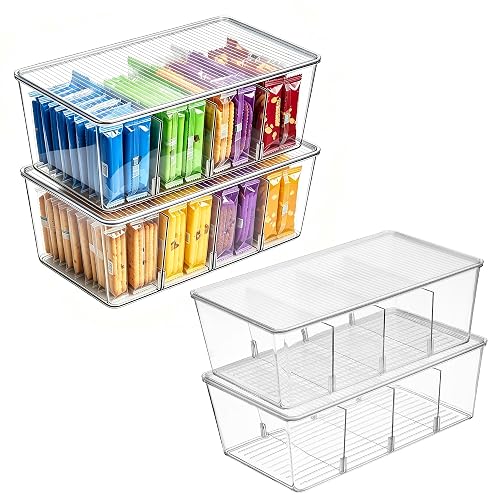
Fix 2: Use cheap clear containers for the stuff you use all the time
You don’t need fancy glass canisters with bamboo lids. You need containers you can see through so you know when you’re running low.
What to focus on:
- Flour, sugar, rice, pasta, oats, snacks
- Things that come in annoying bags that spill or get stale
- Stuff you need to grab quickly while cooking
Go to Target, Walmart, Amazon, or even the dollar store and get a set of basic clear plastic containers with lids. They don’t have to match perfectly. They just have to close tight and let you see what’s inside.
I spent about 20 dollars on a mismatched set and it changed everything. Suddenly I could see we were out of rice without digging through six bags. I stopped buying duplicate pasta boxes because I could actually see what we had.
Fix 3: Group like items together in bins or baskets you already own
Before you spend money on new baskets, check your house.
I raided:
- Old plastic bins from under the bathroom sink
- A basket that used to hold magazines
- A small cardboard box I covered with leftover kraft paper
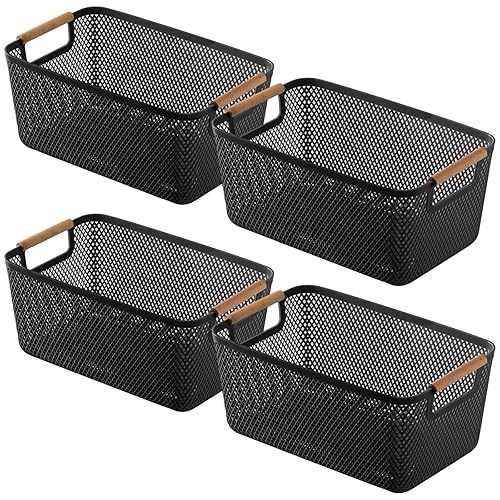
If you really do need a few new bins, dollar store or discount wire baskets work great. You’re not displaying this on a shelf for guests. You’re making it function.
Group things that go together:
- Baking supplies in one bin
- Snacks in another
- Breakfast stuff in a third
Now when you need to make pancakes, you pull one bin and everything is there. Same logic I use in the ADHD‑friendly kitchen drawer system: group by task, not by random category.
![[ 12 Pack ] Plastic Storage Baskets - Small Pantry](https://m.media-amazon.com/images/I/81LwfO1xRKL._SL500_.jpg "Pantry Organization on a Budget: 10 Cheap Fixes That Look High‑End 1")


Fix 4: Add a lazy susan for oils, sauces, and bottles
This is maybe the cheapest upgrade with the biggest impact.
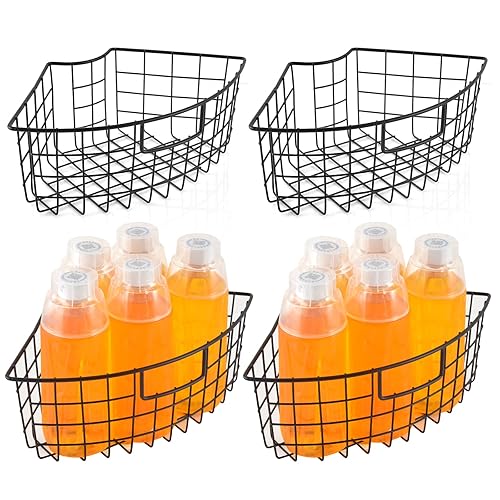
A simple lazy susan (the spinning circle thing) keeps bottles and jars from becoming a nightmare in the back corner.
You can get one for like 8 dollars. Put your oils, vinegars, soy sauce, hot sauce, salad dressings on it. Now you spin it instead of knocking five things over trying to reach the back.
I have two in my pantry now. One for condiments, one for spices. Life‑changing for under 20 dollars.


Fix 5: Use shelf risers to double your space
Most pantry shelves are too tall. You stack things and then you can’t see or reach what’s in the back.
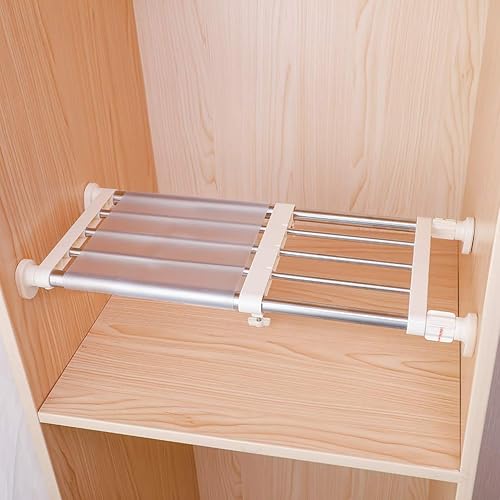
Shelf risers fix this for cheap. They’re basically little platforms that create a second level on your shelf.
You can get a set for 10 to 15 dollars.
Use them for:
- Canned goods (back row on the riser, front row on the shelf)
- Spice jars
- Small snack boxes
Now you can see everything at once and nothing is hiding.


Fix 6: Hang an over‑the‑door organizer for snacks or small stuff
If you have a pantry door, use it.
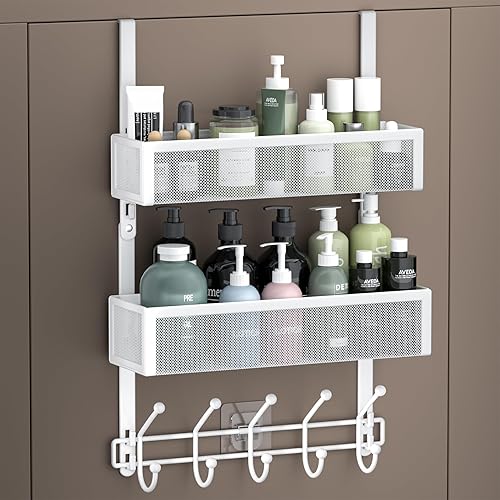
A cheap over‑the‑door shoe organizer or hanging pockets can hold:
- Individual snack bags
- Seasoning packets
- Tea bags and coffee pods
- Small kitchen tools you don’t have drawer space for
This adds a ton of storage without taking up shelf space. I got mine for under 12 dollars and it holds all the kids’ snacks so they can grab their own without tearing apart the shelves.


Fix 7: Add a tension rod for hanging chip bags or cleaning gloves
This trick feels like a hack but it’s so simple.
A cheap tension rod across the inside of your pantry door or between two shelves lets you hang:
- Chip bags with clips
- Dish gloves
- Small reusable bags
You can get a tension rod for like 5 dollars. Stick it up, hang stuff, done.
This is especially good if you’re working with a tiny pantry and already used all the tricks from organizing a small kitchen with zero storage.


Fix 8: Label everything, even if it’s just masking tape and a marker
Labels are the secret to keeping any organization system working long‑term.
You don’t need a fancy label maker (though if you want one, go for it). You can use:
- Masking tape and a Sharpie
- Printable pantry labels from Etsy or Canva
- Sticky notes if you’re testing a system
Label your containers, your bins, your shelves. When everyone in the house knows “snacks go in this bin,” they’re way more likely to put stuff back.
I resisted labels for so long because I thought they’d look cheap. Turns out even masking tape labels make my pantry look more organized than no labels with expensive bins.


Fix 9: Use the “first in, first out” rule to stop wasting food
This isn’t a product, it’s a habit. But it saves money, which means your pantry organization pays for itself.
When you buy new groceries, put the older stuff in front and the new stuff behind it.
This way you use what’s closest to expiring first, and nothing hides in the back until it’s stale.
Pair this with actually knowing what you have before you go shopping. Now that your pantry is organized, you can see at a glance “we’re low on rice but we have plenty of pasta.”
This is the same mindset shift that happens in meal planning on a budget when groceries are expensive. You cook from what you have instead of randomly buying more.
And if you’re struggling with throwing food away, you’ll see yourself in we were throwing 200 dollars in trash every month from food waste.
Fix 10: Keep one “overflow” bin for bulk or rarely used items
Some stuff doesn’t need prime pantry real estate.
Holiday baking supplies, that giant Costco bag of chips you’ll use eventually, specialty flours you use twice a year. Put all of that in one labeled bin on the top shelf or in a closet nearby.
This keeps your main pantry focused on what you use daily or weekly, and the rest isn’t clogging up your system.
I keep an overflow bin in the garage. It’s not cute, but it works. When I need something from it, I swap it into the pantry and move something else out.
Same approach I use in organize your home on a budget without expensive bins. You’re working with what you have and making it function, not buying your way to perfection.
The whole system for under 50 dollars
Let me add it up for you:
- Clear plastic containers: 15 to 25 dollars
- A couple of wire baskets or bins: 10 dollars
- Two lazy susans: 15 dollars
- Shelf risers: 10 dollars
- Over‑the‑door organizer: 12 dollars
- Tension rod: 5 dollars
- Labels (masking tape or printable): free to 5 dollars
Total: around 50 to 60 dollars, depending on what you already have at home.
Compare that to one of those Instagram pantry makeovers that costs 300 to 500 dollars, and you’re getting 80 percent of the function for a tenth of the price.
And honestly, if you can only spend 20 dollars right now, just get containers and a lazy susan. That alone will make a huge difference.
If your budget is tight everywhere, not just pantry bins, the same strategies from saved 400 dollars a month with 5 simple changes can help free up a little breathing room so small upgrades like this don’t feel impossible.
Your pantry doesn’t have to be perfect to work
I’m not going to lie, my pantry still doesn’t look like the ones I see online. Some bins don’t match. My labels are handwritten. There are a couple of things just sitting loose on a shelf.
But I can see what I have. I know where everything goes. Food isn’t expiring in the back. My kids can grab snacks without destroying the whole shelf. And I spent about 45 dollars instead of 400.
That’s what budget pantry organization actually looks like.
Start with one fix this week. Maybe it’s just pulling everything out and tossing expired stuff. Or buying one set of containers for the things you use most. Or hanging a lazy susan for your oils.
Small, cheap fixes add up fast. And a pantry that works makes cooking, meal planning, and grocery shopping so much easier, which saves you money and stress every single week.
You don’t need a pantry that looks like a showroom. You need a pantry that helps you feed your family without losing your mind.
And you can absolutely build that on a budget.
For the cleaning products and tools mentioned here, Amazon has everything you need delivered to your door.







What’s your go-to budget tip for pantry organization? Check out these great ideas! #PantryGoals #HomeHacks #CozyCornerDaily