


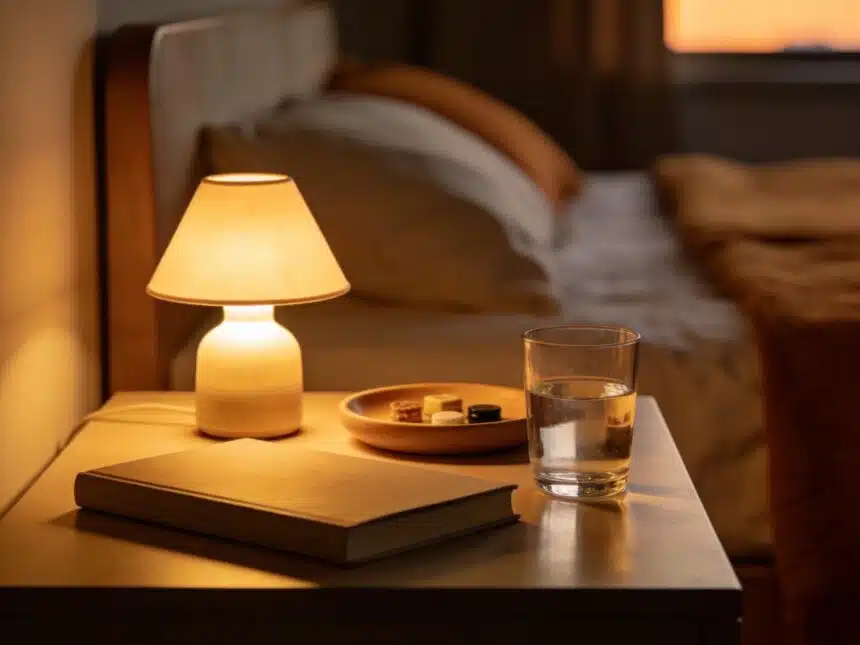
The bedside table is one of those surfaces that reveals a lot about how tired you really are. It starts with just a glass of water and a phone charger. Then a book. Then a few receipts you meant to deal with. Then a lip balm and some hair ties and an old granola bar wrapper and suddenly there’s a pile of things living next to you every night that you stopped seeing weeks ago.
Here’s the honest truth about bedside table organization: most advice over-complicates it. You’ll see posts about labeled trays with separate compartments for your reading glasses and your earbuds and your journal and your lotion. That works in a magazine photo. It does not work when you’ve been awake since 5 a.m. and you’re dropping things on the nightstand at 10 p.m. without looking.
What actually works is building a system based on what you’ll actually do when you’re exhausted. Not what you’ll do on a motivated Saturday afternoon.
The first step is deciding what actually belongs there. Not what you wish you used or what looks nice. What do you reach for every single night? Genuinely. For most people it’s a phone charger, a glass of water, and maybe one book or a lip balm. That’s it. Everything else that accumulates on that surface arrived because there was empty space for it to land. And empty space on a flat surface near a bed is basically a magnet for random objects that have nowhere else to go.
Start by clearing everything off. Don’t sort it on the nightstand, that just creates a sorting pile on top of the mess. Bring a tote bag or a small box, sweep everything into it, and carry it to another room. Now you have a blank surface and you can decide from scratch what earns a spot there.
The items that belong on a bedside table are the ones you use within 30 minutes of sleeping or within the first five minutes of waking up. A phone charger with the cord secured so it’s easy to grab. A glass of water, and honestly a coaster if your table marks easily. One book if you read at night. One item of lip care or hand lotion if that’s part of your wind-down. That’s a full nightstand. Most people don’t need more than that.
The system fails when there’s no designated place for things that tend to migrate. Hair ties, for example. They come off at night and land wherever, then accumulate over a week. A single small ceramic dish is enough to give them a home. One dish, that’s it. Not an organizer tray with four sections. One dish. When it gets full, that’s the signal to move the extras to the bathroom or wherever they belong. This same rule applies to anything else that genuinely does need a nightstand home. Small container, fixed limit, and the overflow goes elsewhere.
For anyone dealing with ADHD or low-energy nights, the key is reducing friction down to almost nothing. If your charger requires two steps to plug in or the cord falls behind the table, you’ll stop using it right. If a book requires you to move three other things to reach it, the pile comes back. Every barrier, no matter how small, is enough to derail the system when you’re tired. This is the same principle behind organizing cleaning supplies so you’ll actually use them, and it applies directly to bedside organization. The easier it is to put something where it belongs, the more likely you’ll actually do it at 10 p.m. when your brain is done.
The drawer matters too. If there’s a nightstand drawer, it needs a job and a limit. Decide what lives there before it becomes the miscellaneous catch-all. A small silicone tray inside the drawer to hold the tiny things works well. One section for health or personal care items you might need overnight. One section for things like a pen and a notepad if you write things down at night. Close the drawer. If something doesn’t fit into those sections, it doesn’t belong in the drawer.
One thing that genuinely helped a lot of people is keeping a small basket or bin nearby, on the floor or on a shelf, specifically for the items that arrive at the nightstand but don’t belong there. Mail, receipts, items borrowed from another room, random small things that don’t have a home yet. Instead of those things piling on the surface, they go in the basket. Then once or twice a week, you process the basket. This separates the “I’ll deal with it later” items from the actual nightstand routine without letting them take over the surface. It’s a similar idea to the family paperwork system that keeps incoming paper from spreading across every flat surface in the house.
Cleaning the nightstand should take under two minutes on a weekly basis once the system is right. Wipe the surface, confirm everything on it belongs there, empty the basket or process the items in it. That’s the whole routine. It only becomes a project when things have been accumulating unchecked for weeks.
The last thing worth saying is about your phone. Phones on nightstands have a way of extending the day past when you meant to stop, and there’s real evidence that the blue light and the content loop disrupts sleep quality. If you want to try keeping your phone off the nightstand, a small charging station in another area of the bedroom or even just across the room creates enough distance to matter. Your morning alarm can be a cheap clock instead. The morning reset routine is a lot easier to start when your first conscious act isn’t reaching for your phone.
If you’re someone who tends to read in bed, keeping your current book on the nightstand is obviously reasonable. But if you’re like a lot of people who have a stack of three or four books there because you can’t decide which one you’re actually in, pick one. The rest go on the shelf. A nightstand with one book on it looks calm. A nightstand with a shifting pile of four books looks like the beginning of a larger problem.
Build the system for your tired self, not your aspirational self. The version of you that will interact with this surface most is the one who has been awake for sixteen hours and just wants to lie down. Design for that person and the surface will stay manageable. Design for the version of you who has time and energy to spare and it will be clean once and then never again.
For the cleaning products and tools mentioned here, Amazon has everything you need delivered to your door.







What’s your must-have item on a bedside table? Check out some great organizing tips! #HomeOrganization #Declutter #CozyCornerDaily