


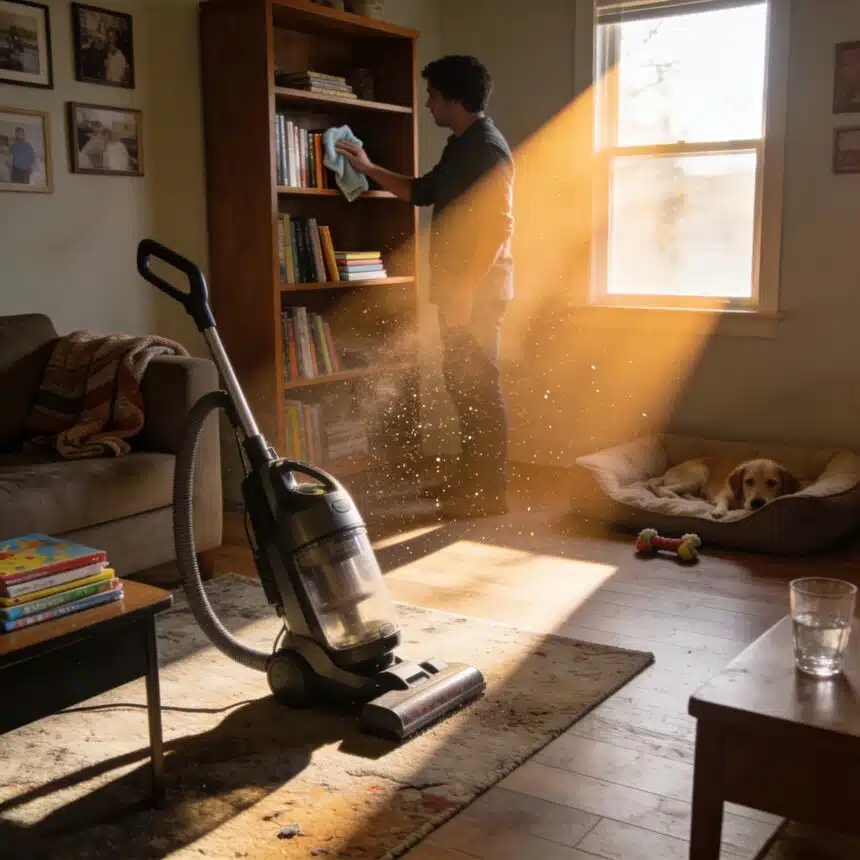
If it feels like you dust your house and the dust comes back before you even put the cloth away, you are not being dramatic.
Some homes really do seem to manufacture dust like it is their side business.
And the annoying part is that dust is rarely just one thing. It is not only dirt from outside. EPA says indoor dust can include tracked-in soil, pollen, mold spores, pet dander, dust mites, skin flakes, and particles from everyday activities like cooking and cleaning. It also says frequent cleaning, damp dusting, weekly vacuuming, and routine filter changes are some of the most practical ways to reduce it.
That explains why a house can look decent and still feel dusty all the time.
If you want less dust, the answer is not just “clean harder.” It is to interrupt where dust collects, where it gets stirred up, and where it keeps getting reintroduced into the same rooms.
The first place I would look is soft stuff.
Bedding, rugs, curtains, upholstered furniture, throw blankets, pet beds, and that decorative pillow situation that got out of hand three seasons ago. Soft surfaces hold onto more than people think. If your bedroom and living room both seem dusty no matter what, start there. EPA specifically recommends washing bedding in hot water once a week and drying it completely, especially for people dealing with allergens.
That is one reason I treat this topic as more than a cleaning issue. It ties right into sleep, allergies, and how a room feels in your body. If that sounds familiar, allergy-proof bedroom reset and what clutter does to your body and mind belong in the same conversation, because dust loves the kind of crowded surfaces we keep meaning to get back to later.
The next thing is how you dust.
A dry rag and a quick swipe can make you feel productive, but a lot of the time it just throws fine particles right back into the air. EPA recommends dusting with a damp cloth because it helps keep settled dust from floating right back around the room.
So if the shelf looks clean for eight minutes and then somehow dusty again by dinner, that might be part of the problem.
The floor matters too, but not in a dramatic perfectionist way. Just in a “please stop letting everything live there forever” way. Carpets need regular vacuuming. Hard floors need proper pickup, not just pushing debris around until it relocates under a chair. EPA also says a vacuum with a HEPA filter can help reduce dust buildup by keeping more of what you vacuum from escaping back into the air. HEPA filters in general are designed to capture at least 99.97% of particles that are 0.3 microns in size.
That does not mean everybody suddenly needs to go buy a new vacuum at 9 p.m. It just means the tool matters if dust is a constant fight.
Another big dust trap is clutter.
Not because clutter is morally wrong. Just because every extra item becomes one more surface to hold dust and one more thing you have to move around to clean properly. Stacks of papers, baskets of cords, random decor, toys that live everywhere but the toy bin, piles of “important stuff” on the side table. All of it makes quick cleaning less effective. That is why the doom pile audit that finally clears hidden clutter and organize cleaning supplies that actually get used help more than people think. A house gets less dusty when it is easier to actually clean.
Then there is the air side of the problem.
EPA says to routinely change air filters in HVAC systems and portable air cleaners according to the manufacturer’s directions, and it notes that higher-efficiency filters can help reduce indoor particulate matter.
That means if your house always feels dusty, look up before you start blaming your furniture. Check the HVAC filter. Check whether the vents look dirty. Think about whether the house is getting enough air movement. Dust is not only a shelf problem. Sometimes it is an airflow problem wearing a shelf costume.
Windows can also be part of the story. If you leave them open on high pollen days, dust and pollen both get invited in like they pay rent. EPA specifically recommends keeping windows closed on high pollen days. If your sills and tracks are always grimy, how to clean window tracks the right way is one of those small fixes that makes the whole room feel cleaner than it has any right to.
And I have to say this because nobody enjoys hearing it, but candles, heavy fragrances, and some aerosol products can also add particles to the air. EPA notes that household products and activities like cooking, cleaning products, and burning candles can contribute to indoor particles. So if you are constantly fighting dust, this might be the season to pull back on some of the extra scent and smoke.
The good news is that you do not need a full deep clean to start winning here.
Wash the bedding. Damp dust the main surfaces. Vacuum the places that actually get used. Change the filter. Reduce a little clutter. Clean the window areas. Repeat before the house gets too far ahead of you.
That is how you dust less.
Not by becoming some spotless-house robot, but by making your cleaning actually interrupt the cycle instead of chasing it.
For the cleaning products and tools mentioned here, Amazon has everything you need delivered to your door.







What’s your biggest dusting challenge at home? Check out these tips for a cleaner space!