


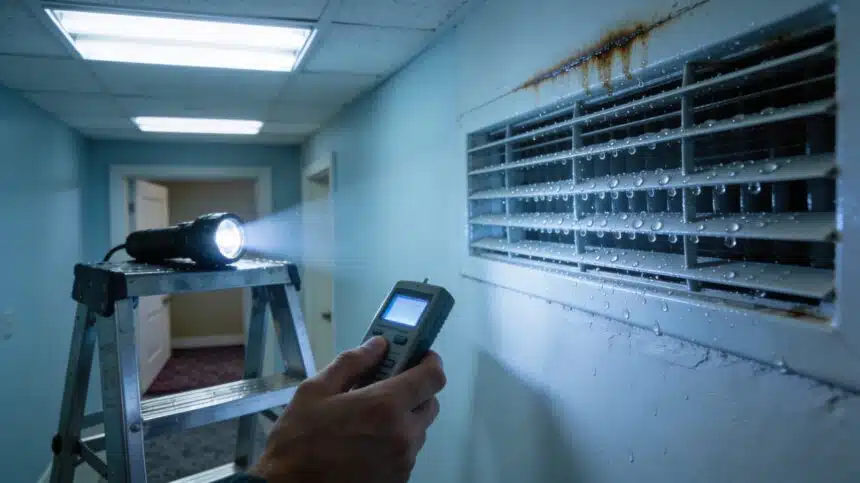
If your AC vents are sweating, the house is trying to tell you something.
It may not be a full emergency, but it is not one of those things I would ignore and hope gets better on its own either.
Condensation on vents or ducts usually means warm, humid air is meeting a cold surface. EPA’s indoor air guidance says residents should watch for signs of inadequate ventilation such as stuffy air, moisture condensation on cold surfaces, or mold and mildew growth. EPA also recommends controlling indoor moisture and keeping humidity around 30% to 50% to help reduce mold and mildew.
That is the big picture.
The smaller picture is usually one of three things. High indoor humidity. Poor insulation around ducts. Or airflow issues that are making parts of the system colder than they should be.
High humidity is the most common place to start.
If the house already feels sticky, musty, or clammy, the sweating vent is often just the most visible symptom. EPA’s mold guidance says condensation can be a sign of high humidity, and it recommends acting quickly to dry wet surfaces and reduce the moisture source. So if you see water forming on or around vents, do not just wipe it and move on. Ask why the room is holding so much moisture in the first place.
This is why articles like stop window condensation before mold starts and allergy-proof bedroom reset connect so naturally here. Condensation rarely shows up in only one form. A humid house usually leaves clues in more than one place.
Another possibility is poor duct insulation.
If cold air is moving through ducts in a hot attic or humid area, the outside of that duct can get cold enough for moisture to form. EPA notes that controlling moisture entry and preventing condensation are key to protecting buildings from mold and moisture-related damage. That means sweating ducts are not just annoying. Over time, they can drip onto insulation, ceilings, or framing and create a much bigger mess than the vent itself.
Airflow problems can also play a role.
If a filter is dirty, vents are blocked, or the system is not moving air the way it should, some components can get colder than normal and create more condensation. ENERGY STAR recommends checking HVAC filters monthly during heavy-use seasons and getting regular service to keep systems working efficiently. That is one reason this article belongs beside eco-friendly HVAC maintenance habits that lower bills and summer electric bill reset. The same neglected maintenance that raises cooling costs can also make moisture problems worse.
If you want to troubleshoot it simply, start with the room.
Does it feel humid? Are the bathroom or kitchen fans actually being used? Is the vent near a bathroom, laundry room, or another moisture-heavy area? EPA says exhaust fans in bathrooms and kitchens should remove moisture to the outside, not into the attic, and it also says dryer vents should vent outside. If those moisture sources are hanging around indoors, the AC vent may just be the first place you notice.
Then check the easy stuff.
Replace the filter if it is dirty. Make sure furniture or rugs are not blocking vents. Look for visible gaps or missing insulation around accessible ducts. Notice whether the sweating happens only on the hottest, muggiest days or all the time. That pattern tells you a lot.
If water is dripping enough to stain the ceiling, wet nearby drywall, or keep coming back, do not let that slide. EPA’s mold guidance is very direct that the key to mold control is moisture control, and water-damaged areas should be dried within 24 to 48 hours. A sweating vent can turn into a mold problem faster than people expect if the moisture keeps collecting in the same spot.
I also think this is one of those home issues people misread because the AC is technically still running.
Cold air is coming out, so it feels like the system must be fine.
But a working system can still be working under bad conditions. A humid house, poor ventilation, disconnected duct insulation, or a hidden moisture source can all leave the AC doing its job while the house quietly develops another problem around it.
So if your vent is sweating, do not just wipe it and move on.
Check the humidity. Change the filter. Use the exhaust fans. Watch for patterns. Look for insulation issues. And if the moisture keeps showing up, bring in a pro before the ceiling or duct area starts telling a more expensive story.
That is usually the cheaper moment to deal with it.
For the tools and materials needed for this project, Amazon has everything you need delivered to your door.







Have you noticed condensation on your AC vents? Check this out to find solutions! #HomeTips #HVAC #CozyCornerDaily