







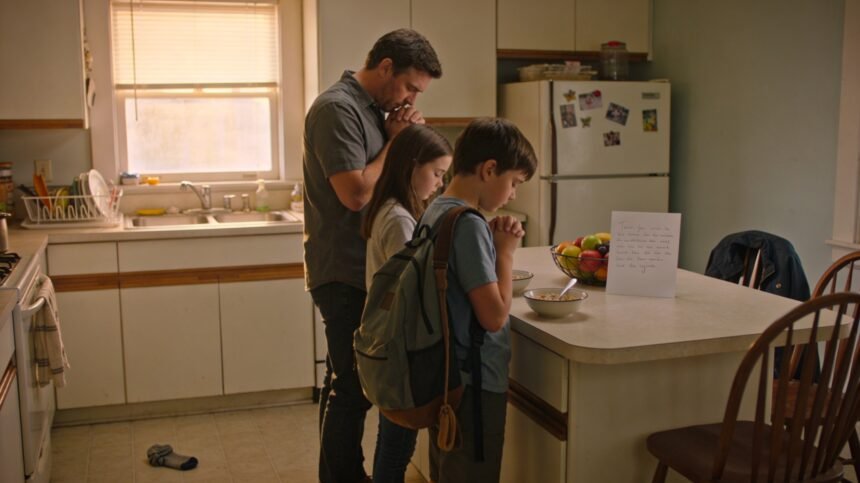
Six forty-five in the morning. Someone cannot find a shoe. The dog knocked over the cereal. A permission slip that needed signing last Thursday is suddenly critical. The morning is already in control of the household instead of the other way around. A faith-centered morning routine does not prevent the cereal spill. It determines how the family responds to it, and over time, that difference in response is the difference between a household that runs on stress and one that runs on something steadier.
Why the Morning Sets Everything
The first thirty minutes of the day establish the emotional temperature the household carries for the rest of it. A morning that starts in reactive scramble produces people who arrive at school and work already depleted, already behind, already slightly irritable. A morning that starts with even a brief moment of intention, a prayer, a verse, a single quiet minute before the noise begins, produces something measurably different.
This is not productivity optimization. It is spiritual architecture. When a family anchors the morning in something larger than the schedule, the schedule becomes a tool rather than a master. The checklist still gets completed, but it is being driven by purpose rather than anxiety.
Psalm 5:3 describes the practice directly: in the morning, Lord, you hear my voice. Lamentations 3:22-23 grounds it in renewal: his mercies are new every morning. The biblical pattern is consistent across both Testaments: morning is the time to orient the heart before the day orients it for you.
Starting Before the Kids Are Up
The most grounded family mornings begin with a parent who has already found their own footing before anyone else needs something from them.
Even ten minutes before the household wakes, a brief personal prayer and one verse establishes the posture the morning needs. Not an elaborate devotional with three commentary volumes. One verse. One conversation with God about the day ahead. One moment of surrender before the first demand arrives.
The habit that holds this: do it before reaching for the phone. The first notification of the morning is not a tweet or an email. It is a reminder that the day belongs to someone other than the inbox. That one change in sequence, prayer before phone, reorganizes the entire psychological opening of the day without adding a single minute to the routine.
The faith-based morning rhythm for a peaceful home builds the full individual rhythm in detail. Starting there before adding the family layer makes the family portion easier to sustain because you are not trying to lead something you have not yet practiced yourself.
Building the Family Morning Anchor
A family faith anchor is a brief, consistent ritual that happens at the same point in every morning and involves every person present. Brief is the operative word. Three to five minutes is enough to change the tone of the morning without becoming another thing that makes everyone late.
It does not require everyone to be dressed. It does not require a formal posture. It does not require children to be still for longer than they are capable of being still. It requires showing up at the same moment every morning and doing the same small thing together.
Options that work for different family rhythms:
The breakfast verse: One index card per week propped against the fruit bowl or taped to the refrigerator with a single verse. Someone reads it aloud before anyone picks up a spoon. No discussion required unless it sparks one naturally. The repetition of the same verse all week creates familiarity and often surfaces unexpected conversations by Wednesday.
The round-table prayer: Thirty seconds per person at the breakfast table. Each family member says one sentence: something they are grateful for, something they are carrying, or something they are asking for. The parent opens and closes. Total time: under three minutes for a family of four.
The morning offering: A short spoken prayer said together while still at the table or standing in the kitchen before the school backpacks are picked up. The same prayer every morning becomes something children memorize without being asked to memorize it, which makes it a genuine rhythm rather than a performance.
The worship song window: One song during breakfast or during the getting-ready window. Not a full worship set. One song on a speaker that sets a tone without requiring anyone to stop what they are doing. Music reaches emotional register faster than almost any other medium and costs nothing to add to a morning.
Making It Stick When the Morning Fights Back
The mornings that most need the anchor are the ones where it is hardest to stop for it. Exactly the overcrowded, shoe-missing, permission-slip-panicking mornings when the pause feels impossible are the mornings when it matters most.
A few practices that protect the anchor when the morning is uncooperative:
Position it early, not last. A family prayer scheduled for the moment everyone is ready to walk out the door will be skipped every morning that runs behind schedule, which is most of them. Placing it at the breakfast table or immediately after waking means it happens before the chaos peaks.
Make it non-negotiable but flexible in form. On the worst mornings, the anchor is thirty seconds. A single sentence spoken together in the car on the way to school counts. The consistency of doing something is more valuable than the consistency of doing the full version.
Rotate who leads. Giving older children a turn to pick the verse, choose the song, or open the prayer builds ownership in the ritual. A child who chose the verse is a child who remembers it.
The back-to-school morning launch system integrates the practical logistics: shoes, lunches, bags, and departure sequence. The faith anchor fits inside that structure as the opening moment rather than competing with it.
Personal Faith Practices Alongside the Family Ritual
The family anchor is shared. The personal practice is individual. Both matter, and keeping them separate prevents the family ritual from replacing personal spiritual formation or vice versa.
For parents, a personal morning practice built around the same elements, scripture, prayer, brief journaling or reflection, runs best in the quiet before the family is moving. Even five minutes of personal engagement with the Word before the household wakes produces a different quality of presence through the morning than starting at zero and jumping straight into the family rhythm.
For children, age-appropriate personal practices grow naturally out of the family ritual. A child who has been hearing a verse read aloud at breakfast for two years is ready to start reading their own at nine. A teenager who has participated in the round-table prayer since childhood is far more likely to maintain personal prayer as an adult than one for whom faith was entirely communal or entirely invisible.
Is my child’s anxiety normal? is a question many parents carry through the morning rush. A consistent family spiritual rhythm does not cure anxiety, but it does provide a child with a reliable structure of meaning and connection that research consistently identifies as a protective factor against anxiety’s worst effects.
Extending the Rhythm Into the Rest of the Day
A morning anchor holds best when it connects to something visible in the home. The faith-centered command center we covered in the organization section of this series gives the scripture a physical home on the wall where the family sees it through the day, not just at breakfast.
The five-minute evening reset closes the day the way the morning anchor opens it: with intention. A brief moment of reflection before bed, what went well, what was hard, what tomorrow holds, mirrors the morning practice and completes the daily loop.
Collaborative household chores as family bonding and the low-energy evening rhythm both support the same goal as the morning anchor: a household where the members are genuinely present to each other rather than parallel and distracted.
For families building this from scratch, Mindful Moments: A Guide to Calm Living and Easy Daily Routines holds the full structure for daily rhythms built around intentionality and peace. And Quietly Becoming: A Soothing Companion for Life’s Uncertain Turns is the companion for the seasons when the morning routine is hard to hold because life itself is hard to hold.
The morning does not belong to whoever wakes up first. It belongs to whoever has a plan. And the families who start with something sacred before they start with something scheduled tend to find that the schedule, somehow, cooperates more than it used to.
For parenting books and resources on this topic, Amazon has a solid selection worth browsing.














What’s your favorite morning routine with your family? Check out these ideas for some inspiration!