


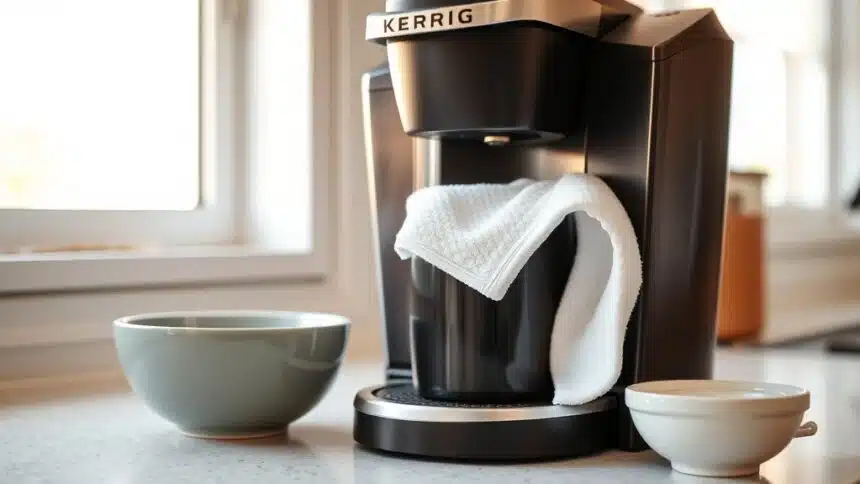
Most people who use their Keurig every single morning have never cleaned it. Not once. If you knew what was growing inside the water reservoir and brewing chamber right now, you’d probably pour your current cup down the drain. Knowing how to use vinegar to clean Keurig machines isn’t some deep secret, but almost nobody actually does it, and every cup of coffee you brew through a dirty machine tastes worse than it should.
The buildup inside your Keurig is a combination of calcium deposits from hard water, old coffee oils that go rancid over time, and in some cases, actual mold colonies thriving in the dark, warm, moist environment of the water reservoir. That slightly bitter, off-tasting cup you blamed on your coffee brand? Probably not the coffee’s fault.
What Happens When You Never Clean Your Keurig
Mineral deposits from tap water accumulate on the heating element and inside the water lines every time you brew. Over months, these deposits restrict water flow, lower the brewing temperature, and produce a cup that’s weaker and more bitter than it should be. The machine works harder, brews slower, and eventually starts making that sad, half-filled cup that dribbles out instead of flowing.
Coffee oils are the other culprit. Every brew leaves a thin film of oils inside the brewing chamber and on the needle that punctures your K-cup. These oils oxidize and turn rancid. You can’t see them, but you’re tasting them in every cup. If your Keurig has been running for six months without a cleaning, those rancid oils have been seasoning your coffee like a cast iron pan seasoning you never asked for.
If you are looking for more ways to use vinegar around the house, check out our guide on how to clean your dishwasher with vinegar for another simple deep clean.
The Vinegar Descaling Method That Actually Works
White vinegar is the most effective and cheapest descaling solution available. The acetic acid in vinegar dissolves calcium and mineral deposits without damaging the internal components of your machine. Here’s the exact process, start to finish.
First, empty the water reservoir completely and remove any K-cup from the holder. Pull out the water filter if your model has one. Fill the reservoir with equal parts white vinegar and water. For most Keurig models, that’s roughly 6 to 8 cups of liquid total. Place a large mug on the drip tray.
Run a brew cycle without a K-cup. Let it fill the mug, then dump the contents in the sink. Repeat this until the reservoir is empty. You’ll notice the first few cups might look cloudy or have visible flecks of buildup. That’s the calcium dissolving and flushing out. This is a good sign.
Once the vinegar solution is gone, fill the reservoir with plain water and run brew cycles until it’s empty again. Do this twice. This flush removes any remaining vinegar taste. Nobody wants their morning coffee tasting like a salad dressing accident.
Once your machine is clean, it is worth putting quality coffee through it. Coffee Bros is the brand I have been using and the difference in taste when the machine is actually clean is real.
Don’t Forget the Parts You Can See
The descaling handles the internal buildup, but the external parts need attention too. Pull out the K-cup holder and the drip tray. Wash both with warm soapy water. Use a paperclip or the Keurig cleaning tool to clear the needle that punctures the K-cup. Coffee grounds pack into that needle over time, and a clogged needle means uneven extraction and grounds in your cup.
Wipe down the water reservoir with a clean cloth. If you see any slime or discoloration on the inside walls, that’s biofilm, and it needs a good scrub with soapy water before you refill.
If appliance cleaning is just one piece of a bigger cleaning puzzle you have been avoiding, When You Were Never Taught to Clean covers the full foundation for $11.99 and it is worth every penny.
Once your coffee maker is sparkling, you might want to tackle your floors next with our tips on using white vinegar for cleaning floors.
How Often You Actually Need to Do This
Every three months is the minimum if you brew daily. If you have hard water (and most municipal water qualifies), every two months is better. You’ll know it’s overdue when the brew time gets noticeably longer, the cup volume drops, or the taste goes flat and bitter despite using fresh pods.
If you’re investing in quality coffee, you owe it to yourself to protect the machine brewing it. Coffee Bros sources and roasts beans that deserve a clean machine. Spending money on premium pods or beans and then running them through a Keurig caked with six months of mineral deposits is like buying a great steak and cooking it in a dirty pan.
For anyone whose Keurig is making strange noises, barely producing half cups even after descaling, or has visible damage to the reservoir, it might be time for a replacement. Kismile makes compact kitchen appliances that fit the same counter space without the headaches of a machine past its prime.
The Cleaning Habit That Prevents All of This
The easiest way to avoid a major descaling session is a simple weekly habit. Every Sunday, run one plain water cycle without a K-cup. Just hot water through the system. This flushes loose deposits before they harden and keeps the brewing chamber cleaner between deep cleans. Takes 90 seconds. Saves you from the three-month reckoning.
If you’re someone who was never really taught how to maintain a home, from the kitchen to the bathroom to the appliances, you’re not alone. Most of us figured it out by trial and error, or we didn’t figure it out at all. When You Were Never Taught to Clean is a guide I put together for exactly that. It covers the cleaning basics nobody ever explains, including appliance maintenance like this, in a way that doesn’t make you feel behind.
If you’ve already nailed the kitchen and want a cleaning schedule that fits a busy life, that’s a solid next step. And if the Keurig cleaning wiped you out and you’re wondering how anyone keeps an entire house clean while exhausted, this guide on cleaning your house fast when you’re running on empty is worth the read. For more ways to clean smarter with fewer products, check out the eco-friendly cleaning products that actually work.
Your Keurig makes you coffee every single day. Give it 20 minutes every few months and it’ll keep doing its job without slowly poisoning your morning cup. And if this is the thing that gets you started on a cleaning routine you’ve been avoiding, grab the When You Were Never Taught to Clean guide and build from here. You don’t need to overhaul everything at once. You just need to start with the machine you use every morning.
If you found this helpful, you might also want to read our guide on meyer’s clean day dish soap.
For the cleaning products and tools mentioned here, Amazon has everything you need delivered to your door.





