


The grocery cart should not feel like a gamble. But somewhere between the protein aisle and the produce section the total starts climbing, and by checkout you are mentally trying to reconstruct which items you put back and whether any of it actually maps to a week of real dinners. This haul works differently. It starts with the five dinners the family will eat this week and works backward to the cart, which means everything in the cart has a job and nothing gets thrown out on Sunday because nobody knew what to do with it.
With tariffs continuing to drive up grocery costs in 2026, a structured weekly haul is not just frugal, it is the difference between a manageable bill and one that routinely runs forty to sixty dollars over what the household can absorb.
The Framework Before the List
A $150 weekly haul for a family of four requires three things working together: a protein anchor, a grain base, and produce that crosses multiple meals. The mistake that blows grocery budgets is buying ingredients for five completely separate meals with no overlap. Every ingredient in this haul appears in at least two meals. That overlap is how $150 covers seven days instead of four.
The budget breakdown:
- Proteins: $45 to $55
- Produce (fresh and frozen): $30 to $35
- Pantry staples and grains: $25 to $30
- Dairy and eggs: $15 to $20
- Bread and snacks: $10 to $15
Total: $125 to $155 depending on your region and what is on sale that week.
The Protein Lineup
Proteins are the most expensive category and the one where strategic choices save the most money. The key is choosing proteins with high versatility, proteins that work in multiple cuisines and formats so you are not buying separate proteins for each night.
The $150 haul protein list:
- Ground turkey, 2 lbs (~$8 to $10): Monday taco bowls, Wednesday pasta sauce. Two nights from one purchase
- Chicken thighs, bone-in, 3 lbs (~$8 to $10): Slow cooker Tuesday dinner, broth reserved for Thursday soup. Slow cooker chicken thighs four ways shows exactly how far this one protein goes
- Eggs, one dozen (~$4 to $6): Friday egg tacos, weekend breakfasts, hard-boiled for lunches all week
- Canned tuna, 3 cans (~$4 to $5): Monday and Tuesday lunches for adults
- Canned black beans, 3 cans (~$3 to $4): Protein extension for taco night, soup base, egg taco filling
- Canned chickpeas, 2 cans (~$2 to $3): Thursday soup, grain bowl topping
Total protein spend: approximately $29 to $38.
The entire protein category uses either quick stovetop cooking, the slow cooker, or no cooking at all for the canned items. That combination means every dinner except the pasta night takes thirty minutes or less.
The Produce Strategy
Buy produce that works across multiple meals and in multiple forms:
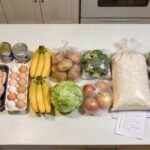
- Bananas, one bunch (~$1.50): Breakfast all week, no prep required
- Potatoes, 5-lb bag (~$4 to $5): Roasted as a side two nights, soup ingredient Thursday, hash for Saturday breakfast
- Cabbage, one head (~$2 to $3): Taco topping Monday, side slaw Wednesday, soup ingredient Thursday. Cabbage lasts the full week without wilting and costs almost nothing per serving
- Onions, 3-lb bag (~$2 to $3): Used in every cooked dinner. Buy the bag, not individual onions
- Garlic, one head (~$1): Flavors every dinner without adding to the cost
- Baby spinach, one bag (~$3 to $4): Pasta sauce addition Monday, smoothie or scramble ingredient all week
- Frozen broccoli, 2-lb bag (~$3 to $4): Side dish for two nights, no washing or chopping required
- Frozen corn, 1-lb bag (~$2): Taco bowl topping, soup addition
- Apples or seasonal fruit, one bag (~$4 to $5): Kids’ lunches and snacks all week
Total produce spend: approximately $23 to $31.
Frozen vegetables are not a compromise. They are picked at peak ripeness and frozen immediately, which means the nutritional profile is often better than fresh produce that has been sitting in transit for several days. A food storage system that cuts grocery waste keeps everything else fresh through the end of the week.
The Pantry Staples
These items are partly a one-time buy and partly replenished weekly depending on what you are running low on:
- White or brown rice, large bag (~$4 to $5): Side dish for four nights, fried rice Friday, grain bowl base
- Pasta, two boxes (~$3 to $4): Wednesday pasta dinner, potential Thursday soup addition
- Canned diced tomatoes, 3 cans (~$4 to $5): Pasta sauce, soup base, taco skillet liquid
- Chicken broth, one carton (~$3 to $4): Slow cooker liquid, soup base
- Old-fashioned oats, large canister (~$4 to $5): Weekday breakfasts five days
- Jarred pasta sauce, one jar (~$3 to $4): Wednesday dinner shortcut
Total pantry spend: approximately $21 to $27.
The Full Week Meal Map
With this haul, here is what the week actually looks like:
Breakfasts (all week):
Oatmeal with banana Monday through Friday. Eggs and toast on the weekend. Total cost per breakfast: under $0.75 per person.
Lunches (all week):
Adults eat tuna with crackers or on toast. Kids eat peanut butter and apple slices with a hard-boiled egg. Leftovers from any dinner cover at least two lunch meals per week. Total lunch cost: under $1.50 per person.
Dinners:
| Night | Meal | Main Ingredients |
|---|---|---|
| Monday | Ground turkey taco bowls | Ground turkey, rice, beans, corn, cabbage |
| Tuesday | Slow cooker chicken thighs | Chicken thighs, potatoes, broth, onion |
| Wednesday | Pasta with meat sauce | Ground turkey, pasta sauce, pasta, spinach |
| Thursday | Chicken and chickpea soup | Leftover chicken, chickpeas, tomatoes, broth |
| Friday | Egg and black bean tacos | Eggs, black beans, corn tortillas, cabbage |
| Saturday | Potato hash and eggs | Potatoes, eggs, onion, frozen broccoli |
| Sunday | Sheet pan chicken and broccoli | Reserved chicken or remaining protein, broccoli, potatoes |
Thursday’s soup uses the broth and any remaining chicken from Tuesday’s slow cooker batch, making it nearly zero additional cost. The clean-out-the-fridge soup formula applies here perfectly: whatever vegetables are aging at the end of the week go into the pot.
Where the Savings Actually Come From
The haul above costs $125 to $150 depending on your store and region. The savings compared to unplanned shopping come from four places:
No impulse proteins: Buying pre-seasoned prepared meats, marinated cuts, or specialty proteins costs two to four times more per pound than plain proteins you season yourself.
No single-use produce: Every vegetable in this haul appears in at least two meals. Nothing is bought for one recipe and discarded the rest of the week.
Store brand everything: Store brand canned tomatoes, beans, broth, and pasta are produced in the same facilities as name brands in most cases and cost thirty to fifty percent less. The grocery trick that saved hundreds per month is almost always a combination of store brand swaps and protein strategy.
No pre-cut or pre-washed convenience produce: Buying whole cabbage instead of bagged coleslaw mix, whole onions instead of diced onion containers, and whole potatoes instead of cubed packets saves two to three dollars per item across a week.
Connecting to the Broader Budget
The pantry challenge method extends this haul further by using what accumulates in the pantry before a full new shopping trip. After two to three weeks of this haul, the pantry has enough staples to skip one full shopping trip per month and still feed the family completely.
With food costs rising across all categories in 2026, the families managing their grocery budget best are the ones shopping from a plan rather than from hunger. The meal plan on a budget guide covers the planning side in more detail. This haul is what that plan looks like in a real cart.
The Sunday fridge reset keeps the haul organized all week so nothing gets lost at the back of a shelf and the Thursday soup ingredients are still exactly where you left them.
One hundred and fifty dollars. Seven days. Four people. It is a plan, not a gamble.