





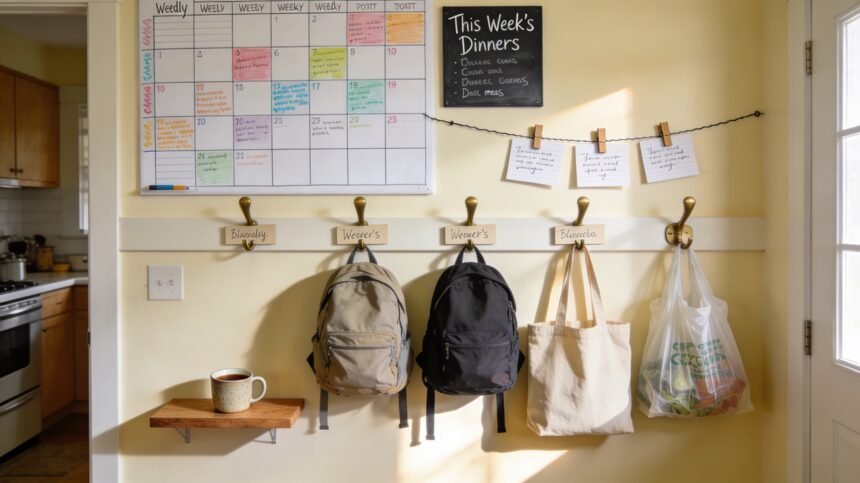
Six forty-five in the morning and your kitchen already feels like an air traffic control tower with no radar. Someone cannot find Wednesday on the calendar. Someone else needs a signed permission slip right now. Dinner is a question mark and the week has not even started. This is not a busy family problem. It is a wall problem. Specifically, the wall you walk past every single morning that is doing absolutely nothing to help you.
A faith-centered morning command center turns that wall into the most functional square footage in your home. It holds the week’s logistics, anchors the family in something bigger than the schedule, and cuts the morning chaos down to a glance instead of a scramble.
What a Command Center Actually Needs to Do
Before buying anything or nailing up hooks, get clear on what your household specifically needs the wall to solve. Command centers fail when they are built around what looks good on Pinterest rather than what the family actually uses daily.
For most households with kids, the core functions are:
- A weekly or monthly calendar everyone can see and update
- A meal planning section so dinner is never a last-minute conversation
- A space for rotating notes, permission slips, and reminders
- A drop zone for keys, charging cables, and anything that gets lost daily
- A faith anchor, whether that is a weekly scripture, a prayer prompt, or a short devotional card
That last piece is what separates a command center from just an organization wall. When faith is built into the structure of the morning, it does not get pushed to the margins by logistics. It becomes part of them.
Choosing Your Wall and Setup
The best command center location is wherever your family naturally passes or pauses in the morning. For most homes, that is the kitchen, the hallway near the front door, or the wall between the kitchen and the living area. High traffic means high visibility, which means the system actually gets used.
You do not need a lot of space. A four-foot stretch of wall is enough to hold a calendar, a meal planning board, a scripture section, and a hook strip. Measure the space before you buy anything and plan what goes where on paper first. Rearranging elements on paper is free. Rearranging them after you have drilled four sets of holes is not.
For renters or anyone who wants flexibility, adhesive strips and peel-and-stick mounting solutions handle everything from dry-erase boards to hook strips without leaving damage. Multifunctional wall storage pieces designed for small spaces also work well in tight hallway or kitchen setups where you cannot spread wide.
Building the Calendar Section
The calendar is the centerpiece of the whole system. A dry-erase weekly or monthly board works better than paper calendars for most families because it can be updated in real time without reprinting.
A weekly format shows the full picture at a glance, which makes it easier to catch schedule conflicts before Monday morning reveals them. A monthly format works better for families with a lot of external events, sports schedules, or school calendars to track. Some households use both: a monthly overview that lives in the center and a weekly strip below it for finer daily detail.
Color coding by family member is one of the most practical upgrades you can make. Assign each person a marker color and use it consistently. At a glance, anyone in the household can see whose week is packed and whose has room.
Pair the calendar section with a shared family digital calendar for anything that needs reminders or syncing with phones. The wall handles visibility. The digital calendar handles alerts. Both together eliminate the “I didn’t know about that” conversation.
The Meal Planning Panel
Add a small dry-erase section or a chalkboard square specifically for the week’s dinner plan. Five to seven lines, one per night. Nothing elaborate.
When dinner is decided at the start of the week and written somewhere visible, the mental load of that daily question simply disappears. It also makes grocery shopping faster, reduces food waste, and gives kids a heads-up about what to expect, which matters more than most parents realize.
A Sunday fridge reset and batch cooking system work together with the meal panel to make the week run smoothly from the first morning glance. If budget is part of the planning, keeping the meal plan connected to a grocery budget is even easier when the week’s dinners are already mapped on the wall before the store run.
The Faith Anchor Section
This is the element that makes the command center more than an organizational tool. A small section of the wall reserved for faith creates a daily touchpoint that does not require anyone to stop and seek it out. It is just there, every morning, as part of the household rhythm.
A few simple ways to build it in:
- Weekly scripture card: Print or handwrite one verse per week on an index card and clip it to a wire strip above the calendar. Change it every Sunday as part of the weekly reset
- Prayer prompt strip: A small chalkboard section with a rotating prompt like “Who are we praying for this week?” gives the family a shared focus without adding structure that feels heavy on a school morning
- Gratitude space: A section where family members can add one sticky note per week with something they are thankful for. By the end of the month, the wall holds the family’s collected moments of noticing grace
Pairing the command center with a faith-based morning rhythm makes the whole system more sustainable. The wall holds the structure. The rhythm holds the intention behind it.
Hooks, Drop Zones, and Paper Management
The bottom section of the command center should be practical and physical. Hooks for backpacks, keys, and dog leashes. A small basket or tray for items that need to leave the house. A slim file pocket or clipboard for papers that need a signature or action this week.
One rule for the paper section: it holds current action items only. Nothing older than two weeks lives there. When something is handled, it leaves. The family paperwork system handles longer-term documents and archives so the command center never becomes a secondary filing cabinet.
For keeping kids engaged in the system, age-appropriate chore assignments listed right on the command center wall make household contributions visible and shared. Kids who can see their role on the wall tend to own it more than kids who are just told verbally what to do.
What to Buy and What to Skip
The entire command center can be built for under fifty dollars with smart choices:
- A dry-erase board or laminated calendar sheet from a dollar store or craft store
- A set of adhesive hooks for keys and bags
- A small chalkboard square for the meal plan
- A wire photo display strip for scripture cards
- A slim wall pocket for current papers
Dollar store organization pieces hold up better than their price suggests for this kind of setup, especially for the small bins and trays that catch the daily drift. Small home storage solutions under fifty dollars round out anything the dollar store cannot cover.
Running the Sunday Reset
The command center only stays useful if it gets a weekly refresh. Sunday evening works best for most families since it prepares the week before Monday arrives. The reset takes about ten minutes:
- Wipe the weekly calendar and fill in the coming week
- Write the week’s dinner plan in the meal section
- Swap out the scripture card for a fresh one
- Remove any papers that have been handled
- Check hooks and drop zones for anything that wandered in from the week before
Build this into the after-school and evening routine so it becomes a family habit rather than one person’s solo maintenance task. When the kids participate in the reset, they are more likely to check the wall in the morning without being reminded.
The mental load of keeping a household running is real, and most of it is invisible until the system breaks. A well-built command center makes the invisible visible, which distributes the load more fairly and keeps the whole household running from a shared picture instead of one person’s overwhelmed mental calendar.
If you want a gentle framework for building calmer daily rhythms around it, Mindful Moments: A Guide to Calm Living and Easy Daily Routines is a natural companion. A family that moves through their mornings from a grounded, intentional place does not need to hustle harder. They just need a wall that tells the truth about the week.