





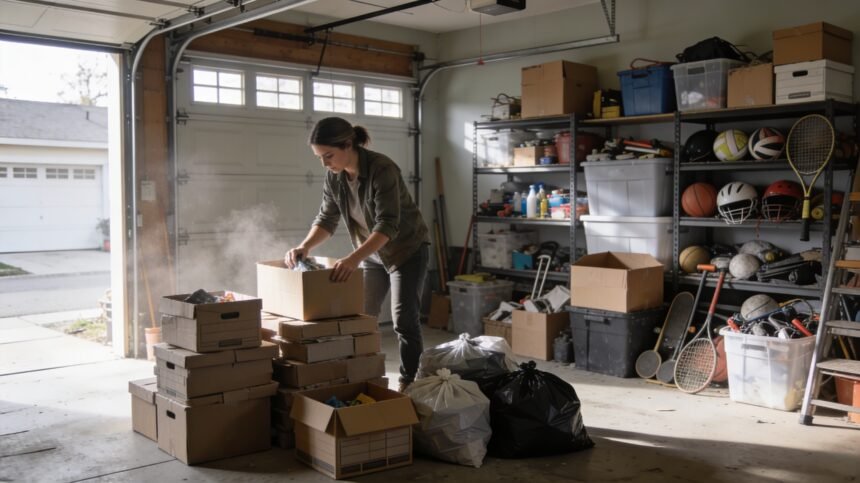
Figuring out how to organize a garage when you’re overwhelmed by the sheer volume of stuff in it is one of those tasks that lives permanently on the to-do list without ever getting started. It’s too big to tackle on a Tuesday night after work. It’s not enjoyable enough to sacrifice a Saturday for. And every time you open the door and look at it, the pile feels slightly larger than it did last time even though nothing new went in. That feeling of it growing is your brain registering the chaos and filing it as unsolvable. It’s not unsolvable. It just needs a method that fits how garages actually get disorganized, which is gradually, category by category, over years of putting things in there with the vague intention of dealing with them later.
The first thing to do is not touch a single item. Spend ten minutes standing in the garage and just looking at it. Walk the perimeter. Open the boxes you haven’t opened in over a year. Try to mentally map what’s there: tools, sports equipment, holiday decorations, garden supplies, things that belong in the house, things that belong nowhere. You’re building a mental inventory before you start moving anything, because the biggest garage organization mistake is pulling everything out onto the driveway and then running out of time or energy to put it back in a better way. That is how a messy garage becomes a driveway disaster on a rainy Thursday.
Zone planning is what separates a garage that stays organized from one that reverts in three months. Think of the garage in zones rather than trying to organize it as one big space. A tool zone. A sports zone. A garden and outdoor zone. A holiday and storage zone. A car zone, meaning the area immediately around the vehicles that needs to stay clear. These zones don’t have to be elaborate or labeled with a label maker. They just need to be consistent. When everything from a single category lives in one area, putting things back becomes automatic because there’s only one logical place each item goes.
Now you can start moving things. Work category by category, not box by box. Pull all the tools together first. All of them, the ones on the pegboard, the ones in the drawer of that old metal cabinet, the ones in the plastic tote by the door, the ones that ended up on top of the water heater for reasons no one can explain. When every tool is in one pile, you can actually see what you have. You’ll find three of certain items and zero of others. You’ll find tools you forgot existed and tools that belong to a project that was completed four years ago and never returned to the store. Consolidate. Throw out anything broken beyond practical repair. Donate what you genuinely haven’t used in two years. Keep only what you actively use or what has a specific, identifiable future use. Simple home repairs every parent should know how to do is worth reading alongside this because it helps you identify which tools are actually worth keeping versus which ones are just taking up wall space.
Sports equipment is one of the most chaotic garage categories because it spans multiple people, multiple seasons, and multiple phases of life. Bikes that don’t get ridden. Skateboards from a phase that ended in 2021. A kayak paddle with no kayak. A bag of soccer balls, only one of which holds air. The approach here is seasonal rotation. Active season equipment stays accessible, ideally on hooks at the front of the zone. Off-season equipment goes to the back or a higher shelf. Things nobody has used in over a year go in the donation pile without guilt. A kid who hasn’t touched a sport in two years is probably done with that sport. Donate the gear and free the space.
Garage walls are the most underused storage real estate in most homes. Pegboards for tools are a classic solution for good reason because they keep frequently used items visible and accessible without taking up floor or shelf space. Wall-mounted bike hooks bring bikes off the floor and free up a surprising amount of square footage. Over-door organizers on the back of the garage door or interior access door hold smaller items that would otherwise scatter. The goal with wall storage is getting as much off the floor as possible, because floor clutter is what makes a garage feel oppressive and useless even when the total volume of stuff isn’t extreme.
Shelving is the single best investment you can make in a garage. Floor-to-ceiling metal shelving units are available at big-box hardware stores for around $60 to $80 and they transform a garage wall from a dumping zone into an organized storage system. Deep shelves at the top for holiday bins and rarely accessed items. Shallower shelves at eye level for frequently used things. A dedicated shelf for automotive supplies. The key is labeling clearly because vague categories like “miscellaneous” become the new junk pile within six weeks. Label by what’s actually in the bin, not by what you intend to put there. If you want to keep costs down and still get organized, the same principle from organizing a home without expensive bins applies in the garage: the category and the consistency matter more than the container.
Holiday decorations deserve a special mention because they tend to be the heaviest, bulkiest, most disorganized part of most garages. Color-coded bins by holiday type, Halloween in orange, Christmas in red or green, general seasonal in clear, make the rotation significantly faster when the time comes. Label the outside with the contents, not just the holiday, because “Christmas” doesn’t tell you which bin has the outdoor lights versus the ornaments versus the wrapping paper. The more specific the label, the less time you spend digging through bins twice a year. These go on the highest, least accessible shelves because they’re used the least frequently.
Paint cans are a garage staple that most people accumulate and almost never use again. If a can has dried up, it’s trash. If it’s less than a quarter full, note the color code from the lid and toss it. If it’s still viable and you might need it for touch-ups, write the room name on a piece of tape stuck to the lid and store it on a dedicated paint shelf. Dried paint cans are heavy, they take up significant space, and most of them haven’t been opened since the house was painted. Be honest about which ones are coming back into use and act accordingly.
Hazardous materials, pesticides, old solvents, expired automotive fluids, need to be stored separately from everything else and disposed of properly when you’re ready to get rid of them. Most counties and municipalities have hazardous waste collection days. Check yours before you throw anything chemical in the regular trash because it’s both illegal in many areas and genuinely harmful. This isn’t the fun part of garage organization but it’s the responsible part and it usually clears a surprising amount of shelf space.
Maintaining the garage after you’ve organized it is mostly a question of enforcing the zone system. Everything that comes in gets assigned to a zone. Anything that doesn’t have a zone shouldn’t be in the garage in the first place. A quick 15-minute tidy every month or two keeps the zones intact and prevents the gradual drift back to chaos that happens when things get put down wherever there’s space rather than where they belong. If your whole house is in a state of reset right now and the garage is one piece of that, the 5-day declutter challenge runs a tight, room-by-room sequence that builds momentum across the whole house.
The garage doesn’t have to be a showroom. It just has to function. When you can park in it, find things quickly, and walk through it without navigating an obstacle course, it’s doing its job. Get the zones right, get things off the floor, label what’s in the bins, and the rest takes care of itself. It’s one weekend to set up and fifteen minutes a month to maintain. That trade is worth making.