





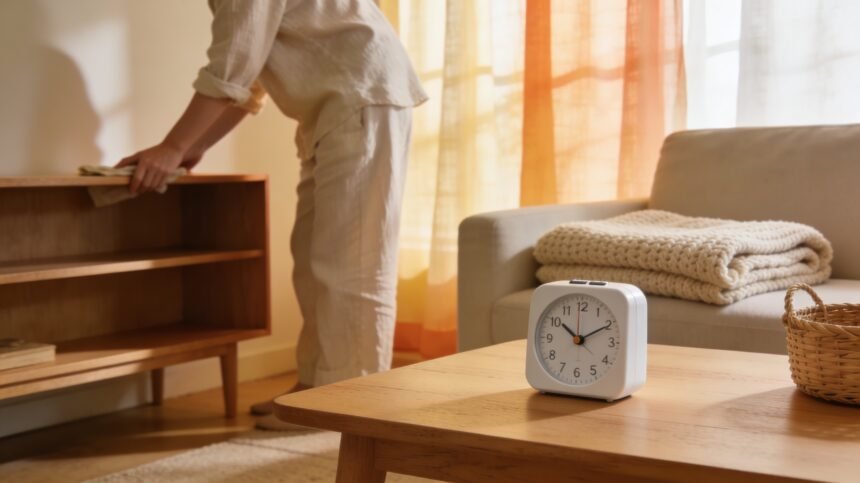
Some days the sink is full, the counter has three mystery piles, and just looking at it makes you want to close the door and pretend it is not there. That is not laziness. That is a brain running low on the fuel it needs to start.
Dopamine is the chemical your brain releases when it anticipates or receives a reward. When those levels drop, whether from burnout, poor sleep, stress, or neurodivergent wiring, even simple tasks feel enormous. The problem is not your house. The problem is that your brain needs a smaller door to walk through. That is exactly what this strategy is built around.
What Low-Dopamine Cleaning Actually Means
Low-dopamine cleaning is not about doing less. It is about removing the activation cost of getting started. What clutter does to your body and mind is well documented. Mess increases cortisol and anxiety, which makes it even harder to begin. The very thing you need to fix is also the thing making it harder to fix.
The strategy works by stripping the task down until it is so small your brain cannot argue with it. You are not cleaning the house. You are picking up five things. Once you finish those five things, your brain gets a small dopamine release from completing a goal, and that release makes the next five things slightly easier. It is a momentum game, not a willpower game.
Why the Ten-Minute Timer Method Works
Set a timer for ten minutes. Not fifteen. Not thirty. Ten.
When a task has a visible, short endpoint, the brain stops treating it as a threat. You are not committing to a Saturday deep clean. You are committing to ten minutes. A consistent 15-minute daily cleaning routine built over weeks will always beat one exhausting marathon session, and the same logic applies here at an even smaller scale.
When the timer starts, pick one surface or one zone. Kitchen counter. Coffee table. The spot by the front door. Work only in that zone until the timer stops. When it goes off, you are done. If you feel like continuing, great. If you do not, you still won.
This is where most people get it wrong. They set a timer, feel guilty when it rings, and keep going anyway. That trains the brain to distrust the system. Honor the ten minutes. Stop when it ends. The trust you build with yourself matters more than the three extra dishes you could have washed.
Building Sensory-Neutral Zones
A sensory-neutral zone is any area of your home with minimal visual noise. No stacks of mail, no random objects waiting to find a home, no layered clutter. It does not have to be large. A cleared nightstand, one clean section of kitchen counter, or a single shelf can serve as your anchor.
Visual chaos pulls on your attention constantly, even when you are not looking directly at it. A sensory-neutral zone gives your brain one place to rest. When everything around you feels like noise, that one quiet corner becomes the spot you return to mentally throughout the day.
Start by choosing one spot in your main living space. Clear only that spot and keep it clear for a week. Once your brain sees it holding, it starts associating the home with peace instead of dread, and the motivation to extend that feeling begins to grow on its own.
The Micro-Win Framework
Here is how the micro-win system works in practice:
- Start visible: Grab anything off the floor of the main room and put it away or toss it in a doom pile basket to sort later
- Move in one direction: Work left to right or clockwise around the room so your brain is not spending energy deciding where to look next
- Touch only what you can handle: If something needs a decision, drop it in the basket and keep moving
- Reset one surface completely: Even if the rest of the room is untouched, one fully cleared surface is a real win
- Name the finish: Actually say to yourself, out loud if you can, “I finished that.” Your brain needs the signal to log it as a reward
The goal is never a spotless home. The goal is a slightly better home than you started with, and a brain that starts associating cleaning with relief instead of punishment.
What to Do on the Lowest Days
On the hardest days, even a ten-minute timer can feel like too much. On those days, do a three-task reset instead. Pick exactly three things to put away. A mug back to the kitchen. A jacket to the hook. A throw blanket back to the couch. That is it.
A five-minute evening reset done consistently does far more for your home than a once-a-month deep clean. When you are running on empty, smaller systems always win. On nights when sensory overload hits before you can even think, this overstimulated mom evening reset is worth bookmarking. It is built for the nights when your bandwidth is genuinely at zero.
Keeping background maintenance low also helps carry the load. An ADHD-friendly laundry system and a simple dishwasher habit can quietly hold the functional parts of your home together so the visible spaces stay manageable without constant effort.
Keeping the System Going
The biggest mistake is treating the low-dopamine strategy as a rescue plan rather than a daily rhythm. You clean once, feel relief, and then let things drift back until the next breakdown.
A few habits that keep it running steadily:
- Keep your cleaning supplies organized and visible so there is no friction between the decision to clean and actually starting
- Run a ten-minute sweep each evening before you sit down for the night
- Use a real morning reset on overwhelmed days before things spiral too far
- Once a month, walk through the cleaning tasks most people forget so small maintenance never grows into a big project
- When you are ready to go room by room, the one-room-at-a-time declutter method keeps the scope manageable so you never have to think about the whole house at once
If you want to build out the full approach and have a structure to follow week by week, The Broke Mom’s 30-Day Home Reset Guide lays it out in a simple, doable format.
A Note for Neurodivergent Brains
If you have ADHD, depression, chronic fatigue, or any condition that affects how your brain regulates dopamine, this is not just a cleaning strategy. It is a way of working with your brain instead of fighting it.
Traditional cleaning advice assumes your brain fires like everyone else’s. It does not, and that is not a flaw to fix. It is just a starting point that calls for different tools. Understanding your low energy evening rhythm and building systems around it rather than against it changes everything over time.
If you have ever felt like nobody ever actually taught you how to do this in a way that stuck, When You Were Never Taught to Clean is a step-by-step guide with no judgment and no perfectionism required. It starts where you are, not where you think you should be.
The house does not need to be spotless. It just needs to feel like yours again.