







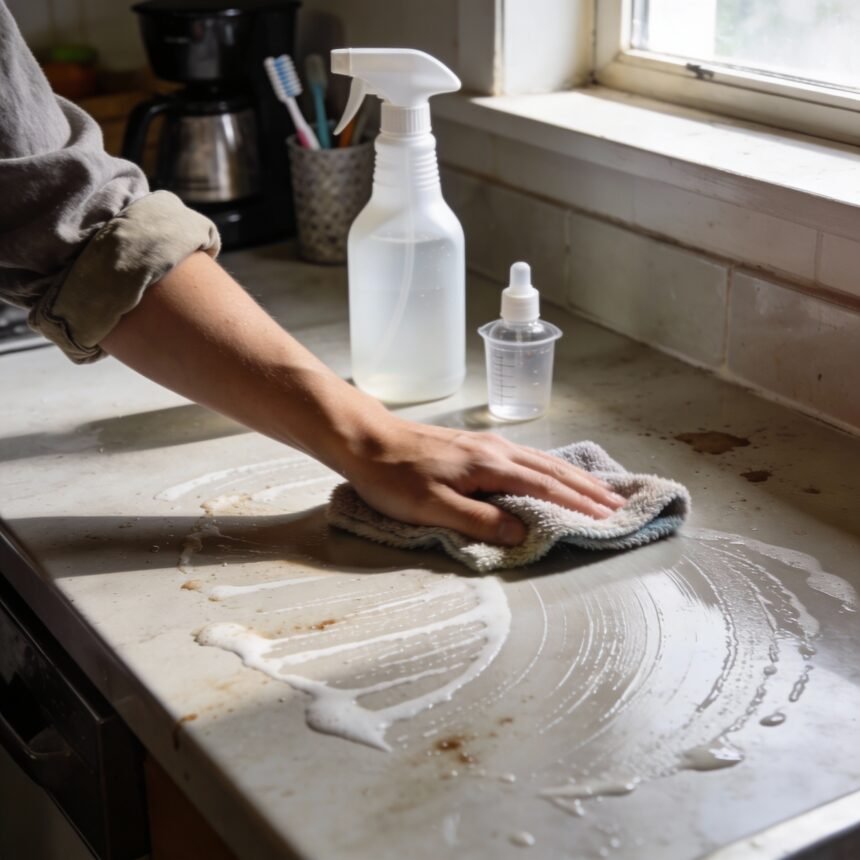
Your kitchen counter feels sticky an hour after you clean it. Your floors look cloudy no matter how much you mop. Your bathroom sink has this weird film on it that wasn’t there before you cleaned.
- The Sticky Residue Problem
- How Much You Actually Need
- The Spray And Walk Away Method
- The Money I Was Wasting
- What Actually Gets Things Clean
- The Surfaces That Show This The Most
- How To Actually Clean Without Over-Using Product
- Teaching My Kids To Not Drown Everything In Cleaner
- The Products Where This Matters Most
- The Exception: Really Tough Grime
- What I Wish Someone Had Told Me
- The Quick Version
This was my life for years and I thought I just sucked at cleaning. Turns out I didn’t suck at cleaning. I was using way too much cleaning product and it was leaving residue that made surfaces look worse and attract more dirt.
The bottle says use one capful. I was using three or four because surely more cleaner means cleaner surfaces, right? Wrong. More cleaner means more sticky residue left behind when it dries. That residue looks cloudy or filmy, and it attracts dust and dirt way faster than a properly cleaned surface.
Once I figured this out and started using the actual recommended amount of cleaner, everything got cleaner and stayed cleaner longer. I was also spending way less money on cleaning products because they lasted three times longer.
Here’s what I learned about how much cleaner you actually need and why less really is more.
The Sticky Residue Problem
When you use too much cleaner, it’s really hard to rinse or wipe it all away. The excess cleaner dries on the surface and leaves a residue. That residue feels slightly sticky or filmy depending on what cleaner you used.
Sticky surfaces attract dirt and dust. So you clean something, it leaves residue, the residue attracts new dirt, and the surface looks dirty again within hours. Then you clean it again with even more cleaner thinking that’ll help, but you’re just making the problem worse.
This was especially bad with my floors. I was using way too much floor cleaner in the mop water. The floors would dry with this haze on them and then footprints and dirt would show up immediately. I thought our floors were just cursed or we were exceptionally dirty people.
Nope. I was leaving soap residue on the floor that was attracting and holding onto every speck of dirt that touched it. Once I started using barely any floor cleaner, just a tiny squirt in a whole bucket of water, the floors actually looked clean and stayed clean way longer.
How Much You Actually Need
Most cleaning products are super concentrated now. You need way less than you think.
For spray cleaners, one or two spritz on a surface is enough. Not five or six sprays coating the entire counter. Just one spray and wipe it around to cover the area you’re cleaning.
For products you dilute like floor cleaner, follow the bottle instructions exactly. Usually it’s something like one or two tablespoons per gallon of water. Not a big glug of cleaner. Like actually measure it.
For dish soap, a drop the size of a dime is enough to wash a whole sink full of dishes. You don’t need to squirt a bunch under the running water to make giant suds. That’s wasting soap and making it harder to rinse off.
Laundry detergent, same thing. The cap has fill lines for a reason. Using more doesn’t get your clothes cleaner. It just leaves detergent residue in the fabric and potentially damages your washing machine over time.
I started actually measuring and following the instructions and I’m using probably one-third the amount of cleaning products I was using before. Everything is cleaner and the products last way longer.
The Spray And Walk Away Method
The other mistake I was making was spraying cleaner and immediately wiping. The cleaner needs time to actually work. It has to sit on the surface and break down the dirt and grime before you wipe it away.
Most cleaners need at least 30 seconds to a minute of contact time. Some need several minutes for tough stuff. If you spray and immediately wipe, you’re just smearing dirt around with a wet cloth. The cleaner didn’t have time to do its job.
Now I spray surfaces and then go do something else for a minute. Spray the bathroom counter, go start the laundry. Come back and wipe the counter. It’s way cleaner with way less scrubbing because the cleaner had time to work.
This is called dwell time and it matters. Read the bottle. A lot of products specifically say let it sit for X minutes. Actually do that.
For tough stuff like soap scum in the shower, I spray it before I get in the shower. By the time I’m done showering, the cleaner has been sitting for 10 minutes and the soap scum wipes right off. No scrubbing required.
If you’re trying to make your cleaning routine more efficient overall, check out the 15 minute cleaning routine. Same concept of working smarter not harder.
The Money I Was Wasting
Cleaning products are expensive. A bottle of all-purpose cleaner costs $4 to $6. Floor cleaner is $5 to $8. Laundry detergent is $10 to $20. That adds up fast, especially if you’re going through it three times faster than necessary.
When I was using three times the recommended amount, I was buying cleaning products constantly. Floor cleaner lasted maybe a month. All-purpose cleaner lasted two or three weeks. Laundry detergent disappeared insanely fast.
Now that I’m using the actual recommended amounts, products last three times longer. Floor cleaner lasts two to three months. All-purpose cleaner lasts a month or more. Laundry detergent lasts way longer than it used to.
I’m probably saving $20 to $30 a month just on cleaning products by using the right amount instead of overdoing it. That’s $240 to $360 a year. Real money.
If you’re trying to cut spending in general, little things like this add up. Check out stop Amazon spending spiral for more ways to plug money leaks.
What Actually Gets Things Clean
Cleaner is only part of the equation. The physical action of wiping or scrubbing is what actually removes dirt. The cleaner just helps break it down so it’s easier to wipe away.
Using more cleaner doesn’t replace elbow grease. You still have to actually wipe surfaces thoroughly. But using the right amount of cleaner plus good wiping technique gets things way cleaner than drowning surfaces in product and barely wiping.
For most surfaces, spray lightly, let it sit a minute, then wipe with a clean cloth using some pressure. That’s it. That gets things clean.
For floors, use way less cleaner than you think, mop thoroughly, and if you can rinse with clean water after that’s even better. Gets rid of any residue.
For dishes, a tiny bit of soap plus hot water plus actual scrubbing. The soap helps but it’s the hot water and scrubbing that really clean the dishes.
The cleaning product is a tool to make cleaning easier. It’s not magic. You still have to do the actual cleaning part.
The Surfaces That Show This The Most
Floors are where you notice too much cleaner the most. That cloudy hazy look is almost always from product residue. Especially on tile or laminate floors.
Glass and mirrors too. If you spray too much glass cleaner, it leaves streaks when it dries. One light spray and wipe with a microfiber cloth gets it streak-free. Drenching it in cleaner makes it worse.
Kitchen counters, especially if they’re stone or quartz. Too much cleaner leaves a film that makes them look dull instead of shiny. A damp cloth with barely any cleaner is all you need for daily wiping.
Stainless steel appliances. Too much cleaner shows up as streaks and spots. A tiny bit of product on a cloth buffed in the direction of the grain makes them shine.
Basically any smooth hard surface shows product residue really obviously. You can get away with more cleaner on rough textured surfaces, but even then it’s wasteful and unnecessary.
How To Actually Clean Without Over-Using Product
For daily surface cleaning, I mostly just use a damp microfiber cloth now with no cleaner at all. For kitchen counters after cooking, bathroom counter after getting ready, wiping down appliances, a damp cloth gets the surface clean without any product.
I only use actual cleaner for surfaces that are genuinely dirty or greasy. And even then, just a tiny amount.
For floors, I mostly dry mop or vacuum and only actually mop with cleaner maybe once a week or when they’re really dirty. The daily dry cleaning keeps them clean enough that they don’t need constant mopping.
For bathrooms, I spray cleaner on the surfaces that actually need it like the toilet and sink, let it sit a minute, wipe thoroughly. That’s enough. I don’t need to spray everything with cleaner every time.
Using less cleaner more strategically gets things just as clean with way less product waste and way less residue buildup.
If you’re building a cleaning routine from scratch, check out how to clean when nobody taught you. Covers all the basics without overcomplicating it.
Teaching My Kids To Not Drown Everything In Cleaner
My kids are at the age where they’re helping with chores and their instinct is to use a ton of cleaner because more must be better, right?
So I’ve been teaching them to use just a little. One spray. A tiny squirt. A small amount. And showing them that it works just as well as drowning something in product.
They’re learning that cleaning isn’t about using as much cleaner as possible. It’s about using the right amount plus actually wiping thoroughly. The wiping matters more than the amount of product.
This is saving money and also teaching them not to be wasteful with products in general. If you can clean something with a little bit of cleaner, why use a lot? Makes no sense.
The Products Where This Matters Most
Laundry detergent is a big one. Modern detergents are super concentrated. You really don’t need much. The cap has lines for a reason. Using more can actually make your clothes dingy over time from residue buildup.
Dish soap is another one where people way overuse. You don’t need a ton of suds to clean dishes. A tiny drop is plenty.
Floor cleaner people tend to really overdo. The bucket water shouldn’t be super soapy. It should look like barely tinted water. That’s enough cleaner.
All-purpose spray cleaners people tend to overspray. One or two sprays covers a pretty large area. You don’t need to drench surfaces.
These are the products where I was wasting the most money and causing the most residue problems. Fixing how I used these made the biggest difference.
The Exception: Really Tough Grime
There are times when you do need more cleaner or stronger cleaner. Baked-on grease in the oven. Really dirty grout. Soap scum that’s been building up for months.
For tough jobs, you might need to apply cleaner more generously and let it sit longer. Maybe even apply it twice. That’s fine. That’s different from using three times the recommended amount on already-clean surfaces for daily cleaning.
But even for tough jobs, letting the cleaner sit and do its work matters more than just using massive amounts of product. Spray it on thick, let it sit 10 minutes, spray again if needed, then scrub. That’s more effective than drowning something in cleaner and scrubbing immediately.
For really tough cleaning jobs, check out grout cleaning hack saved 500 bathroom renovation. Sometimes you need specialized approaches for specific problems.
What I Wish Someone Had Told Me
I wish someone had explained that cleaning products are designed to work at specific concentrations. The recommended amount on the bottle isn’t a minimum suggestion. It’s actually the optimal amount for that product to clean effectively without leaving residue.
Using more doesn’t make it work better. It makes it work worse and costs you more money.
I also wish I’d known about dwell time sooner. I wasted so much time scrubbing things that would’ve come clean easily if I’d just let the cleaner sit for a minute first.
And I wish I’d known that a lot of everyday cleaning doesn’t need cleaner at all. A damp cloth handles most daily surface wiping perfectly fine. Save the actual cleaners for when you really need them.
The Quick Version
Use less cleaner than you think you need. Follow the bottle instructions exactly. Let it sit before wiping. Wipe thoroughly.
That’s it. You’ll have cleaner surfaces that stay cleaner longer, you’ll spend less money on products, and you’ll have less residue buildup causing problems.
This is one of those things that seems too simple to matter but it made a noticeable difference in how clean our house actually is and how much I spend on cleaning supplies every month.










Have you ever realized that less is more with cleaning products? Check out this surprising tip! #CleaningHacks #HomeTips #CozyCornerDaily