





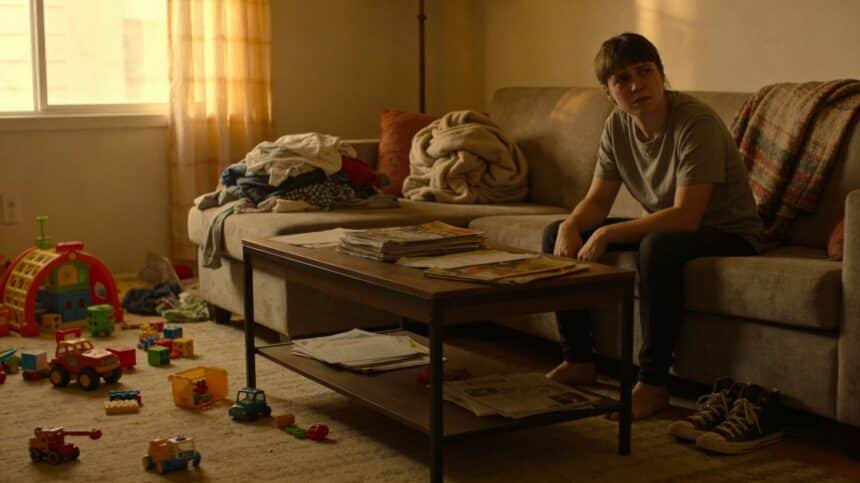
What clutter does to your body and mind is something most people feel but never name. You walk into a cluttered room and something shifts. Your jaw tightens a little. Your shoulders don’t quite drop the way they do in a calm space. You sit down to relax and somehow can’t actually relax because the pile in the corner keeps pulling at your attention even when you’re not looking directly at it. That’s not weakness or sensitivity. That’s your nervous system doing exactly what it’s designed to do, which is scan the environment for things that need to be addressed. A cluttered environment gives it too many things to scan and nowhere to land.
The body keeps score on this in ways that are measurable. Cortisol, the primary stress hormone, is elevated in people who describe their homes as cluttered or unfinished compared to those who describe their spaces as restful. That’s not a metaphor. It’s a physiological response to visual overload. A home that feels like a to-do list in physical form keeps the body in a low-grade stress state even during hours meant for rest. Over time, that low-grade stress contributes to sleep disruption, appetite changes, difficulty concentrating, and a general sense of being behind on everything even when the actual task list is manageable.
Sleep is one of the most direct casualties of a cluttered environment, particularly bedroom clutter. The bedroom is supposed to signal the brain that rest is possible, that the day is done and the body can downregulate. When the bedroom is full of things that haven’t been dealt with, clothes that need to be put away, papers from last month, items that somehow migrated from other rooms, the brain receives conflicting signals at the exact time it most needs clarity. Research consistently shows that people who sleep in cluttered rooms take longer to fall asleep and report lower sleep quality than those who sleep in organized spaces. It’s not the stuff itself that keeps you awake. It’s what the stuff represents. Unfinished business. Decisions that haven’t been made. A backlog your brain can see even with your eyes closed.
Decision fatigue is a real phenomenon and clutter amplifies it dramatically. Every item in your visual field is a micro-decision waiting to happen. Where does this go? Should I keep it? When am I going to deal with that? When a home is cluttered, the brain is processing hundreds of these micro-decisions constantly in the background, and that processing drains the cognitive resources that should be available for the decisions that actually matter, like what to make for dinner, how to handle a difficult conversation with a teenager, or whether a work decision is the right call. This is part of why people who live in cluttered homes often report feeling mentally foggy or overwhelmed without a clear reason. The reason is background cognitive load, and it’s exhausting in a way that’s hard to trace without understanding what’s driving it.
The link between clutter and anxiety is particularly strong in parents, and mothers specifically report higher stress levels in cluttered home environments than fathers, which connects to the well-documented reality of the mental load being distributed unevenly in most households. When one person in the household carries the majority of awareness about what needs to be done, including what’s cluttered, what needs to be organized, and what’s been neglected, that person’s nervous system operates under a sustained cognitive load that doesn’t switch off just because the workday ended. If this is a familiar dynamic, sharing the mental load of home repairs and household tasks addresses the structural side of this rather than just the symptom. Because clearing the clutter helps, but so does not being the only one who sees it.
Children are affected by household clutter in ways parents often don’t connect to behavior. Kids who grow up in chronically cluttered homes show higher baseline anxiety, more difficulty self-regulating, and greater challenges with focus compared to kids in organized environments. This doesn’t mean a perfectly sterile house, it means a home where things generally have places and the environment doesn’t feel chaotic as a default state. Kids absorb the stress of their environment in a way that is real and measurable, and the behavior that looks like defiance or inattentiveness is sometimes just a child whose nervous system is perpetually overstimulated by visual chaos. If your child’s anxiety has been a concern lately, understanding what’s normal versus what needs attention is worth reading alongside addressing the physical environment, because both matter.
The relationship between clutter and eating habits is less obvious but consistent. Chaotic environments tend to produce chaotic eating. People in cluttered kitchens eat more, choose less nutritious options, and snack more impulsively than people in organized kitchen spaces. Part of this is the decision fatigue effect. When the environment is already overwhelming, the brain reaches for easy, comforting choices rather than deliberate, healthy ones. The kitchen cleaning routine that turned a disaster-zone kitchen around matters for reasons that go beyond aesthetics. The state of the kitchen affects what you cook in it and what you grab out of it when you’re tired and not thinking carefully.
Financial behavior is also shaped by clutter in ways that most people never connect. Clutter costs real money, not just in the things bought and never used, but in the things repurchased because you couldn’t find what you already owned. In the late fees from bills that got buried. In the items damaged because they weren’t stored properly. What clutter is actually costing you financially is one of those reads that reframes the whole conversation from aesthetics to economics, and the numbers are uncomfortable in the most clarifying way.
The physical effects don’t stop at cortisol and sleep quality. Dust accumulates faster in cluttered spaces because there are more surfaces for it to settle on and fewer clear paths for air to circulate. For anyone with allergies, asthma, or kids who are prone to respiratory issues, a cluttered home is literally harder to breathe in. Mold risk increases in areas where clutter prevents proper ventilation or traps moisture. Pests find cluttered spaces more hospitable because there are more undisturbed areas to nest. These are practical health consequences, not just aesthetic complaints.
Here’s what’s interesting about addressing clutter: the psychological benefits kick in faster than most people expect. Even one cleared surface in a frequently used room produces a measurable sense of calm and control. It’s not about achieving a magazine-spread home. It’s about reducing the amount of unresolved visual information your brain is processing at any given moment. Start small. What to declutter first for the biggest visual and emotional impact identifies the high-leverage spots, meaning the places where clearing creates the most immediate shift in how a room feels.
The 5-day declutter challenge is the practical entry point if you want a structured approach that doesn’t require gutting your entire house in a single overwhelming session. Twenty minutes a day over five days, in a specific sequence, with the highest-impact rooms first. The mental shift that follows the physical clearing is real and it happens faster than most people expect. And if the whole thing feels too big to start because the house has gotten to the point where the overwhelm is genuine, how to start decluttering when you’re completely overwhelmed is the right first read before anything else.
The body responds to the environment it lives in. That’s not philosophy. That’s physiology. A calmer space produces a calmer nervous system, which produces clearer thinking, better sleep, lower stress eating, and more energy for the things that actually matter. The clutter isn’t just a visual problem. It’s a health issue wearing a home organization costume. And it’s one of the few health issues you can start addressing tonight with nothing more than a trash bag and twenty minutes.