







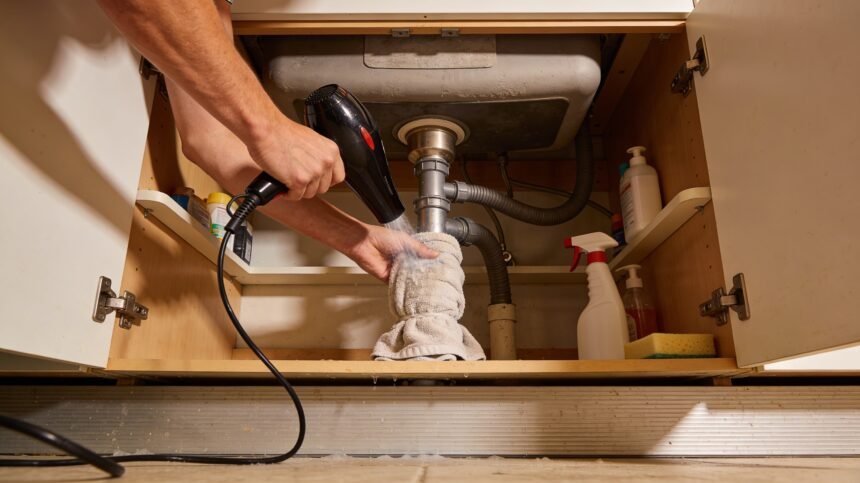
Frozen pipes are one of those problems that go from “fine” to “disaster” fast
Most pipe disasters happen right after the freeze, when things start thawing and pressure finds the weakest spot. So if you suspect a frozen pipe, speed matters, but panic does not.
Step 1: Confirm it’s frozen
Signs:
- Only a trickle comes out of one faucet
- No water in one area, but the rest of the house works
- Visible frost on a pipe (rare indoors, but it happens)
Step 2: Keep the faucet slightly open
This sounds backwards, but it helps. Running water relieves pressure and makes thawing safer.
Step 3: Find the freeze point
Common spots:
- Under kitchen sinks on exterior walls
- Garage wall pipes
- Crawl spaces
- Basement rim joists
While you’re here, link to your draft test because drafts and pipe freezing are cousins:
Step 4: Thaw safely
Use:
- Hair dryer (slow and steady)
- Heating pad
- Warm towels you keep swapping
Avoid open flame. No torch. No heat gun blasting full power. Your future self will thank you.
Step 5: Watch for leaks as it thaws
This is the moment a hidden crack reveals itself. Keep an eye out and be ready to shut off the water.
Step 6: Prevention that actually works
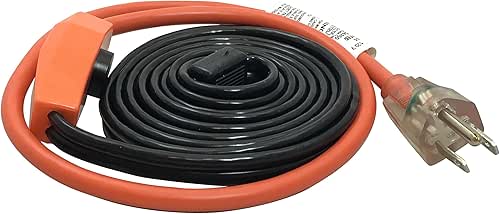
If your area gets hard freezes, a pipe heat cable can be a solid preventative option for the right situations. Example: Frost King heat cable kit.

energy bill reset easy cuts that work
FAQs
Should I shut off the main water if a pipe is frozen?
If you see active leaking, yes. If not, keep the faucet open and thaw first while monitoring.
How long does thawing take?
It depends, but usually 10 to 60 minutes if you’re applying steady heat.
Are heat cables safe?
They can be when installed per instructions. Never run them inside walls.












Have you ever dealt with a frozen pipe? Check out this guide to stay calm and ready! #HomeTips #WinterPrep #CozyCornerDaily