






There are days when cooking is not going to happen. Not because you don’t care about eating well. Not because you’re being lazy. Because the day used up everything, and the idea of standing at a stove making decisions about timing and heat and whether the protein is cooked through is genuinely beyond what’s available right now. These days happen to everyone. They happen more often in households managing chronic stress, ADHD, neurodivergent children, demanding work, or any combination of the above. And the most useful thing you can do about them is stop treating them as failures and start treating them as a meal planning category that deserves its own system.
Most households have a dinner fallback position. For a lot of families it’s delivery, which is expensive and takes 40 minutes. For others it’s cereal or toast, which handles hunger but not much else. The emergency meal plan replaces both of those defaults with something that costs almost nothing per serving, takes under three minutes to assemble, requires no heat, no dishes, no decision-making beyond opening a few containers, and is actually nutritionally solid enough to function as a real meal.
The system has two parts. The first is a dedicated zero-effort bin, a specific container or shelf section in the pantry that holds only emergency meal components. Not general pantry items. A curated collection of things specifically chosen for no-cook, low-friction assembly. Having this bin be a named, specific thing in your pantry means that on a depleted evening you’re not scanning shelves trying to improvise from ingredients meant for other purposes. You go to the bin. Everything in the bin is a valid dinner option. The decision is already made.
What goes in the bin is the second part, and it’s worth thinking about carefully rather than just stocking it randomly. The items need to meet a few requirements: shelf stable or at least lasting long enough to be reliably available, edible without cooking, containing enough protein to be satisfying, and texturally acceptable on a low-sensory day. That last criterion matters more than it sounds. If someone in the household is sensory-sensitive, a meal that’s technically adequate but texturally unpleasant creates a new problem on a day that already had too many of them.
Canned fish is one of the highest-value items in this category and one of the most underused. Canned salmon, tuna, sardines, and mackerel are shelf stable, high in protein, and require nothing more than opening a tin. Sardines in olive oil in particular are complete nutrition in a pull-tab can: protein, healthy fats, and omega-3s in about 90 seconds. For households where canned fish is met with resistance, quality matters: the mid-to-upper range canned options taste noticeably different from the cheapest available and are worth the small price difference when they’re going to be eaten as-is with no masking flavors from cooking.
Hard-boiled eggs that were prepped earlier in the week and stored in the fridge, or individual packs of string cheese, work as fast protein additions that require nothing. Individual nut butter packets are useful when even a jar feels like too many steps. A small can of white beans drained and eaten with olive oil, salt, and whatever spice is nearby is a complete protein source in three minutes. Single-serve guacamole cups, which are stable unopened for weeks, add fat and calories that make the assembly feel more like a meal. The stock the pantry guide for busy families covers the broader pantry strategy, and the emergency meal bin is one of the highest-priority sections within it.
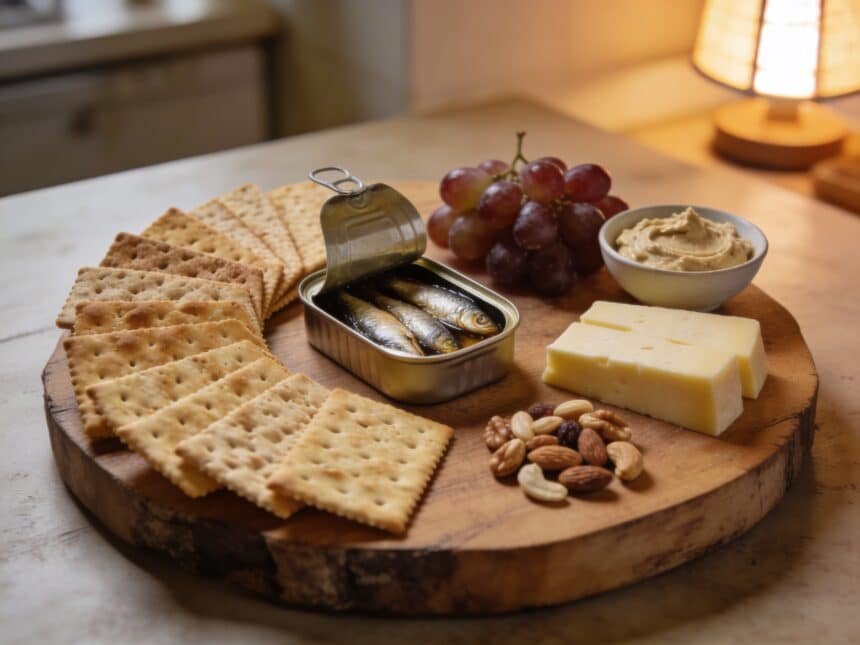
The assembly format that works best for no-cook emergency meals is the board or the bowl. Not a plated dinner. Not something that requires arranging. A board is just a cutting board or a large flat plate where items are placed next to each other without precise organization. Crackers, cheese, canned fish or beans, a handful of pre-washed grapes or cherry tomatoes from the fridge, a few nuts, a spoonful of hummus. Nothing overlaps intentionally. Nothing needs to look like anything. For families with children, boards tend to get eaten more readily than formal plates because they look less like “dinner” and more like a spread of options, which reduces the resistance from kids who are also depleted and looking for control over at least one thing that evening.
The bowl version works for more liquid-comfortable components. A scoop of canned chickpeas over pre-washed baby spinach with olive oil and lemon juice squeezed from a plastic bottle. Canned lentil soup heated for 90 seconds in the microwave, because that actually counts as an emergency option if it’s in the bin ready to go. A container of cottage cheese with sliced fruit and a handful of granola. These aren’t elaborate. They’re adequate, calorie-sufficient, and achievable. That’s the job on an emergency day.
Keeping the bin genuinely stocked is the maintenance piece that most people forget. The bin only works if it has things in it. After each emergency meal usage, the items used get added to the next grocery list. This is best done immediately, either with a note app or a list on the fridge, rather than trying to remember later. The grocery strategy that saves money without going boring includes restocking staples as a consistent grocery list habit, and the emergency bin restocking belongs on the same list at the same frequency.
For households with ADHD, the specific placement of the bin matters as much as its contents. It needs to be visible when you open the pantry, not behind other items. Eye level is ideal. If you have to move something to get to the emergency bin, it will not function as an emergency resource in the moments when it’s most needed, because moving things requires a decision and decisions are scarce. Label it clearly: “Emergency Meals” or “No-Cook Bin” or whatever plain language makes its purpose obvious at a glance. The label is not for organizational aesthetics. It’s so that a brain running on empty doesn’t have to figure out what it’s looking at.
Pre-washed greens in the fridge are the bridge between the pantry bin and a full no-cook plate. A bag of arugula, pre-washed spinach, or a spring mix that’s ready to pour directly into a bowl adds volume, fiber, and nutrition to any emergency assembly with zero effort. Pairing shelf-stable protein from the bin with ready-to-eat greens from the fridge produces a genuinely complete meal in under three minutes. If greens aren’t reliably in the fridge, individually packaged salad kits with dressing included are a reasonable alternative that require no dressing decision and no washing. They cost more per serving than a bag of loose greens, but the zero-friction factor earns that premium on the nights they’re needed.
The emergency meal plan is not about giving up on real cooking. It’s about having a real alternative to delivery on the nights when real cooking isn’t on the table, literally or figuratively. A family that has a stocked zero-effort bin spends less on takeout, eats better on depleted evenings, and removes one significant source of guilt from the days that are already hard enough. The no-cook meal habits connected to ADHD meal planning frame this not as a backup plan but as a permanent feature of a functional household kitchen. That framing matters. If the emergency bin is part of the plan, using it isn’t failing. It’s the plan working exactly as designed.










What’s your go-to no-cook meal? Check out these quick ideas! #NoCookMeals #MealPrep #CozyCornerDaily