






I Tried Learning A New Skill At 35 And Here’s What Actually Worked
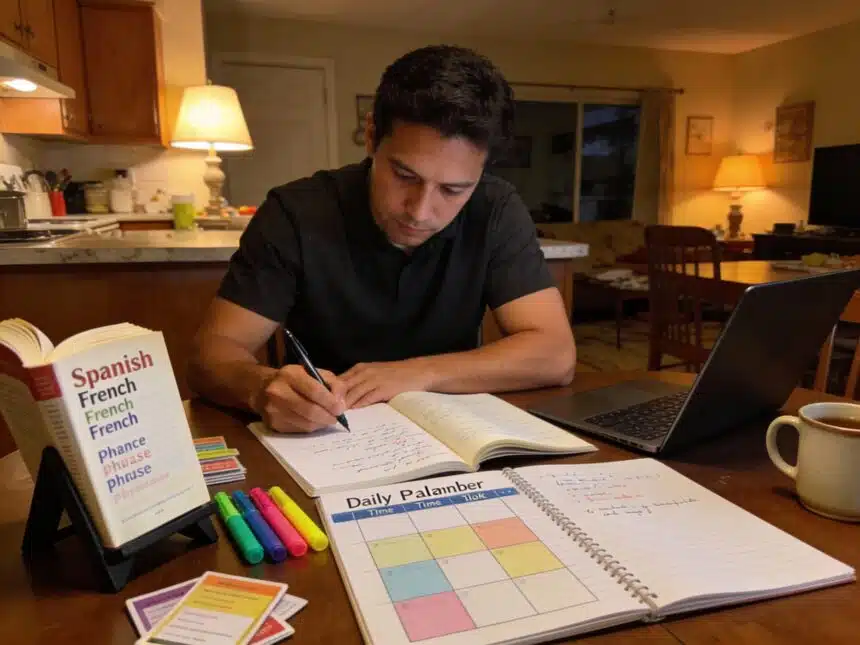
I decided to learn conversational Spanish at 35 years old.
- I Tried Learning A New Skill At 35 And Here’s What Actually Worked
- The Opinion I’m Standing On
- Why Most Adult Learning Fails (And It’s Not You)
- Step 1: Pick One Skill And Get Stupidly Specific
- Step 2: Schedule It Like A Doctor’s Appointment
- Step 3: Use The Pomodoro Method (It’s Not Just For Work)
- Step 4: Active Learning Beats Passive Every Time
- Step 5: Learn In Context, Not Isolation
- Step 6: Embrace The Plateau And Keep Going Anyway
- What I Learned About Learning From “Ultralearning”
- The Tools That Actually Helped
- How This Applies To Any Skill You Want To Learn
- What I’d Do Differently Next Time
- You Are Not Too Old And It Is Not Too Late
- The Bottom Line
Not because I needed it for work. Not because I was planning a trip. Just because I was tired of feeling like my brain had stopped growing the day I left college.
Everyone told me it would be harder now. Your brain isn’t as flexible. You don’t have time. Adults can’t pick up languages like kids can.
They were half right. It was harder. But not for the reasons I expected.
The hard part wasn’t my age or my brain. The hard part was unlearning all the terrible study habits I picked up in school and figuring out what actually works when you are juggling a job, a family, and approximately 47 other responsibilities.
Here is what I learned about learning when you are not 22 anymore.
The Opinion I’m Standing On
I think we have been lied to about adult learning.
The idea that “you can’t teach an old dog new tricks” is garbage. Research on adult learning shows that adults can absolutely learn new skills, sometimes even better than younger learners, because we have context, motivation, and life experience to connect new information to.
What we lack is not ability. What we lack is time, energy, and systems that fit our actual lives.
You are not too old. You are not too busy. You just need a different approach than the one that worked when you were 19 and could pull all-nighters fueled by ramen and poor decisions.
Why Most Adult Learning Fails (And It’s Not You)
Most people quit learning new skills not because they are bad at it, but because they set themselves up wrong from the start.
They pick something huge and vague. “I want to learn Spanish.” Okay, but what does that mean? Conversational? Reading? Business fluency? That is like saying “I want to get in shape” without defining what shape looks like.
They try to learn the way they did in school. Textbooks. Memorization. Hours of passive reading. That might have worked when you had three hours between classes and nothing else to do. It does not work when you have 30 minutes before the kids get home.
They expect linear progress. In school, you move from chapter 1 to chapter 2 in order. Real learning is messy. You get better, then plateau, then suddenly click, then forget half of it, then it comes back. That is normal.
Once I accepted that my learning would look different than it did at 20, everything got easier.
Step 1: Pick One Skill And Get Stupidly Specific
Do not try to “learn Spanish.” Pick one tiny, specific goal.
“Order food in Spanish without pointing at the menu.”
“Have a five minute conversation about my day.”
“Read a children’s book in Spanish without looking up every word.”
Specificity gives you a finish line. Vague goals give you endless wandering.
I picked “hold a 10 minute conversation about daily life topics.” That was it. Not fluency. Not perfect grammar. Just functional conversation.
When I started, I grabbed this Easy Spanish phrase book because I did not want a 400 page textbook. I wanted the most common phrases I would actually use. Done. Simple.
If you are learning French instead, the French version is just as practical. Small book. Big results.
Step 2: Schedule It Like A Doctor’s Appointment
Here is the uncomfortable truth. If it is not on your calendar, it will not happen.
You will not “find time” to practice. Time does not appear. You have to take it from something else.
I blocked 25 minutes every morning at 6am before anyone else woke up. Not an hour. Not “whenever I have time.” 25 minutes. Non-negotiable.
Some days I was tired. Some days I wanted to scroll my phone instead. But the appointment was there, so I showed up.
Same strategy I used when I started my side business. If it’s not scheduled, it doesn’t exist.
I started using this daily productivity planner to actually block the time and track whether I stuck to it. Seeing the streak build became weirdly motivating. Missing a day felt like breaking a promise to myself.
Research on habit formation shows that consistency beats intensity every time. 25 minutes daily is better than three hours on Sunday that you end up skipping half the time.
Step 3: Use The Pomodoro Method (It’s Not Just For Work)
If you have never heard of the Pomodoro Technique, it is simple. Work for 25 minutes. Break for 5 minutes. Repeat.
This changed everything for my learning.
Instead of vague “study sessions” that dragged on while I checked my phone every three minutes, I had a timer. 25 minutes of full focus. Then I was done for that session.
I got this Pomodoro timer so I did not have to think about it. I just rotated it to 25 minutes and worked until it buzzed. No phone timer. No distractions.
Knowing I only had to focus for 25 minutes made starting so much easier. I could do anything for 25 minutes.
Step 4: Active Learning Beats Passive Every Time
Here is what does not work. Reading a textbook for an hour and hoping it sticks.
Here is what does work. Writing, speaking, practicing, and testing yourself immediately.
I learned more Spanish in two weeks of writing out sentences by hand than I did in two months of reading grammar rules.
I picked up this dotted journal just for language practice. Every morning, I wrote five sentences in Spanish about my day yesterday. Did I make mistakes? Constantly. But writing forced my brain to recall, construct, and apply what I learned.
For vocabulary, I used flashcards with pictures instead of just word lists. Visual association made things stick faster. I kept them in my car and flipped through five cards at red lights.
Active learning is harder. It feels slower at first. But the retention is so much better.
Step 5: Learn In Context, Not Isolation
Memorizing vocabulary lists is boring and useless.
Learning words in the context of sentences you would actually say? That works.
Instead of memorizing “dog, cat, house, car,” I learned phrases like “My dog is sleeping on the couch” and “I need to take my car to the shop.”
Context gives you hooks. Your brain remembers stories and situations, not random words floating in space.
When I was studying, I used this book stand to prop up my phrase book so I could write notes while keeping the book open. Sounds small, but it made studying so much more comfortable. I was not hunching over a table holding a book open with one hand.
Step 6: Embrace The Plateau And Keep Going Anyway
Around week four, I hit a wall.
I felt like I was not improving. Every session felt hard. I kept forgetting the same words. I wanted to quit.
This is called a plateau, and every single person learning a new skill hits them. Research on skill acquisition calls this the “OK plateau,” where you are good enough to function but not good enough to feel confident.
The only way through is to keep showing up.
I did not magically break through because I found some secret trick. I broke through because I kept going even when it felt pointless.
Some days I just reviewed old material. Some days I only did 15 minutes instead of 25. But I did not stop.
Consistency beats motivation every time.
What I Learned About Learning From “Ultralearning”
About two months in, I read Ultralearning by Scott Young, and it completely reframed how I was approaching everything.
The big takeaways that changed my approach:
Directness. Practice the thing you actually want to be able to do. If you want to speak, you have to speak. Reading about speaking does not count.
Retrieval. Testing yourself is more effective than reviewing. Close the book and try to recall. That is where learning happens.
Feedback. You need to know when you are wrong, fast. I started using language exchange apps where native speakers corrected me in real time. Brutal but effective.
If you are serious about learning any skill, this book is worth reading. It is not about becoming a genius. It is about learning efficiently when you do not have unlimited time.
The Tools That Actually Helped
I am not going to recommend 47 apps and tools. Here is what I actually used and why.
A dedicated notebook. Not notes on my phone. A physical notebook where I wrote by hand. The act of writing helps memory in a way typing does not.
Highlighters for active reading. When I did read, I used these retractable highlighters to mark key phrases and patterns. It forced me to engage with the material instead of just skimming.
A timer I could trust. The Pomodoro timer I mentioned earlier kept me honest. No negotiating. No “just five more minutes on my phone first.”
A phrase book, not a textbook. I needed practical language I could use tomorrow, not grammar theory I might understand someday.
Flashcards I could carry. Five minutes here and there adds up. Waiting rooms. Coffee shop lines. Before bed.
That is it. No expensive courses. No fancy software subscriptions. Just simple tools used consistently.
How This Applies To Any Skill You Want To Learn
Learning Spanish taught me how to learn anything as an adult.
The same principles apply whether you are learning to code, play guitar, cook, draw, or build furniture.
Or learning to DIY home repairs like installing a handheld shower head. Break it into steps, practice actively, and give yourself permission to mess up.
Start small and specific. Not “learn to code.” Build one specific thing, like “create a simple website for my side project.”
Schedule it. If it is not on the calendar, it is not real.
Practice actively. Do the thing, do not just read about the thing.
Accept the plateau. Feeling stuck is not failure. It is part of the process.
Show up even on bad days. 15 minutes of mediocre effort beats zero minutes of perfect intention.
What I’d Do Differently Next Time
If I started over, I would find a practice partner or tutor from day one. I waited three months before I tried speaking with another human, and that was a mistake. You need feedback. You need to fail in front of someone. That is where real progress happens.
I would also embrace mistakes faster. I spent too much time trying to get sentences perfect before I spoke them. Turns out, native speakers do not care if you mess up verb conjugations. They care that you are trying.
And I would celebrate small wins more. I got so focused on “not being fluent yet” that I did not appreciate that I went from zero Spanish to holding basic conversations in four months. That is not nothing.
You Are Not Too Old And It Is Not Too Late
If you have been putting off learning something because you think you are too old, too busy, or too far behind, I am here to tell you that is fear talking, not reality.
You do not need to become a master. You do not need to quit your job and dedicate your life to this one skill.
You just need 25 minutes a day and a willingness to be bad at something for a while.
That is it.
Same mindset applies if you’re thinking about starting a business on the side. Start small. Build as you go.
Pick one skill. Get specific about what success looks like. Put it on your calendar. Show up. Repeat.
Six months from now, you will either be six months older with a new skill, or six months older wishing you had started today.
Start today.
The Bottom Line
Learning as an adult is not about having more time or a better brain. It is about working with the time and brain you have.
You do not need perfect conditions. You need a plan, a timer, and the guts to be a beginner again.
The hardest part is starting. The second hardest part is not quitting when it gets boring.
But if you can get past those two things, you will be shocked at what you can learn in a year of consistent, focused practice.
You are capable of so much more than you think. You just have to give yourself permission to try.
As an Amazon Associate, I earn from qualifying purchases. This helps support Cozy Corner Daily at no extra cost to you.
For parenting books and resources on this topic, Amazon has a solid selection worth browsing.









What new skill have you tried lately? Check out this inspiring journey! #LifelongLearning #SkillBuilding #CozyCornerDaily