


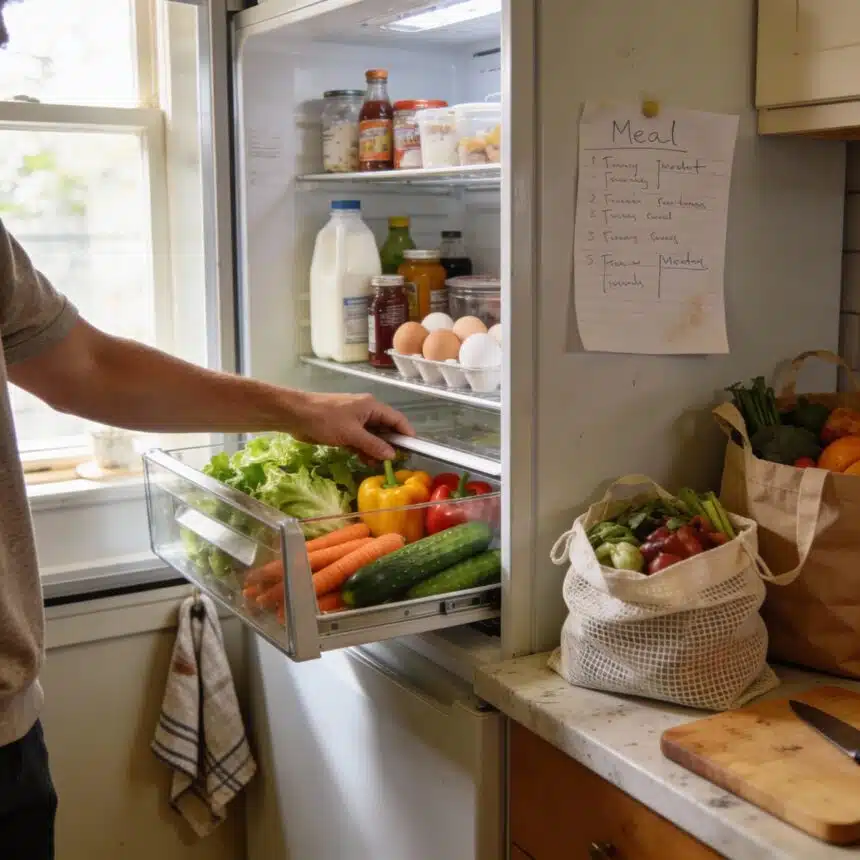
I opened our fridge last April to put away groceries and had to throw away a container of spinach that had turned to slime, half a package of mushrooms that were shriveled and gross, and a bell pepper that was so soft I almost gagged touching it.
- Why We Were Wasting So Much Food
- The Meal Planning Shift That Changed Everything
- The Fridge Organization That Actually Helps
- Using Everything Before Buying More
- Freezing Things Before They Go Bad
- Shopping More Often But Buying Less
- Realistic Portions For Our Actual Family
- What We Do With Leftovers Now
- The Kids And Food Waste
- The Mental Shift About Sales
- Tracking The Progress
- The Budget Impact
- What I Wish I’d Done Sooner
- The Reality Check
This wasn’t unusual. This was every single week. I’d buy groceries with good intentions, some of it would get used, and a bunch of it would go bad before we got to it. Then I’d throw it away and buy more groceries and do the same thing again.
One week I actually tracked what I threw away and calculated what it cost. Fifty-three dollars worth of food went straight in the trash that week. In one week. That’s over $200 a month of groceries that we bought, paid for, brought home, and then literally threw away.
We weren’t even struggling with money at the time. We had enough for groceries. But watching that much money go directly in the garbage started to really bother me. It felt wasteful and dumb and I knew we could do better.
Here’s what I figured out about why we were wasting so much food and what actually worked to stop it.
Why We Were Wasting So Much Food
The main problem was I had no plan. I’d go to the grocery store and buy things that seemed healthy or that looked good or that I vaguely thought we might eat that week. Lots of fresh produce because I wanted us to eat more vegetables. Ingredients for meals I’d seen online. Random stuff.
Then I’d get home and realize I didn’t actually have a plan for when or how we’d eat any of it. The produce would sit in the crisper drawer while we ordered pizza or made pasta because I was too tired to figure out an actual meal. By the time I remembered the vegetables existed, they’d be rotted.
I was also buying too much. I’d see a good sale and think “oh we love strawberries, I’ll get three containers.” But we’re a family of four. We don’t eat three containers of strawberries before they mold. One container, maybe two. Three was wishful thinking.
And I wasn’t using what we already had before buying more. I’d go shopping even though we still had stuff in the fridge and pantry. So things would get pushed to the back, forgotten, and eventually thrown away when I’d find them weeks later.
The whole system was broken. Or really, there was no system. I was just buying food randomly and hoping it would work out. It wasn’t working out.
The Meal Planning Shift That Changed Everything
I know everyone says meal plan, and I’d tried it before and quit because it felt too rigid and complicated. But I finally figured out a version that actually works for us.
Sunday afternoon I sit down with my phone and plan exactly five dinners for the week. Not seven, five. That gives us two buffer nights for leftovers or ordering takeout or eating whatever without feeling like I failed at meal planning.
I look at what we already have in the fridge and pantry first. If we have half a container of mushrooms, I plan a meal that uses mushrooms. If we have chicken in the freezer, that’s going in the plan. This prevents stuff from going bad because I’m actively using what we have instead of letting it sit there.
Then I make a grocery list based only on what I need for those five meals plus breakfast and lunch basics. Nothing extra. No “oh that looks good” impulse purchases. If it’s not on the list for a specific planned meal, I don’t buy it.
This immediately cut our food waste by probably half. Because everything I bought had a purpose and a plan for when we’d use it.
If you want more detail on how I actually do the meal planning, check out I stopped meal planning like Pinterest told me to. That explains the whole system.
The Fridge Organization That Actually Helps
I also reorganized our fridge so I could actually see what we had. Before, things would get shoved to the back and forgotten. Now I can see everything at a glance.
Produce goes in clear containers on the middle shelf where I see it every time I open the fridge. Not in the crisper drawer where it’s out of sight out of mind. The crisper drawers are now for drinks and snacks.
Leftovers go on the top shelf with a piece of masking tape on each container that says what it is and what day I made it. This prevents mystery containers that sit there until they’re scary and also helps me remember to actually eat leftovers before they go bad.
Condiments and stuff that lasts forever go on the door. The stuff that needs to be used quickly stays front and center where I can’t ignore it.
This simple reorganization made a huge difference because I was no longer discovering rotten food I’d forgotten existed. Everything was visible and I knew what needed to be used soon.
If you’re working on organizing other parts of your kitchen too, check out the kitchen cleaning routine. Same principle of making things visible and functional.
Using Everything Before Buying More
I made a rule that we don’t go grocery shopping until we’ve used up most of what we already have. This forces us to get creative with what’s in the fridge and pantry instead of just buying more stuff.
We call it “clearing out the fridge night.” Usually happens Thursday or Friday. I look at what vegetables are getting close to their limit and what leftovers need to be eaten, and I make something with all of it.
Sometimes this results in weird combinations. Leftover rice with random vegetables and whatever protein we have, all mixed together with soy sauce. Not Instagram worthy but it’s edible and it uses up what we have.
My kids complained about this at first because it’s not always their favorite meals. But I explained that we’re not wasting food anymore and this is how we do it. They got used to it. Now they actually help me figure out what to make with the random stuff we have left.
This reduced our grocery spending and our food waste at the same time. We’re buying less because we’re using everything we buy more efficiently.
Freezing Things Before They Go Bad
I finally started actually using our freezer for more than just ice and frozen pizza. If I have produce that’s getting close to going bad and I know we won’t use it in time, it goes in the freezer.
Bananas getting too ripe? Peel them, break them in half, freeze them for smoothies later. Bread getting stale? Freeze it and toast slices as needed. Vegetables that are still good but we’re not going to eat them this week? Chop them up and freeze them for soup or stir fry later.
This isn’t as good as eating everything fresh, but it’s way better than throwing it away. Frozen vegetables are still vegetables. Frozen fruit still works in smoothies. And frozen bread is fine for toast or sandwiches.
I keep freezer bags labeled by what’s in them and the date I froze it. Nothing mysterious. Everything gets used within a couple months so it doesn’t get freezer burn and become garbage anyway.
Shopping More Often But Buying Less
This sounds backwards, but it actually worked better for us to go grocery shopping twice a week instead of once. I buy less each time, which means less food sitting around waiting to be used.
I do a bigger shop on Sunday for the main dinner ingredients and basics. Then I do a smaller shop mid-week, usually Wednesday or Thursday, for fresh produce and anything we ran out of. The produce I buy Wednesday actually gets eaten by the weekend instead of sitting in the fridge for 10 days and going bad.
This only works because there’s a grocery store on my way home from dropping kids at school. If I had to make a special trip it wouldn’t be worth it. But since I’m driving past there anyway, stopping twice a week for smaller shops is actually easier than doing one huge shop.
Your situation might be different. If you live far from a store, shopping twice a week wouldn’t make sense. But the principle of buying smaller amounts more frequently so less stuff goes bad might still apply.
Realistic Portions For Our Actual Family
I was buying food like we were a family who cooks elaborate meals from scratch every night and sits down to proper dinners. We’re not. Some nights we’re eating scrambled eggs and toast because everyone’s tired. Some nights we’re eating leftovers standing at the counter.
Once I accepted that reality, I stopped buying ingredients for complicated recipes we were never going to actually make. I stopped buying bulk amounts of produce that would require daily cooking to use up. I started buying amounts that matched what we realistically eat.
For us, that’s one bag of spinach or lettuce, not three. One package of mushrooms, not two. Enough chicken for two meals, not five. If we run out, I can always buy more. But buying less initially means way less waste.
This required being honest with myself about who we actually are instead of who I wish we were. We’re not people who make fresh vegetable sides every single night. We’re people who make simple meals and eat a lot of fruit and raw veggies as snacks. Buying groceries that match that reality was a game changer.
What We Do With Leftovers Now
Leftover food used to sit in the fridge until it was scary. Now we actually have a system for using leftovers so they don’t go to waste.
Leftovers from dinner become lunch the next day for whoever’s home. My husband takes them to work. I eat them for lunch. The kids eat them after school if they’re still hungry.
If we have leftovers that won’t get eaten as the same meal again, I repurpose them. Leftover roast chicken becomes chicken tacos or chicken fried rice. Leftover vegetables get thrown into scrambled eggs or a quesadilla. Leftover rice becomes fried rice.
Nothing sits in the fridge for more than three days. If it’s been three days and we haven’t eaten it, it either gets repurposed into something else or it gets frozen for later. This prevents the “leftovers that sit for a week until they’re garbage” situation.
If you’re looking for ways to use leftovers efficiently, the batch cooking guide has some good ideas about repurposing ingredients multiple ways.
The Kids And Food Waste
My kids are part of this too. They were in the habit of taking huge servings and then not finishing them. All that food was going in the trash.
Now we serve smaller portions and they can get seconds if they’re still hungry. This dramatically cut down on plate waste. They eat what they take and come back for more if they want it, instead of wasting half a plate of food.
They’re also more aware of food waste in general now. If they ask for a snack and then don’t eat it, we talk about how that’s wasting food and money. Not in a shamey way, just matter of fact. This is what costs, this is why it matters.
They’re getting better about only asking for food they actually want to eat and finishing what they ask for. It’s a work in progress but it’s better than it was.
The Mental Shift About Sales
I used to see a sale and think “great deal, I should stock up.” But if you buy a bunch of something on sale and then don’t use it before it goes bad, it’s not actually a deal. You just wasted money, even if it was discounted money.
Now I only buy sale items if they’re shelf-stable or freezable, or if it’s something I know for sure we’ll use within a few days. Fresh produce on sale? Only if I have a plan to use it immediately. Meat on sale? Only if I’m freezing it or cooking it this week.
This was a hard mental shift because sales feel like saving money. But wasting food is the opposite of saving money. Paying full price for food you actually eat is better than paying sale price for food you throw away.
Tracking The Progress
For the first couple months after I started actually trying to reduce food waste, I tracked what I threw away each week. I wrote down what it was and approximately what it cost. This kept me accountable and helped me see patterns.
I was throwing away a lot of bagged salad greens because they’d get slimy before we finished the bag. So I stopped buying bagged salad and started buying whole heads of lettuce that last way longer. Problem solved.
I was also wasting a lot of cheese because we’d open a package, use some, and forget about the rest until it molded. So I started storing cheese in a clear container on the top shelf where I see it every day. Also solved.
Paying attention to what specifically was getting wasted helped me adjust how I shopped and how I stored things. After about two months, we were wasting maybe $40 to $50 a month instead of $200. That’s a huge difference.
Now we’re down to probably $20 to $30 a month of food waste, and that’s mostly stuff like apple cores and vegetable scraps. Actual waste of food we could’ve eaten is pretty minimal.
The Budget Impact
Getting food waste down from $200 a month to basically nothing freed up a lot of money in our grocery budget. We didn’t lower our grocery budget though. Instead we used that money to buy better quality food.
We buy more organic produce now because we can afford it with the money we’re not wasting. We buy better meat. We buy the stuff we actually want instead of just the cheapest version of everything.
So our total grocery spending is about the same, but we’re getting way more value out of it because we’re eating everything we buy and we’re eating better quality food.
If you’re trying to reduce your overall grocery spending, check out the grocery strategy that cuts my bill by 30 percent. Different focus but similar principles of being intentional about what you buy.
What I Wish I’d Done Sooner
I wish I’d tracked our food waste way earlier. Just seeing how much money we were throwing away every month made me actually care enough to fix it. When it was invisible, I could ignore it. Once I quantified it, I couldn’t.
I also wish I’d started meal planning years ago instead of thinking it was too complicated or restrictive. The version I do now is simple and flexible and it’s made such a huge difference not just in food waste but in my overall stress level about getting dinner on the table.
And I wish I’d organized our fridge better from the start. Such a small change, such a big impact on actually using what we have.
The Reality Check
We still waste some food. I’m not perfect. Sometimes stuff still goes bad before we use it. Sometimes I still buy too much of something. Sometimes my meal plan falls apart and we order pizza three nights in a row and the groceries I bought don’t get used.
But we went from wasting $200 a month to wasting maybe $20 to $30. That’s an 85-90% reduction. That’s real money that stays in our account instead of going in the garbage.
This was one of the easier changes we made financially because it didn’t require earning more money or cutting out things we enjoy. It just required being more intentional about buying food we’d actually eat and eating food we’d actually bought.
If you’re working on getting your budget under control overall, this is one piece that can make a real difference. Check out living paycheck to paycheck for more strategies on plugging money leaks and taking control of spending.
If you want a structured plan rather than individual tips, The Family Budget Reset ($22) is a 30-day framework for identifying exactly where the money is going and reassigning it — built specifically for families, not single earners.
For books and tools that go deeper on this topic, Amazon has a solid selection worth browsing.






Wow, how much food waste do you think you produce each month? Check out the link for some eye-opening facts! #FoodWaste #Sustainability #CozyCornerDaily