








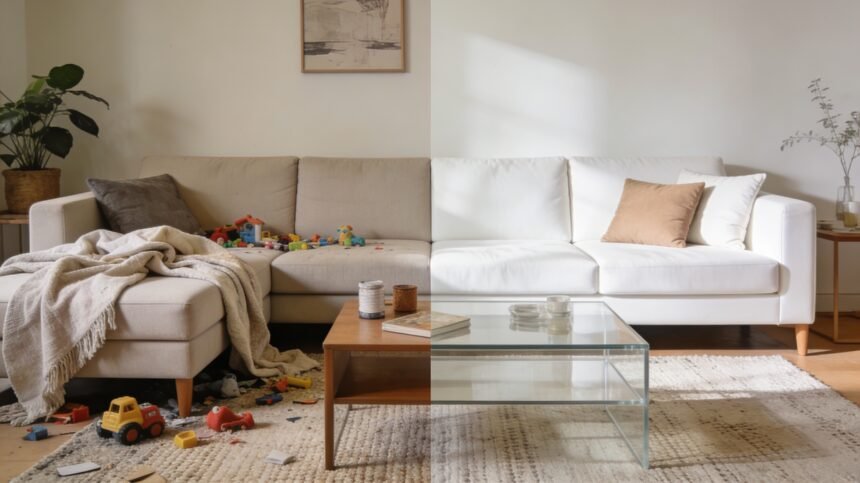
Here’s the thing. Most people have no idea what a “real” deep clean actually costs. They just feel guilty that the baseboards are gray, the tub is stained, and the crumbs under the toaster could probably feed a small village. I’ve been there. I once called a cleaning service out of desperation and nearly choked when I saw the estimate.
- What “deep clean” really means (not just a tidy)
- What cleaning services charge in 2026
- DIY deep clean: the real cost
- How long a deep clean actually takes
- Room‑by‑room cost breakdown
- DIY vs hiring: what actually makes sense
- How to budget for a deep clean when money is tight
- How to keep your house from needing another full deep clean
- FAQs


So let’s talk real numbers. What it costs in 2026 to deep clean your house, what’s actually worth paying for, and what you can absolutely handle yourself with the right game plan and a $20 cleaning caddy.
What “deep clean” really means (not just a tidy)
A deep clean is everything you never touch on a normal weeknight wipe‑down. We’re talking:
- Baseboards, doors, and trim
- Inside appliances (oven, fridge, microwave)
- Cabinet fronts and handles
- Light switches, door handles, vents
- Bathroom grout, faucets, and behind the toilet
- Dusting high surfaces and light fixtures
If your usual routine looks more like “move the stuff, wipe the crumbs, shove things in baskets,” that’s fine. A deep clean is where you reset the house so your everyday routines, like your 5 minute evening reset, actually work.
What cleaning services charge in 2026
Pricing varies a bit by city, but most legit cleaners now charge:
- Flat rate per service for a specific size home
- Or hourly rates with a deep‑clean surcharge
For a 2–3 bedroom, 2‑bath home, you’re usually looking at:
- Standard clean: roughly $120–$180 for a one‑time visit
- Deep clean: $220–$350+ depending on how bad things are, pets, and add‑ons like ovens or inside the fridge
If your home hasn’t been cleaned properly in months, expect the higher end. They’re not judging you, but they are charging you for the extra hours of scrubbing.
And here’s the kicker: if you only wanted someone once, that’s it. That money is gone and you still don’t have a system. That’s why I like to use those prices as a comparison point. If a deep clean would cost you $280, and you can DIY it for $60 in tools and a full Saturday, you’ve basically “earned” $220 in sweat equity.
DIY deep clean: the real cost
Let’s break down a realistic DIY deep clean shopping list. You don’t need twenty fancy sprays. You just need a small crew of workhorse products you can reuse again and again.
Bare minimum shopping cart:
- Heavy duty degreaser for stove, range hood, and grimy cabinets
- Bathroom cleaner that actually tackles soap scum and hard water
- Microfiber cloth set (a big pack you can wash and reuse)
- Spin mop with a bucket and wringer
- Scrub brushes (one stiff, one small detail brush)
- Magic eraser style sponges
- Extendable duster for fans and high corners
If you’re starting from absolutely nothing, that cart will probably sit somewhere around $50–$80 depending on brands and sales. The good news is it doesn’t all get used up in one weekend. You’ll use the same mop, duster, and cloths all year if you treat them decently. That’s why I sometimes tell people to start with a true first apartment cleaning kit. You get your basics set once and stop re‑buying random bottles that don’t work.
How long a deep clean actually takes
If your home is average lived‑in chaos, not “hoarder episode,” a real deep clean usually shakes out like this for a 2–3 bedroom home:
- Kitchen: 3–4 hours (fridge, oven, cabinets, counters, floors)
- Bathrooms: 2–3 hours total
- Living room + hallways: 1–2 hours
- Bedrooms: 2–3 hours
Call it 8–12 hours of work, especially the first time. That’s why it feels so impossible when you’re tired and working and parenting. You’re not lazy. It’s just a lot.
My favorite way to tackle it is the “weekend sprint” method. One heavy Saturday focused on kitchen + bathrooms, then Sunday for bedrooms and living spaces. If your schedule is brutal, stretch it into a “four evenings” project instead.
Room‑by‑room cost breakdown
Let’s talk where your money actually goes.
Kitchen:
Most of your product use happens here. Degreaser, scrubbing pads, possibly an oven cleaner if things are bad. I like to think of it as $20 of product “used up” on a big kitchen reset, even though some of that carries forward. If you also decide to reorganize your pantry, this is when a small budget for bins really pays off. I’d pair this with your pantry organization on budget cheap fixes so you’re not just cleaning around chaos.
Bathrooms:
Here the cost is more in effort than products. A good bathroom cleaner, toilet bowl cleaner, a stiff scrub brush, and maybe a grout brush are fine. If mold is already showing up, switch over to your mold removal guide for safety.
Bedrooms + Living Areas:
Mostly dusting, wiping, and floors. Microfiber cloths, vacuum, mop solution. If your energy is low, this is where that 15 minute cleaning routine that keeps house clean can become your “maintenance plan” after the big reset, so you don’t have to do this again for months.
DIY vs hiring: what actually makes sense
If you’re working multiple jobs, have little kids, or your mental health is stretched thin, sometimes paying for one professional deep clean is worth it. Then you jump in with maintenance routines after.
Hiring may make sense if:
- You’re moving out and need a guaranteed “landlord‑proof” clean
- You have mobility or health issues
- The mess is causing serious stress or conflict at home
DIY makes more sense if:
- Money is tight but time is semi‑flexible
- You want to learn how to clean properly because nobody ever taught you
- You’re already doing small routines like the 5 minute evening reset and want to level up
You can also go hybrid. Pay a cleaner for bathrooms and kitchen deep clean once, then follow guides like how to clean when nobody taught you step by step to keep it up.
How to budget for a deep clean when money is tight
I don’t know, maybe I overthink this, but cleaning supplies are just another bill for most families. The trick I like:
- Week 1: buy mop + cloths
- Week 2: buy degreaser + bathroom cleaner
- Week 3: buy scrub brushes + magic erasers
By week three you’re fully stocked without a huge hit in one grocery trip. This is the same mindset as your grocery spend reset method. Slow stacking beats all‑at‑once panic buying.
You can even tuck it inside a bigger money reset like the broke mom’s 30‑day home reset guide. One page for cleaning, one page for money, they play really nicely together.
How to keep your house from needing another full deep clean
This is where your future self either loves you or hates you. A big deep clean once or twice a year is fine, but only if your daily and weekly habits are actually supporting it.
To stretch the life of your deep clean:
- Run your 10 minute closing shift at night
- Use a short kitchen cleaning routine to keep crumbs and grease from building up
- Pick one “detail” task per week, like scrubbing one bathroom or dusting baseboards in one room
Deep cleaning doesn’t have to be a scary, once‑a‑year meltdown with tears and trash bags. When you know what it actually costs, both in dollars and hours, you can plan like a grownup instead of constantly playing catch up.
FAQs
How often should you deep clean a house?
Most average homes do well with a full deep clean every 3–6 months. If you’re using simple routines like a 15‑minute daily clean and a weekly reset, you can stretch it closer to every 6 months. If you’re in a messy season with little kids or big pets, every 3–4 months feels more realistic.
Is it cheaper to hire a cleaner or DIY a deep clean?
Purely in dollars, DIY is almost always cheaper. A professional deep clean can run $220–$350+, while DIY supplies might cost $50–$80 and then last for many months. The trade‑off is time and energy. If taking a weekend to scrub from top to bottom is going to wreck you, hiring out once and then maintaining it yourself might be the better “value.”
How long does a full deep clean really take?
Plan on 8–12 hours for a typical 2–3 bedroom home that hasn’t been deeply cleaned in a while. You can spread that over a weekend or four evenings. If it’s taking you longer, it usually means you’re also decluttering and reorganizing, which is normal and honestly kind of a good sign.
What rooms should I deep clean first if I’m short on time?
Start with the kitchen and main bathroom. Those are the spaces you touch constantly and they impact your mood and health the most. If you still have energy, tackle the living room next, since it’s often the “people see this” zone and makes the biggest visual difference.
Do I need expensive cleaning products for a real deep clean?
No. You need a small handful of reliable basics, not a rainbow of specialized sprays. A good degreaser, bathroom cleaner, all‑purpose cleaner, microfiber cloths, and a solid mop will get you through most of the work. You can always add a specialty product later if you run into a specific problem like rust or hard water.
How do I budget for supplies when money is tight?
Break your shopping list into small chunks. Add one or two cleaning items per grocery trip instead of trying to buy everything at once. Use “pantry challenge” weeks or a no spend grocery week to free up cash. And check what you already have before you buy duplicates.
What should I deep clean before a move‑out or home inspection?
Focus on what people will inspect closely: bathrooms, kitchen (especially appliances), floors, and obvious scuffs on walls and doors. Make sure the oven, fridge, and tub look genuinely clean, not just wiped. Baseboards and light switches are small things that make a big impression and can be the difference between a happy landlord and a withheld deposit.
For the cleaning products and tools mentioned here, Amazon has everything you need delivered to your door.















What’s your budget for a deep clean in 2026? Find out more in the link! #DeepCleaning #HomeCare #CozyCornerDaily