


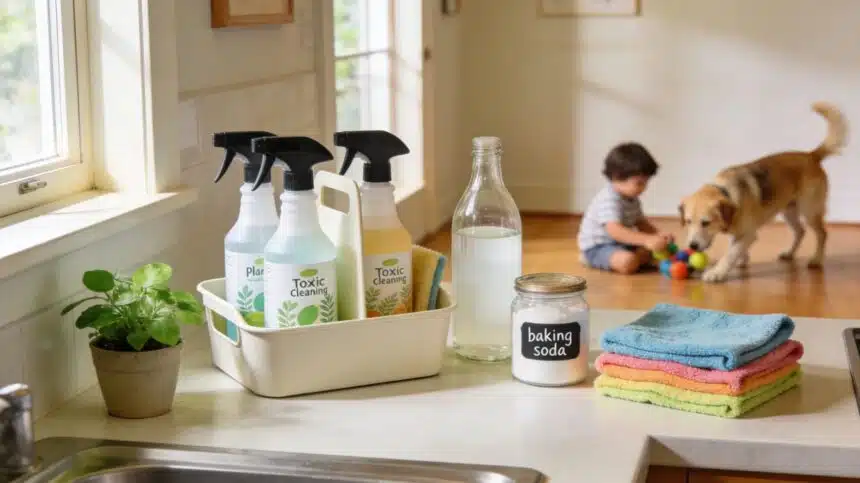
If you’ve ever searched “non‑toxic cleaner safe for kids and pets,” you know the internet basically screams 50 brand names at you at once. Meanwhile, newer 2025–2026 round‑ups keep coming back to the same simple idea: you don’t need thirty products. You need a small, solid team that’s transparent about ingredients and actually works.
So let’s build a short, realistic list you can use to stock a family‑safe cleaning caddy, then get on with your life.




What experts and “mom approved” lists look for
Non‑toxic cleaning guides for families usually focus on:
Plant‑based or safer synthetic surfactants
No harsh solvents, chlorine bleach, or strong ammonia
Low or no synthetic fragrance (or at least clearly labeled)
Transparent ingredient lists
Solid performance in testing
Long lists from cleaners and mom blogs name‑drop specific brands over and over, but the pattern is the same: gentle ingredients + real cleaning power.
The “core four” you really need
Across multiple guides, the same basic categories show up:
All‑purpose cleaner (plant‑based)
Bathroom cleaner
Glass/mirror cleaner
Floor cleaner
Add a laundry detergent you trust, and you’ve covered most daily cleaning in a kid‑and‑pet home.
You can plug almost any of the recommended brands from those big lists into your own caddy as long as they meet those criteria.
Everyday helpers almost everyone agrees on
Non‑toxic cleaning round‑ups still love the basics:
White vinegar (used carefully, not on stone)
Baking soda for gentle scrubbing
Hydrogen peroxide‑based cleaners for disinfecting
Bon Ami powder or similar for sinks, tubs, and tiles
That matches your own approach in how to clean when nobody taught you step by step and the 7 cleaning products you actually need and 20 you don’t. Old‑school basics + a few well‑chosen modern products.
Kitchen use: what the 2026 lists highlight
In 2026 round‑ups, common “best for families” picks include plant‑based multi‑surface sprays that cut grease without heavy fumes and can be used around kids and pets.
Look for:
Plant‑powered all‑purpose cleaner (often recommended for families in lists like these)
Vinegar‑based DIY spray for glass and some appliances
Mild dish soap that doubles as a degreaser
Use them with your kitchen cleaning routine that stopped my kitchen from being a disaster zone and your 20 cleaning caddy that changed everything, and you’re set.
Bathroom: non‑toxic but strong enough
Bathroom cleaners are where some “green” sprays fall apart, but several non‑toxic bathroom products now get good marks from cleaning companies and eco blogs for handling soap scum and mildew.
Look for:
Plant‑based bathroom foam cleaners
Vinegar‑based formulas like some Aunt Fannie’s‑style products
Bon Ami or similar for scrubbing tubs and sinks
Use the strong stuff (including traditional disinfectants) only when you truly need it, like serious mold situations covered in how to get rid of mold in house complete guide.
Floors: safe for paws and tiny hands
Pet‑safe product lists for 2024–2026 focus on:
Plant‑powered floor cleaners
Vinegar and water on certain surfaces
Bona‑style hardwood floor cleaners (water‑based, low VOC)
The biggest tip is rinsing or using light enough dilution that residue is minimal. That’s especially important if you’ve got crawlers, kids who eat off the floor, or dogs who lick everything.
Laundry: what touches skin all day
Laundry detergents sit on clothes and bedding, so non‑toxic lists pay extra attention to them, recommending dye‑ and fragrance‑free options and detergent sheets.
Look for:
Laundry sheets or liquid labeled hypoallergenic and fragrance‑free
Detergents without brighteners or unnecessary additives
These line up with the “kids and pets” lists that highlight plant‑powered and gentle formulas.
Building your simple non‑toxic cleaning caddy
Instead of chasing every brand, fill your caddy with:
Plant‑based all‑purpose cleaner (for most surfaces)
Plant‑based bathroom cleaner
Glass cleaner or vinegar solution
Floor cleaner appropriate for your flooring
Dish soap, vinegar, baking soda, and hydrogen peroxide
A gentle powder scrub like Bon Ami
Microfiber cloths and a couple of scrub brushes
That’s basically your existing caddy, just cross‑checked against 2026 non‑toxic recommendation lists.
FAQs
Are “eco‑friendly” cleaners always non‑toxic?
Not necessarily. Some eco labels focus on environmental impact more than direct human toxicity. The best bet is products that clearly list ingredients, avoid harsh solvents and heavy synthetic fragrance, and show up on multiple “non‑toxic for families” lists.
Do non‑toxic cleaners disinfect as well as traditional ones?
Some do. Certain plant‑based disinfectants use agents like thymol, and some hydrogen‑peroxide‑based products are strong disinfectants when used as directed, including proper contact time. Always check the label for what germs they’re approved to kill.
Is vinegar safe to use everywhere?
No. Non‑toxic guides agree you should avoid vinegar on stone surfaces (marble, some granite) to prevent etching. It’s fine for many tiles, glass, and some floors when diluted, but treat it as a basic cleaner, not a universal solution.
How do I switch to non‑toxic products without wasting what I have?
Finish your current products in less kid‑ and pet‑intense areas (like garage or outdoor tasks), then replace them with safer options as you run out. Many bloggers and cleaning experts suggest starting with the products you use most often (all‑purpose, floor, dish soap, laundry) and swapping those first.
Can kids help clean with these products?
Yes, more safely than with harsher chemicals, but supervision still matters. Many “mom‑approved” lists are built specifically around letting kids help with light chores using non‑toxic sprays and wipes. Teach them not to spray near their face and to wash hands after.
What’s the quickest non‑toxic swap that makes a big difference?
Most experts say it’s switching to a safer all‑purpose cleaner and laundry detergent, since those touch a huge portion of surfaces and fabric in your home. Combine that with your 15 minute daily cleaning routine, and exposure drops fast.
For the cleaning products and tools mentioned here, Amazon has everything you need delivered to your door.








What’s your go-to non-toxic cleaner for kids or pets? Check out our shortlist for 2026! #NonToxicLiving #EcoFriendly #CozyCornerDaily