



Hard water stains are one of those household problems that make you feel personally insulted. You clean the bathroom. It looks decent for about forty-five minutes. Then the faucet goes chalky again, the shower glass looks cloudy, and that white crust around the sink starts acting like it signed a lease. I used to think I was just bad at cleaning bathrooms. Turns out I was mostly using the wrong approach. Hard water stains are not the same as general dirt, and once I understood that, the whole job got easier. Not fun exactly, but easier. Which matters, because I am not interested in spending my life scrubbing the same faucet like it owes me rent.
The first thing that helped was learning the difference between hard water stains and soap scum. They love to hang out together, which is rude, but they are not the same thing. Hard water stains come from mineral deposits left behind when water dries. Soap scum is that filmy, sticky residue that forms when soap and minerals combine. If you use the wrong cleaner for the wrong buildup, you end up doing a lot of wiping and a lot of sighing with very little result. That was me for a while. I kept throwing stronger products at the problem, assuming effort was the missing ingredient. It was not. Technique mattered more. Same lesson as in using too much cleaner and making the house dirtier. More product is not always better. Sometimes it just leaves more residue and more frustration.
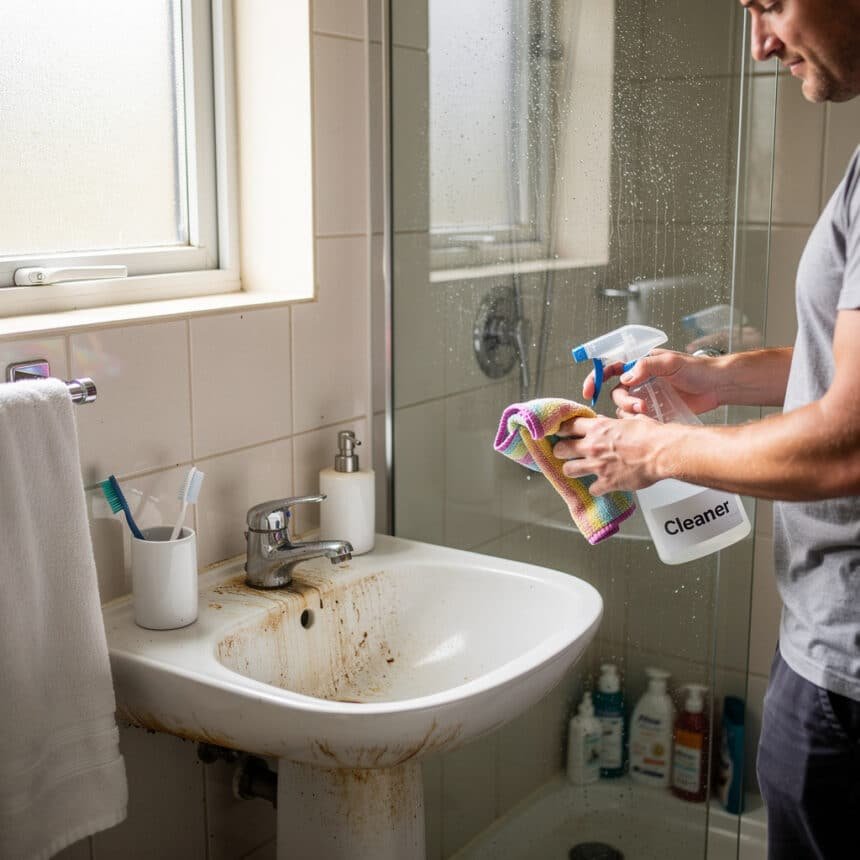
For most hard water stains on faucets, sinks, and shower glass, a simple acidic cleaner works best because it breaks down the mineral deposits. White vinegar is the classic option, and yes, it really does help, but only if you use it with a little patience. Spraying and instantly wiping is not enough for stubborn buildup. The minerals need contact time. I spray or soak, leave it alone for several minutes, then scrub gently with a non-scratch sponge or microfiber cloth. On faucet edges or around drain areas where buildup gets crusty, I sometimes soak a cloth or paper towel in vinegar and wrap it around the spot so it stays wet longer. That works better than constantly re-spraying and getting annoyed.
Now, I need to say this because it matters. Do not go putting vinegar on every surface in your bathroom without thinking. Natural stone like marble or some specialty finishes can react badly to acidic cleaners. That is the part internet cleaning videos love to skip while somebody wipes everything with the same miracle bottle and calls it a day. Always know what surface you are dealing with first. For regular chrome, ceramic, glass, and many standard bathroom fixtures, vinegar can be great. For delicate or sealed surfaces, be careful and check what is safe. “Natural” does not automatically mean harmless for every material.
Shower doors are usually the biggest emotional offender because when they stay cloudy, the whole bathroom feels grimy even after you clean it. What has worked best for me is this: spray the glass, let the cleaner sit, scrub in sections, rinse well, then dry the glass. That last part matters way more than people realize. If you leave water sitting there again, minerals start redepositing and the cycle continues. A squeegee is not glamorous, but it helps. So does a quick dry with a microfiber cloth. Not every single time if life is chaotic, but often enough to break the pattern. That kind of prevention makes a bigger difference than people think. Same energy as how I clean my bathroom in 4 minutes step by step. The big win is usually in the repeatable little thing.
Faucets and showerheads need a slightly different approach because buildup loves tiny openings. If your showerhead is spraying in weird directions or losing pressure, mineral deposits are probably clogging some of the holes. You can often fix that by soaking the head in vinegar, either by removing it if that is easy or tying a vinegar-filled bag around it for a while. Then scrub lightly and run hot water through it. Same with faucet aerators if you know how to remove them. This is one of those small household jobs that pays off immediately. Better flow, cleaner look, less annoyance. And unlike some home tasks, it actually feels satisfying once you see the before and after.
When it comes to non-toxic bathroom cleaning, I am not interested in weak products that smell nice and do nothing. Cleaners have to work. But I also do not think every bathroom issue needs a cloud of harsh fumes and rubber gloves that make you question your life choices. That is why I keep coming back to practical product picks and simpler kits like best nontoxic cleaners for kids and pets in 2026 and cheap vs expensive cleaners, what’s worth it. A few good basics beat a cabinet full of half-useful bottles every time.
What does not work well, at least not for me, is rushing the job or scrubbing with the wrong tool. Abrasive pads can damage finishes. Super heavy scents can make a small bathroom unbearable. Randomly mixing cleaners is a terrible idea. Also, this is a pet peeve of mine, but spraying product onto a dry, crusted surface and wiping immediately like the stain should respect your schedule is not a cleaning strategy. Buildup needs time to soften. That is not me being dramatic. That is just chemistry being annoying and true.
There is also a bigger picture here. Hard water stains come back faster in bathrooms that stay wet all the time. Poor ventilation, damp corners, shower walls left dripping, leaky faucets, all of that gives buildup more chances to set. So if you feel like you are fighting the same spots over and over, check the moisture situation too. Bathroom fan not removing moisture fix and stop window condensation before mold are worth reading alongside this because sometimes the real issue is not your cleaner. It is the fact that the room never really dries out.
What finally made hard water stains manageable in our house was dropping the fantasy that one heroic deep clean would solve it forever. It is a maintenance problem. Not daily, not obsessive, but regular. Use the right cleaner. Give it time. Scrub gently. Rinse. Dry what you can. Repeat often enough that buildup never gets too smug. That approach saved me a lot of frustration, and honestly it made the bathroom look cleaner with less effort overall. I will take that kind of win every time.