





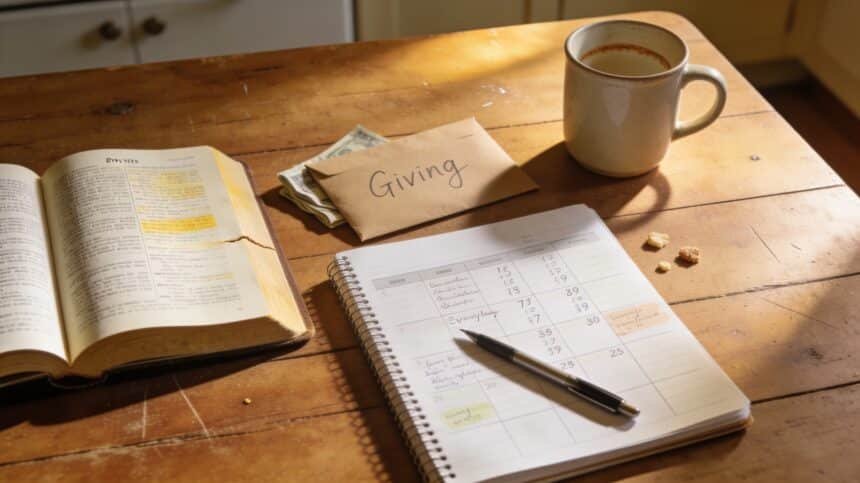
For years, every budget I built fell apart by the second week. Not because the numbers were wrong. The numbers were usually right. It fell apart because of what lived underneath them: the low hum of scarcity, the grip of fear around every line item, the quiet belief that there was never going to be enough and that being careful with money meant bracing for impact. No spreadsheet touches that. No app reorganizes the part of you that is convinced the floor will drop out.
What changed it was not a better system. It was a different starting point.
The Shift From Ownership to Stewardship
The first thing that changed was how I understood whose money it actually was.
Biblical financial stewardship begins with the recognition that everything you have is held in trust, not owned outright. That reframe sounds abstract until you feel what it does to the anxiety around spending and saving. When money is yours alone to protect, every financial decision carries the full weight of your security. When money is something entrusted to you to manage wisely, the weight shifts. You are responsible for it, yes, but the burden of being the last line of defense against financial ruin lifts in a way that no emergency fund fully replicates.
Proverbs 3:9 calls for honoring God with the first portion of income. Proverbs 21:5 frames diligent planning as wisdom rather than anxiety. Together they describe a financial life that is both grounded in faith and practically structured. Not one or the other. Both.
Treating Debt Like Clutter
Debt accumulated the same way clutter does. Gradually. A little at a time. Each individual decision seemed reasonable. The cumulative weight of it only became visible much later.
When what clutter is really costing you is not just measured in square footage but in mental load and emotional drain, you start to see debt the same way. It is not a number on a statement. It is weight you carry into every financial decision, every conversation about money, every month-end moment of dread. Eliminating it is not just financially smart. It is a form of clearing. Of making room.
The debt snowball method is the most practical path for most households starting from zero momentum. Pay the smallest balance first. Close the account. Feel the concrete win. Use that to fuel the next one. The math of the avalanche method may be slightly more efficient, but the psychology of the snowball is what actually gets people through. A budget grounded in faith pairs well with this because the why behind the sacrifice is larger than the inconvenience of the month.
Giving as a Foundation, Not an Extra
The hardest reframe for most people is giving before the budget is comfortable.
The traditional secular approach is: cover necessities, pay off debt, build savings, then give once there is margin. The biblical approach flips the order: give first, plan around what remains. That ordering feels counterintuitive until you live it for a few months and notice what changes.
Giving first does two things simultaneously. It acts as a consistent declaration that you trust provision more than scarcity. And it imposes a structural ceiling on lifestyle creep that is more effective than any spending category cap because it comes out before you get used to having it. Tithing, even a modest percentage, is not a financial disadvantage. For many households it is the habit that finally makes the rest of the budget hold.
Savings as Service, Not Stockpiling
Savings built from a place of fear looks different from savings built from a place of purpose. Fear-based saving hoards without a clear function. Purpose-based saving names what the money is for: an emergency buffer that protects the family from desperation decisions, a car repair fund that keeps the household running, a giving pool that grows until there is enough to respond to a need.
Building a three-month emergency fund from a tight starting point is less about the amount and more about the consistency. Proverbs 6:6-8 uses the ant as a model: steady, purposeful, preparing for what is coming without panic. Small, consistent transfers build the same foundation a lump sum would, just over more time and with more resilience along the way.
Practical Peace in the Numbers
Faith in finances does not mean ignoring the ledger. It means engaging the ledger from a calmer place.
That still requires knowing where your money is actually going and being honest about the gaps. It means running a subscription audit and not flinching at what you find. It means using a bills calendar so that late fees stop eating into money earmarked for something with more purpose.
With family budget pressures rising in 2026 and the cost of living continuing to climb, the practical tools matter just as much as the mindset. A budget built for uneven income holds the faith-based framework together on months when the numbers are harder to look at. And finding unclaimed money from old employers or identifying easy ways to cut household bills creates breathing room that makes the generous and intentional choices easier to sustain.
What It Looks Like Week to Week
Faith-based financial peace is not a feeling. It is a set of repeating habits that eventually become the background of how the household runs:
- Giving comes off the top, before lifestyle expenses are calculated
- Debt gets a fixed weekly or monthly payment regardless of how the rest of the budget feels
- Savings transfers happen automatically so the decision is never left to willpower
- Spending categories reflect actual priorities, not aspirational ones
- A weekly or monthly money check-in reviews the ledger with honesty rather than avoidance
None of that requires a high income. It requires a clear order of operations and a reason behind each step that is larger than convenience.
Teaching kids to understand that order early changes how they grow up thinking about money. Talking to kids about money by age does not have to be a formal lesson. It can be as simple as letting them watch the giving envelope get filled first every month and explaining what it is for.
Where the Peace Actually Comes From
The peace is not the result of having enough. Plenty of people with full savings accounts are still anxious about money every day. The peace comes from a settled relationship with money: knowing what it is for, knowing who it ultimately belongs to, and trusting that faithful management of what you have right now is enough.
That does not mean financial hardship is not real or that prayer replaces a grocery budget. It means that the fear underneath the numbers has somewhere to go. And once the fear quiets, the practical decisions get clearer.
If you are in a season that feels financially uncertain and you need a companion for the emotional weight of it more than another budget template, Quietly Becoming: A Soothing Companion for Life’s Uncertain Turns was written exactly for moments like that. And if the mornings feel heavy before they even start, Mindful Moments: A Guide to Calm Living and Easy Daily Routines holds the daily rhythms that make the rest of this sustainable.
A faith-based morning rhythm that begins before the budget opens is not a detour from financial discipline. It is the foundation it actually needs.