



Window tracks are probably the last thing you cleaned. Or maybe you’ve never cleaned them at all. That’s not a judgment because they genuinely are easy to forget. They sit right there in plain sight, but because they’re recessed and narrow, your eye tends to skip over them. Until the day you open a window and notice the kind of buildup that makes you question your whole life.
What collects in window tracks isn’t just dust. It’s dust mixed with moisture, dead insects, old caulk flecks if your home is older, fine grit from outside air, and sometimes a layer of dark grime that’s starting to look uncomfortably close to mold. The narrow grooves that hold your window in place are basically little collection troughs, and without regular attention, they pack solid. Most people don’t notice until they try to open a window after winter and it barely budges.
This is also not just a cosmetic issue. Dirty window tracks affect how well your windows seal. When the tracks are packed with debris, the window can’t sit flush in the frame when it’s closed. Cold air finds its way in. Conditioned air leaks out. If you’ve been trying to cut household bills and you haven’t looked at your window tracks, it’s worth checking before you start pointing at your thermostat. A compromised window seal is a quiet, constant drain.
The cleaning itself takes about 10 to 15 minutes per window, and you probably already have everything you need at home right now.
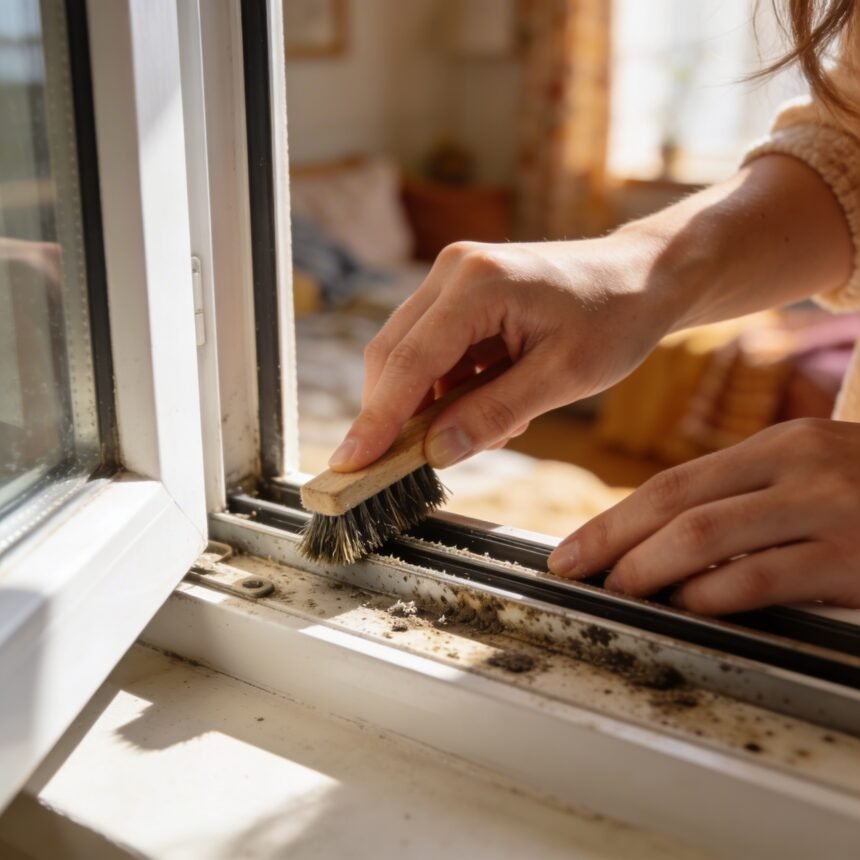
Start dry, always. Before you add any liquid, use a vacuum with the crevice attachment to pull out the loose debris. If you don’t have one, a dry toothbrush works fine to loosen things. Fold a paper towel around a butter knife to create a thin, firm edge that fits into the grooves, and drag it along the length of the track. You’ll be surprised what comes out of a window you’ve opened every day for years. Focus on the corners first because that’s where it packs tightest and stays wettest.
Once the loose material is gone, sprinkle a small amount of baking soda directly into the track. Just enough to coat the bottom. Then spray white vinegar over it and let it fizz for a full five minutes. This isn’t just for show. The reaction actually breaks down accumulated grime and handles any mold or mildew beginning to form, without any harsh chemicals. If you’ve been looking for non-toxic cleaners that actually work for your family, this combination genuinely holds its own against most commercial products.
After the fizzing settles, go in with your toothbrush or a cotton swab for the narrow ridge areas and scrub. Wipe everything out with a damp cloth. You’ll likely need to rinse and wipe two or three times to clear all the baking soda residue. For windows you haven’t touched in a couple of years, letting the baking soda and vinegar sit for seven to ten minutes instead of five makes a real difference. Don’t rush that step.
After the tracks are clean and dry, run a thin layer of petroleum jelly or a silicone-based lubricant along the tracks. This does two things at once. Your window will slide noticeably easier, which feels immediately satisfying, and the coating makes future grime less likely to grip and stick. A thin coat applied with your finger or a folded piece of paper towel is plenty. Wiping it on lightly is much better than applying too much and having it collect new dust faster.
How often you need to do this depends on how much you open your windows. Three to four times a year is a good rhythm if they get regular use. Twice a year is fine for windows that stay closed most of the time. The goal isn’t obsessive maintenance. The goal is keeping them functional and not letting the buildup reach the point where it starts affecting your home’s energy efficiency.
If after a full cleaning you’re still feeling a draft near the window, the track may not be the only problem. Weatherstripping wears out over time and pulling away from the frame creates gaps that no amount of track cleaning will fix. The 15-minute home draft test is one of the most useful things you can do on a quiet afternoon. Most of the fixes you’ll find through that process cost under $10, and some cost nothing at all.
Pay attention to the small drain holes while you’re in the tracks. Most window tracks have weep holes at the bottom corners that allow water to drain out. These get clogged with debris the same way the tracks do, and when they’re blocked, water pools instead of draining. A toothpick or a straightened paper clip clears them in seconds. This is one of those ten-second tasks that prevents actual wood rot and frame damage over years of ignored moisture.
For anyone who finds dark spots that don’t respond to the baking soda treatment, that’s likely surface mold that’s taken hold in the material. Diluted hydrogen peroxide applied with a cotton swab and left to sit for ten minutes before wiping usually handles it. If the mold looks like it’s spread beyond the track surface or appears on the surrounding frame, that warrants a larger look. The complete guide to getting rid of mold in the house covers what to handle yourself and what to call someone for.
The truth is, window tracks take about five minutes to maintain once they’re actually clean. It’s only the first session after years of neglect that takes real effort. If you build the track wipe-down into your seasonal home cleaning checklist, it never gets back to that first awful state.
A couple of additional things worth knowing: if you have older double-hung windows, the interior tracks where the window slides up and down also collect debris at the base of the sash. This is easy to miss because it’s partially hidden when the window is closed. Tilt the window in if it has that feature, or open it fully to access the bottom portion of the track. Same baking soda and vinegar approach works perfectly there.
Also, foam weather seal tape pressed into a window track after cleaning is a simple trick for windows that consistently collect moisture. Kitchens and bathrooms are the usual suspects. The foam absorbs condensation drip before it settles into the groove and creates a new cycle of buildup. It’s inexpensive, it takes five minutes to apply, and it extends the clean window track life significantly in humid rooms.
Window track cleaning is one of those tasks that feels minor until you realize how much of a difference it makes. Clean tracks mean better seals, smoother operation, less mold risk, and honestly, less air going in and out of your home that you’re paying to heat or cool. That’s a return on fifteen minutes that most bigger cleaning projects can’t match.