





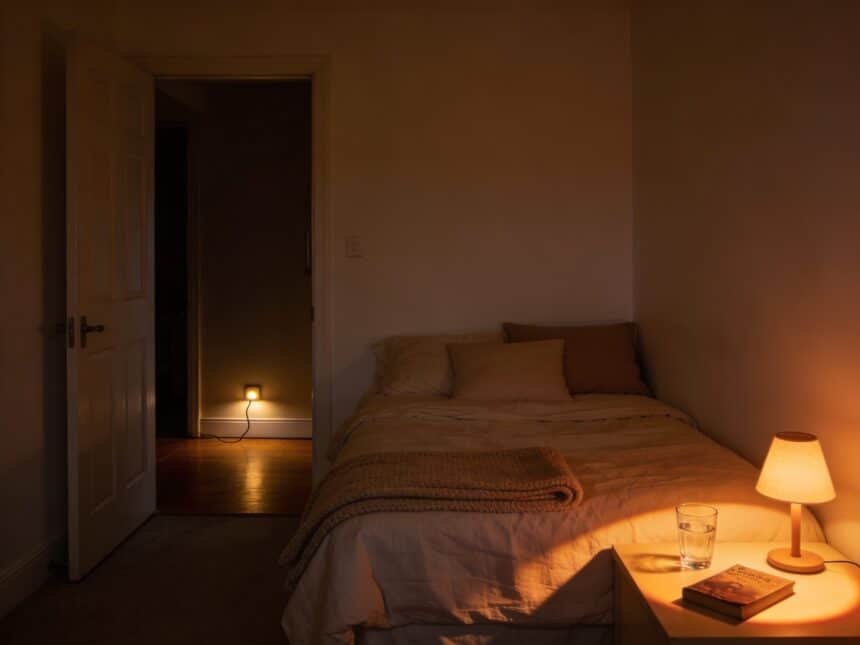
Evenings can go wrong in such an ordinary way that you barely notice it until you are lying in bed still carrying the whole day in your body. The counters are still cluttered. The bedroom has little piles on every flat surface. The lights are too bright too late. The phone keeps dragging your attention around. You tell yourself you are winding down, but the room says otherwise. The house is still in go-mode.
That is why a low-energy evening rhythm matters so much. Not a heroic reset. Not a full second shift. Just a gentle shutdown sequence that helps the home signal to your brain that the day is actually ending. I think a lot of people miss this. They try to force better sleep without changing the environment that their body is still reacting to.
What works best for me is keeping the evening rhythm small enough that I will still do it when I am tired. Clear the nightstand. Reset one or two flat surfaces. Dim the lights. Put tomorrow’s obvious needs where I can see them. Maybe move a load of laundry or wipe the bathroom sink if it will make the morning easier. That is enough. It is the same practical logic behind the five-minute evening reset that keeps a home functional and the ten-minute closing shift that makes mornings more peaceful. A little order at night pays you back immediately in the morning.
Lighting is one of the biggest pieces. Bright overhead lights keep a room feeling alert even when your body is begging for softer cues. Lower lamp light, gentler hall light, and a little less screen glare do more for the nervous system than people think. It is one of the reasons the evening routine that stops sensory meltdowns matters beyond families with young kids. Adults need softer environmental transitions too.
The bedroom itself also needs to stop acting like a storage annex if you want it to feel restorative. That does not mean it has to be perfect. It means the surfaces need to stop shouting. A cleared bedside table, a basket for stray items, a folded blanket, clothes not multiplying on the chair, little things like that matter. That is why the bedside table organization system that stays organized is more powerful than it looks. Small visible order creates big emotional relief.
I also like building tomorrow into the rhythm in one or two low-drama ways. Water bottle filled. Bags near the door. Coffee area reset. Something simple for breakfast visible. That supports sleep more than people realize, because the brain relaxes faster when tomorrow looks less jagged. This connects beautifully with a real morning reset for overwhelmed days and the school morning routine that finally ended the chaos. Good evenings make better mornings.
And honestly, that is the point. A low-energy evening rhythm is not about squeezing more productivity out of the last hour of your day. It is about making home management support rest instead of delaying it. The house does not have to be perfect to help you sleep better. It just has to stop sending “unfinished” signals from every corner.
I think this matters even more in ADHD households, where the temptation is often to delay everything until there is suddenly no energy left and then feel bad about all of it at once. A softer shutdown sequence helps because it gives the brain a few simple, repeatable cues instead of one giant bedtime expectation. Dim the lights. Clear the surface. Set up tomorrow. Breathe. Done.
The sustainable part here is not flashy. It is just honest. Rest is easier to protect when the home stops demanding so much from you at night. Less visual clutter. Less bright light. Less friction. More readiness. More softness. More room to actually exhale.
There is also something powerful about using the evening to lower tomorrow’s mental load a little. Not by doing everything, but by doing the most helpful few things. When the sink is less chaotic, the bedroom is less noisy, the nightstand is clear, and tomorrow’s basics are not scattered across three rooms, your nervous system gets to rest instead of rehearsing. That matters more than people realize.
I also think evening rhythms work best when they feel kind rather than strict. If the routine becomes one more standard to fail at, it stops being restorative. But if it feels like a quiet set of supports, the body starts trusting it. The home becomes part of the cue that it is safe to shut down.
That kind of rhythm does not only protect sleep. It protects the version of you who has to wake up and do it all again tomorrow.