





The problem with a lot of home repair advice is that it assumes you either have a full garage workshop or endless patience for emergency store runs. Real life is usually less impressive. A cabinet starts wobbling while dinner is half done. A door sticks harder every humid morning. A faucet begins that slow, annoying drip right when you are already tired. Then you end up buying one more disposable patch, one more plastic-wrapped gadget, one more tube of something that dries out in the junk drawer after one use. The house gets technically fixed, maybe, but the system behind the fixing stays messy, expensive, and wasteful.
That is why I finally stopped chasing random one-off products and started building a low-waste home repair kit that could handle most of the small household emergencies that actually happen in a normal family home. Not the fantasy emergencies from a renovation show. The real ones. The loose hinge. The scuffed wood. The sticky door. The tiny crack, the wobbly handle, the draft around a window, the sudden drip under a sink that needs attention before it becomes a bigger problem.
The goal was not to make every repair look rustic and virtuous. The goal was to stop buying throwaway fixes that barely lasted and filled the house with half-used tubes, plastic patches, and chemical-heavy junk I did not trust or even remember owning. A good low-waste repair kit is not about being precious. It is about having reusable, durable basics that solve common problems fast and stay useful the next time something shifts, squeaks, loosens, or leaks.
The first thing I changed was the container. Instead of a plastic bin full of mystery items rolling around together, I started using a solid handled toolbox and a few glass jars inside it for the tiny things. Screws in one jar. Nails in another. Felt pads in one. Small anchors in another. That one shift cut down a ridiculous amount of repeat buying because I could actually see what I already had. It felt a lot like the lesson behind organizing cleaning supplies so they actually get used. Home systems get easier when the right stuff is visible and not buried under ten unrelated things.
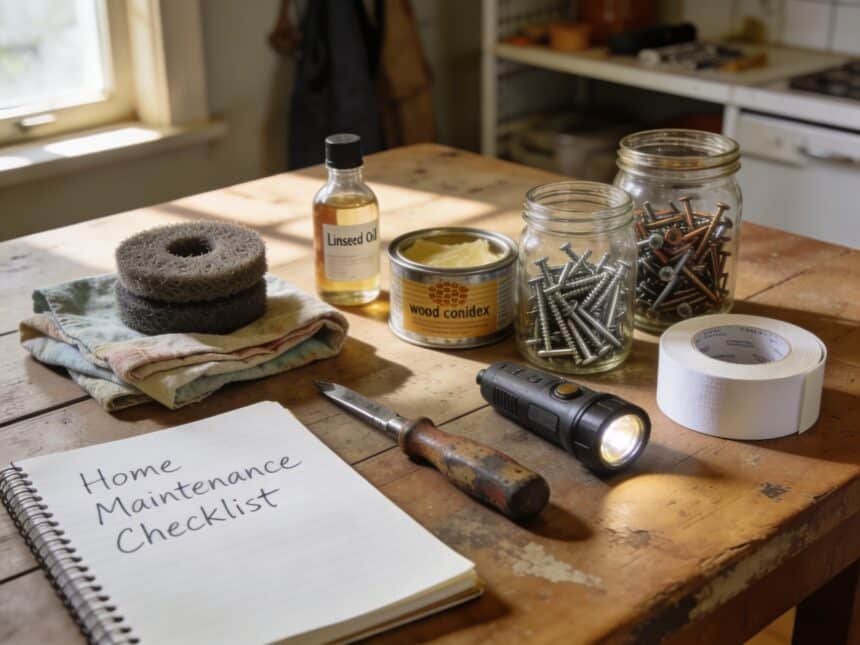
Then I got honest about what belongs in a repair kit if you want it to stay low-waste and actually useful. A few washable cloth rags beat disposable paper towels in almost every repair situation. Steel wool handles rust, grime, and wood prep far better than a handful of flimsy one-use scrubbers. A small tin of beeswax wood conditioner or wood polish can bring dry wood back to life and soften minor surface wear without buying a different product for every scratch. Boiled linseed oil, used carefully and stored properly, can refresh tired wood handles, unfinished wood trim, and some furniture pieces that look one week away from giving up. None of these are glamorous, but all of them last.
I also kept a few truly practical basics that are not trendy but absolutely earn their place. A solid screwdriver with changeable bits. Needle-nose pliers. An adjustable wrench. A utility knife. Wood glue. Painter’s tape. A flashlight. A measuring tape. A handful of felt bumpers. A compact level. A small container of wood filler. A couple of sanding blocks. That is enough to solve a surprising number of home annoyances before they become expensive repairs.
What I like about this kind of kit is that it pushes you toward actual fixing instead of temporary panic-patching. When a kitchen cabinet starts clattering, I do not need to buy some weird one-purpose gadget. I already have the screwdriver, wood glue, and small supplies needed to handle it. That is exactly why fixing loose cabinet hinges to quiet kitchen noise is the kind of repair I love. It is small, it matters, and it gets much easier when the basics are already in the house.
The same thing goes for squeaks and sticking. A lot of people live with irritating little house noises and jams for months because they think every repair needs a whole hardware-store trip. It usually does not. A low-waste kit gives you enough on hand to handle those things when you actually notice them, which matters because momentum is half the battle. That is also why fixing sticky doors and squeaky floors with what you already have feels so satisfying. The repair is not only cheaper. It is more likely to actually get done.
For wood surfaces, I learned to stop treating every scratch or dry patch like a future major project. A walnut, a rag, a little wax, a little oil, a tiny bit of steel wool in the right place, those low-waste basics can do more than most people think. That mindset lines up perfectly with fixing furniture scratches with low-cost household supplies. The point is not perfection. The point is keeping the home functional and cared for without turning every flaw into a shopping trip.
Leaks are where a low-waste repair kit really proves itself, but this is also where honesty matters. Some leaks can be managed quickly with a wrench, a rag, plumber’s tape, or a new washer if you know what you are dealing with. Some leaks are warning signs that need real repair, not denial wrapped in sustainability language. I do not believe in pretending a serious plumbing issue can be solved with vibes and a cloth. But I do believe a smart repair kit helps you respond faster and with less waste while you handle the actual problem. That is why fixing a leaky faucet yourself and saving money, how to fix a dripping faucet tap yourself, and hidden water leaks that raise your water bill are such useful pieces of the same conversation.
The low-waste piece also shows up in how you buy. I stopped buying giant repair assortments full of pieces I would never use. I stopped buying the cheapest tools that bend or strip out after one frustrating job. I started buying fewer, sturdier basics. That does not sound revolutionary, but it adds up. Cheap tools create waste too. So do half-effective products that force you to replace them, work around them, or buy the “real” version later.
Another shift that helped was pairing the repair kit with a simple written checklist. Not a perfect laminated household system. Just a notebook page taped inside the box lid. It listed what the kit contained, what needed refilling, and the top repairs we keep running into in this house. Loose knobs. Felt pads. Window drafts. Filter changes. Faucet drips. That tiny list made the kit feel like a real household system instead of a random box of grown-up objects. It also took some of the mental pressure off. That same logic runs through sharing the mental load of home repairs and the shared strategy for overwhelmed parents managing mental load. When the information lives outside your head, repairs get easier to follow through on.
One of the most underrated parts of a low-waste repair kit is how it changes the feeling of home maintenance. It stops feeling like every problem requires a fresh purchase, a panic scroll, or a pile of waste. You already have a few durable answers on hand. The repair becomes smaller in your mind because the friction around starting is smaller too.
That matters if your house already feels full. Full of clutter, full of half-done jobs, full of stuff you bought to solve other stuff. A low-waste kit is partly about reducing physical waste, yes, but it is also about reducing household noise. Fewer duplicate products. Fewer dried-up tubes. Fewer weird tools with one tiny purpose. That simplicity supports the same calmer-home goal behind the doom pile audit that finally clears hidden clutter and what clutter is really costing you. The less excess there is around the fixing, the easier the actual fixing becomes.
And I think that is the real value here. A low-waste home repair kit does not make you a perfect homeowner. It does not stop every future leak, squeak, wobble, scratch, or draft. But it does give you a grounded, reusable way to respond. It helps you repair with less waste, less last-minute spending, and less household chaos. That is a good trade. Not flashy. Just genuinely useful. In a real home, that kind of usefulness tends to last longer than the trendier fixes anyway.