



A house usually does not fall behind all at once.
It happens in layers.
The counters still get wiped. The dishes still get done. The laundry keeps moving, mostly. But then one day the house starts feeling off in a way you cannot quite explain. It smells a little stale. The bathroom fan sounds tired. The fridge shelves feel sticky. Dust shows up faster than it should. The whole place feels like it needs more than a quick tidy.
That is usually a sign the monthly stuff has been getting skipped.
These are not the dramatic chores people post online for attention. They are the quiet little tasks that keep buildup, odors, lint, moisture, and grime from turning into bigger headaches later. EPA says controlling indoor moisture, wiping dust with a damp cloth, vacuuming, and fixing water problems early all help reduce mold, allergens, and other indoor air issues. It also recommends keeping indoor humidity around 30% to 50% when possible.
The first forgotten job is the bathroom exhaust fan cover.
A lot of people hear the fan running and assume it is fine, but dust buildup can make it work harder while removing less moisture. EPA says ventilation is especially important in bathrooms because it helps remove moisture that can lead to mold and mildew. If your bathroom keeps feeling damp no matter how often you clean it, this fits naturally with the bathroom reset that stops the buildup and the low-effort humidity hack to stop hidden bathroom wall mold.
The next one is washing or vacuuming under couch cushions.
It is a tiny mess factory down there. Crumbs, dust, hair, mystery wrappers, the occasional pencil, and enough lint to start its own family. It is not glamorous, but it changes how a room feels fast.
Then there are the vent covers.
Not full duct cleaning drama. Just the covers. Dust builds there quietly, and once it starts collecting around vents, the room never quite feels clean. This is also a good reminder to check the HVAC filter if dust seems to be multiplying for sport. EPA says routine filter changes and damp dusting are practical ways to cut indoor particles.
Fridge shelves and door seals need a monthly look too.
Not because you are trying to impress anybody, but because little spills turn into smells faster than people think. The same goes for the freezer drawer. If yours is full of frost, crumbs, broken bags, and good intentions, that mess eventually costs you time and food. That is one reason this article pairs well with the ADHD freezer bin system that stops losing leftovers and doom fridge reset with a sensory-friendly system.
Another one people forget is the trash can itself.
Taking out trash is not the same as cleaning the can. Wipe the lid. Rinse the inside. Check the bottom. The same goes for laundry hampers, recycling bins, and that small bathroom trash can everybody ignores until it smells strangely personal.
Now let’s talk about the dryer.
The lint screen should be cleaned every load, but the area around the filter, behind the dryer, and the vent path need attention too. USFA says you are at higher risk of a clothes dryer fire if you do not clean the lint filter and dryer vents, and it notes that failure to clean was the leading factor in home clothes dryer fires from 2018 to 2020. This is one of those chores that sounds boring right up until it becomes important.
Baseboards are another monthly win.
Not every inch with a toothbrush. Just a real pass in the areas that actually get dusty. Same for window tracks, the tops of door frames, and light switches. These are the kinds of spots that make the room feel cleaner than they should for the amount of effort involved. If your windows are already collecting grime and pollen, how to clean window tracks the right way is worth keeping in the mix.
A few more monthly tasks that quietly help are wiping down cabinet fronts, checking for expired pantry items, cleaning under small appliances, washing pet bowls properly, vacuuming mattresses, wiping blinds, checking for water under sinks, and looking at any corners where moisture tends to collect. EPA says if you see condensation or moisture collecting on surfaces, act quickly to dry the area and reduce the moisture source, because that can be a sign of high humidity.
I also think every monthly cleaning list needs one reset task that is less about cleaning and more about making the next month easier.
That might be tossing dead bathroom products, clearing the pile on the bedroom chair, sorting the junk drawer, or finally dealing with the paper stack on the counter. Because the truth is, clutter and cleaning are always in the same conversation. A house gets easier to clean when there is less random stuff sitting around collecting dust and delaying you. That is exactly why the doom pile audit that finally clears hidden clutter and bedside table organization system that stays matter more than they first seem to.
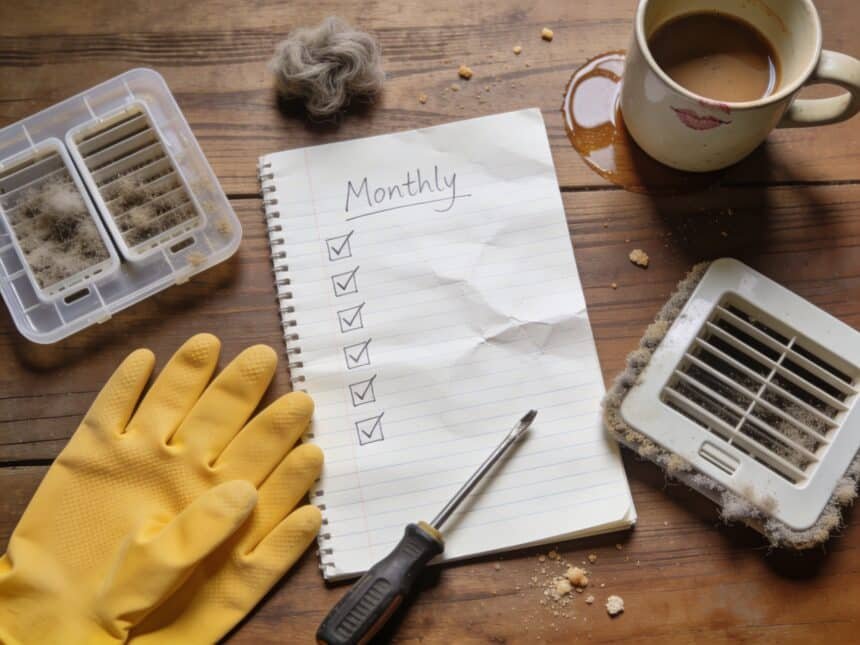
You do not need a perfect monthly checklist.
You just need a few tasks that stop your house from getting weird in the background.
That is usually enough to keep normal mess from turning into a full reset weekend.