








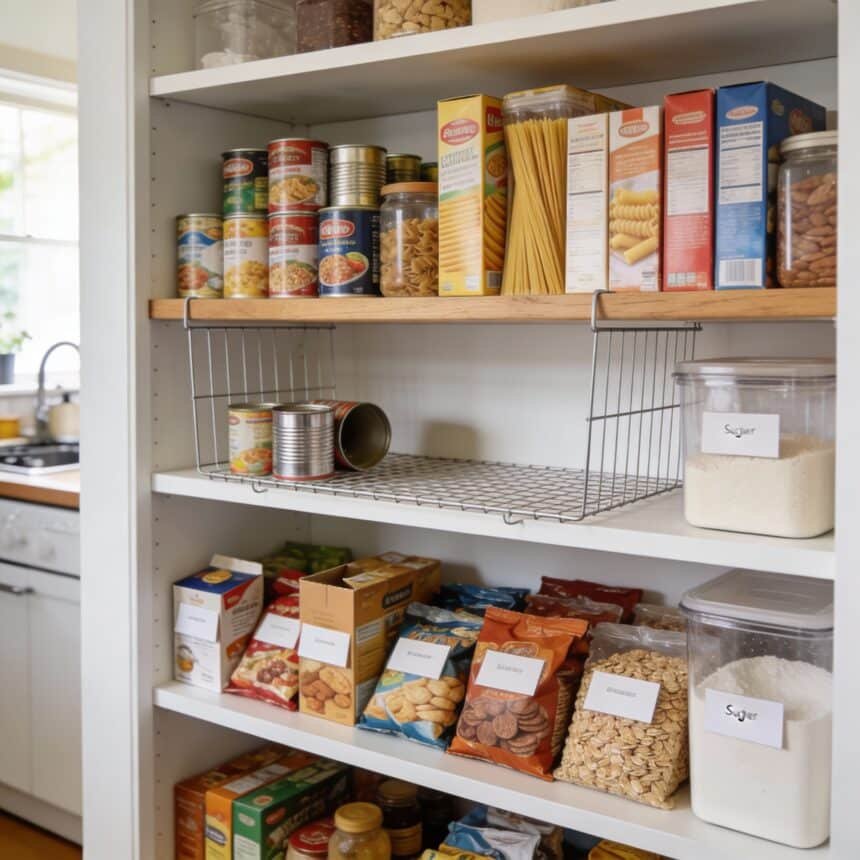
My pantry was a disaster for years. Not like a little messy. I’m talking you-couldn’t-find-anything-and-half-the-food-expired-before-we-used-it level of disaster.
I’d buy groceries, shove them onto whatever shelf had space, and then forget they existed. I’d discover cans of beans I bought six months ago pushed to the back. Pasta boxes half-empty and half-open spilling everywhere. Snacks in random places so my kids would tear apart the whole pantry looking for granola bars.
And every few months, I’d get frustrated enough to pull everything out, wipe down the shelves, and reorganize. It would look great for about a week. Then it would slowly descend back into chaos because I didn’t actually have a system. I just had a temporary arrangement that fell apart the second anyone needed to put groceries away.
Then I tried a different approach. Instead of trying to make my pantry look like those perfect Instagram photos with matching containers and fancy labels, I focused on creating a system that was actually maintainable for my real life. And it’s been organized for months now without me having to do another big overhaul.
Here’s what finally worked.
Step One: Empty Everything and Check Expiration Dates
I know, I know. This is the most annoying first step. But you have to do it. You need to see what you actually have, what’s expired, and how much space you’re working with.
I pulled everything out of my pantry and put it on the kitchen counter. All of it. Cans, boxes, bags, jars, everything. The pile was honestly embarrassing. I had three half-empty bags of flour. Multiple open boxes of the same type of pasta. Spices I bought for one recipe two years ago and never touched again.
I checked expiration dates and threw out anything that was past its prime. I also got rid of things we realistically weren’t going to eat. The weird health food I bought because I thought I should like it but never actually ate? Gone. The specialty ingredient for a recipe I never made? Donated.
This step alone freed up probably 30 percent of my pantry space. I didn’t need more room. I just needed to stop holding onto food we weren’t using.
If you’re feeling overwhelmed by this process and you’re not sure where to start, I put together a complete guide for people who were never taught how to clean and organize. It walks through decluttering step-by-step without assuming you already know what you’re doing.
Step Two: Group Everything by Category
Once I’d gotten rid of the expired and unwanted food, I sorted what was left into categories. All the canned goods together. All the pasta and grains together. All the baking supplies together. All the snacks together. All the spices together.
This seems obvious, but I’d never actually done it before. I’d just put things wherever they fit. Which meant we had pasta on three different shelves and I never knew if we were out of something or if it was just hiding somewhere else.
Grouping by category made it so much easier to see what we had and what we needed. It also made putting groceries away way faster because everything had a designated spot.
The categories don’t have to be complicated. I have maybe six or seven. Breakfast stuff (cereal, oatmeal, pancake mix). Canned goods (beans, tomatoes, soup). Pasta and rice. Baking supplies (flour, sugar, chocolate chips). Snacks. Sauces and condiments. Spices. That’s it.
Step Three: Use Zones, Not Containers
Here’s where I did things differently than every Pinterest pantry tutorial I’d ever seen. I didn’t go buy a bunch of matching clear containers and label everything with a label maker.
Don’t get me wrong, those pantries look beautiful. But they’re also high-maintenance. You have to decant everything into containers. You have to keep the containers clean. You have to remember what goes where. And if you have kids or a partner who also puts groceries away, they’re probably not going to follow that system.
Instead, I just created zones on my shelves. The bottom two shelves are snacks and breakfast stuff because that’s what my kids reach for most. The middle shelves are canned goods and pasta because I use those for cooking. The top shelf is baking supplies and things I don’t need very often.
Within each zone, I just keep like items together. All the pasta boxes together. All the canned beans together. All the cereal together. I didn’t buy any special organizers. I just arranged things so I could see what I had at a glance.
The only containers I use are for things like flour and sugar that come in flimsy bags. I put those in airtight containers so they don’t spill or attract bugs. But I keep the container right next to the original bag with the baking instructions on it, so I’m not trying to remember if the white powder is all-purpose flour or bread flour.
Step Four: Front-Facing Labels and Visibility
This is the one change that made the biggest difference for maintenance. I turned everything so the labels faced forward. Cans, boxes, bags, everything. If I can’t see what it is at a glance, I’m not going to use it.
I also stopped stacking things on top of each other unless I absolutely had to. When things are stacked, you forget what’s on the bottom and you end up buying duplicates. Now I arrange things in a single layer as much as possible so I can actually see what I have.
For taller shelves, I use a simple wire shelf riser. It’s basically a little platform that creates a second level, like bleachers. So I can put canned goods on the bottom level and see them, and then put more cans on the raised platform and still see those too. It’s like $10 on Amazon and it doubled my usable space.
This sounds so simple, but it completely changed how I use my pantry. Before, I’d buy pasta because I couldn’t remember if we had any. Now I can look at my pantry and immediately see we have four boxes of pasta and we definitely don’t need more.
If your kitchen drawers are also a chaotic mess, I wrote about an ADHD-friendly kitchen organization system that works even if you’re not great at maintaining perfect systems. Same principles of visibility and simplicity.
Step Five: Weekly Five-Minute Reset
Here’s the thing that keeps my pantry from falling apart again. Once a week, usually Sunday evening, I spend five minutes resetting it.
I pull everything forward so it’s not pushed to the back. I make sure items are in their correct zones. I wipe down any spills. I check if we’re running low on anything and add it to the grocery list.
That’s it. Five minutes. It’s barely any effort, but it keeps the system from getting out of control.
Before I started doing this, small messes would accumulate until the whole pantry was chaotic again. Now I catch it early when it’s still easy to fix.
I do this as part of my closing shift, which is basically just a quick reset of the main living areas before bed. If you’re interested, I wrote about the 10-minute closing shift that makes my mornings peaceful. The pantry reset is just one small part of it.
What Makes This System Actually Work
The reason this system has stayed organized for months is because it’s low-effort to maintain. I’m not trying to keep everything in perfectly labeled matching containers. I’m not arranging things by height or color. I’m just keeping like items together, labels facing forward, and doing a quick reset once a week.
It’s also flexible enough that my husband and kids can follow it. When they put groceries away, they can figure out where things go because the zones are obvious. Snacks go on the bottom shelf. Canned stuff goes on the middle left. Pasta goes on the middle right. It’s not complicated.
The other reason it works is that I’m not holding onto food we don’t eat. I used to feel guilty throwing away food or donating unopened items, so I’d keep them even though I knew we’d never use them. Now I accept that holding onto food we won’t eat is actually more wasteful than letting it go. So I regularly clear out things we’re not using, which keeps the pantry from getting overcrowded.
The Mistakes I Made Before
I want to talk about what didn’t work, because I think a lot of people make the same mistakes I did.
Mistake one: Buying a bunch of organizing products before figuring out what I actually needed. I had bins and baskets and lazy Susans that didn’t actually help because I hadn’t thought through how I wanted to use the space. Now I only buy organizers after I’ve been using the space for a while and I’ve identified a specific problem to solve.
Mistake two: Trying to make my pantry look like the perfect ones I saw online. Those systems work for people who have the time and energy to maintain them. I don’t. And that’s okay. My pantry doesn’t look Instagram-worthy, but it’s functional and I can actually keep it organized.
Mistake three: Not involving my family in the system. If I’m the only one who knows where things go, then I’m the only one who can put groceries away correctly. Now everyone knows the zones and they can all contribute to keeping it organized.
Mistake four: Reorganizing everything at once and then never maintaining it. Big overhauls don’t work if you don’t have a plan for upkeep. The weekly five-minute reset is what makes the difference between a system that lasts and one that falls apart.
If you’re dealing with other areas of your home that feel out of control, I wrote about decluttering five things in January that made the whole house feel bigger. The pantry was actually one of them, and it’s amazing how much more functional the kitchen feels when that one space is organized.
What Actually Changed
I stopped wasting money on duplicate groceries because I can actually see what we have. I’m not buying a third jar of pasta sauce because I forgot we already had two hiding in the back.
I’m also wasting way less food. Before, things would get pushed to the back and expire before we used them. Now everything is visible and I actually use what we have.
Meal planning is easier too. I can look at my pantry and immediately know what I can make without having to dig through everything. If I can see we have pasta, canned tomatoes, and garlic, I know I can make a quick marinara.
The biggest change though is that I’m not stressed every time I open the pantry. It used to feel overwhelming and chaotic. Now it’s just…calm. Everything is where it should be. I can find what I need. It’s not a big deal.
If your closet is causing the same kind of morning stress, I wrote about the organization system that ended my closet chaos. Same principles of creating zones and making things visible.
How to Start if Your Pantry is Overwhelming
Don’t try to do this all at once if you’re feeling overwhelmed. You can do it in stages.
Week one: Just empty one shelf, check expiration dates, and put back only what you’re actually going to use.
Week two: Do another shelf.
Week three: Finish the rest and create your zones.
Or if you have the energy, just knock it all out in one afternoon. But give yourself permission to take breaks if you need to.
The goal isn’t perfection. The goal is a system that works for how you actually live. My pantry still gets messy sometimes. But it’s way easier to reset now because there’s actually a system to reset to.
And honestly, if you can get your pantry organized in a way that’s actually maintainable, it makes everything else about cooking and meal planning so much easier. You know what you have. You know where it is. You can actually use your food instead of letting it expire in the back of the shelf.
That’s worth the effort of emptying and reorganizing, even if it feels like a pain in the moment.












How do you keep your pantry organized? Check out this method! #PantryGoals #HomeOrganization #CozyCornerDaily