





You can reset your whole home in one weekend for free and the result, when you do it in the right sequence, is a house that feels genuinely different when you walk back into it Monday morning. Not a deep clean. Not a full renovation. A functional reset that removes visual noise, restores order to the spaces that affect your daily life the most, and leaves behind a structure that holds for longer than the average cleaning burst because it’s built on systems rather than effort.
The free part is the piece people get skeptical about, understandably, because most home organization content is selling something. Bins. Labels. Drawer inserts. Storage systems. All of it useful at some point but none of it what’s actually preventing your house from feeling organized. The thing preventing your house from feeling organized is too much stuff in undefined spaces. No bin solves that. Editing solves that. And editing costs nothing.
Saturday morning starts before you touch anything. Make coffee. Walk through every room in the house with a notepad and write down the single biggest problem in each space. Not a comprehensive list. Just the one thing in each room that, if fixed, would change how that room feels most. The pile on the kitchen counter. The overflowing coat closet. The laundry situation in the bedroom. The bathroom cabinet that won’t close properly. Writing these down takes fifteen minutes and immediately creates a priority list for the weekend. You’re not tackling everything. You’re tackling the highest-leverage one thing per room.
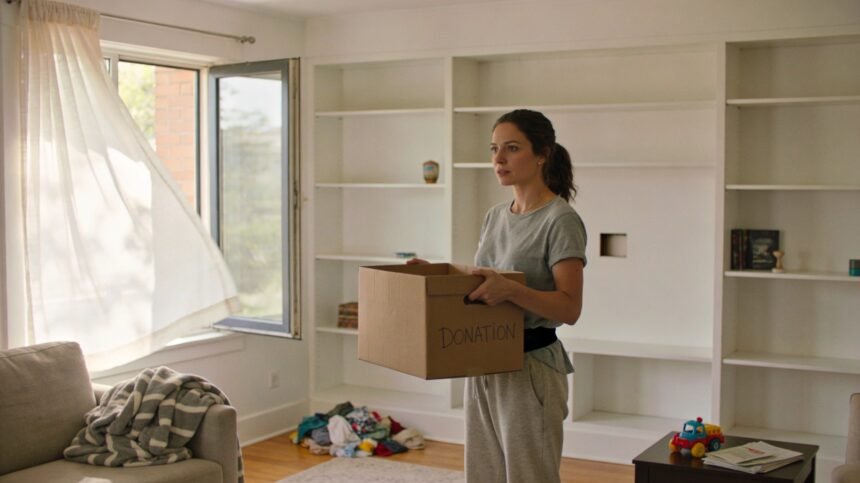
Now, before any organizing happens, a purge pass through the whole house. Get three large garbage bags and label them mentally if not physically: trash, donate, and belongs elsewhere. Walk through every room and move fast. Don’t deliberate for more than ten seconds on any single item. If you haven’t used it in a year and don’t have an upcoming specific use for it, it goes in the donate bag. If it’s broken and you haven’t fixed it in six months, trash. If it belongs in a different room, put it directly in that room, not in a pile to be dealt with later. Speed matters here because deliberation is where purges stall. The goal is volume, not perfection. A fast, decisive purge of an entire house takes two to three hours and removes more visual noise than any organizational system can. This is the single highest-leverage action of the weekend and it costs nothing.
The kitchen counter is the command center of most homes and the first specific surface to address after the purge pass. Clear it completely. Everything off. Wipe it down. Now ask what actually needs to live on this counter versus what has just accumulated there over time. The appliances used daily, the coffee maker, the toaster if it’s used most mornings, earn their counter space. Everything else, the rarely used blender, the decorative items that have become invisible, the random items that don’t belong anywhere else, gets assessed and relocated. A clear counter makes the whole kitchen feel bigger, cleaner, and more functional before a single drawer is organized. The 5-minute kitchen reset that transforms mornings runs this logic daily as a maintenance habit and is worth building after the weekend reset establishes the baseline.
Saturday afternoon goes to the living room and the entryway. These are the spaces that determine how the house feels when you first walk in and when you sit down to decompress. The entryway specifically is worth spending real time on because it’s the transition zone between outside chaos and home calm, and when it functions properly it reduces friction for everyone in the house. Hooks for bags and coats. A tray or basket for shoes. A surface for keys and mail that doesn’t become a permanent pile. None of these require purchasing anything if you repurpose what’s already in the house. A basket from another room. A bowl that was sitting in a cabinet unused. The simple command center that keeps a family organized shows what this looks like when it’s functional rather than just visually tidy.
The living room reset is primarily a surfaces and furniture arrangement exercise. Clear every surface: coffee table, side tables, entertainment unit, bookshelves. Apply the same keep-or-relocate logic as the kitchen counter. Items that belong in another room go there. Items with no home anywhere get donated. Items that stay get arranged deliberately rather than just placed back where they came from. This is also a good moment to try rearranging the furniture. Pull the sofa slightly away from the wall. Move a chair toward the window. Rotate the rug slightly. Rearranging costs nothing, takes thirty minutes, and frequently changes how a room reads more than any decorating purchase could.
Saturday evening, once the family is fed and the kids are in whatever state they’re in, do one load of laundry. Not all of it. One. The point is not to conquer the laundry situation in a single evening but to clear the single most visually overwhelming pile. The ADHD laundry routine that actually gets done works regardless of whether ADHD is in the picture because the structure it offers addresses the real obstacle with laundry, which is that it’s a multi-step task that gets abandoned at different stages by different people for entirely understandable reasons.
Sunday morning is the bedroom and bathroom. The bedroom is where the reset has the most impact on how you sleep and how you start your day. Clear the surfaces: nightstands, the top of the dresser, the chair or corner where clothes accumulate between wearing and washing. The floor first, because floor clutter changes how a room reads more dramatically than any other single factor. Clothes get put away or in the hamper, not relocated to a different pile. Under the bed gets a quick pass. Pillows get fluffed. Nightstands get cleared down to what actually belongs there. This takes maybe forty-five minutes and the room genuinely looks different when it’s done. The closet organization system that ended morning chaos is the natural next step if the closet is where the bedroom breaks down.
The bathroom reset is fast. Clear under the sink and the medicine cabinet using the same donate-trash-relocate logic as the purge pass. Throw out anything expired. Consolidate duplicates. Wipe everything down including the mirror, the faucet hardware, and the baseboards around the toilet which collect more dust than they should. A clean bathroom with cleared surfaces feels like a different room even if nothing structural changed. Cleaning the bathroom in four minutes once it’s reset becomes the maintenance plan that keeps this Sunday reset from needing to be repeated in three weeks.
Sunday afternoon is for the spaces that affect the household operationally: the laundry area, the pantry, and whatever secondary storage space has become a dumping zone. The laundry area reset focuses on having one clear spot for clean laundry waiting to be put away and one clear spot for dirty laundry waiting to be washed. Those two things existing as defined, separate spaces removes most of the laundry pile problem. Small laundry room organization on a budget covers this for the rooms where space is genuinely the constraint.
The pantry, cleared out and reorganized by category, is a cornerstone of a functional kitchen. Pull everything out. Check dates. Consolidate and discard. Put back by category with the things used most frequently at eye level. This isn’t about labeled mason jars. It’s about being able to see what you have so you stop buying things you already own and start cooking from the actual ingredients available. The pantry organization method that actually stays organized gives this more structure if you want a system rather than just a one-time reset.
Sunday evening is a light pass through the whole house, not another deep clean but a visual check. Is the donation pile bagged and by the door for Monday? Are the surfaces that were cleared still clear? Does the house feel different than it did Friday night? It should. Not because everything is perfect but because the things that were creating the most visual and mental noise have been addressed. The 30-day home reset challenge is where to go if this weekend was the starting point and you want to build on it room by room over the following month.
The reset that lasts isn’t about the weekend. It’s about the habits that maintain what the weekend created. The 15-minute daily cleaning routine that keeps the house from falling apart is the bridge between the reset and the maintenance. Build that habit into Monday and the weekend’s work holds. Skip it and the drift back begins. The choice of which direction to go from here is entirely available to you. Start Saturday. The dollar cost is zero. The effort is real. The return is a house that actually feels like home.