

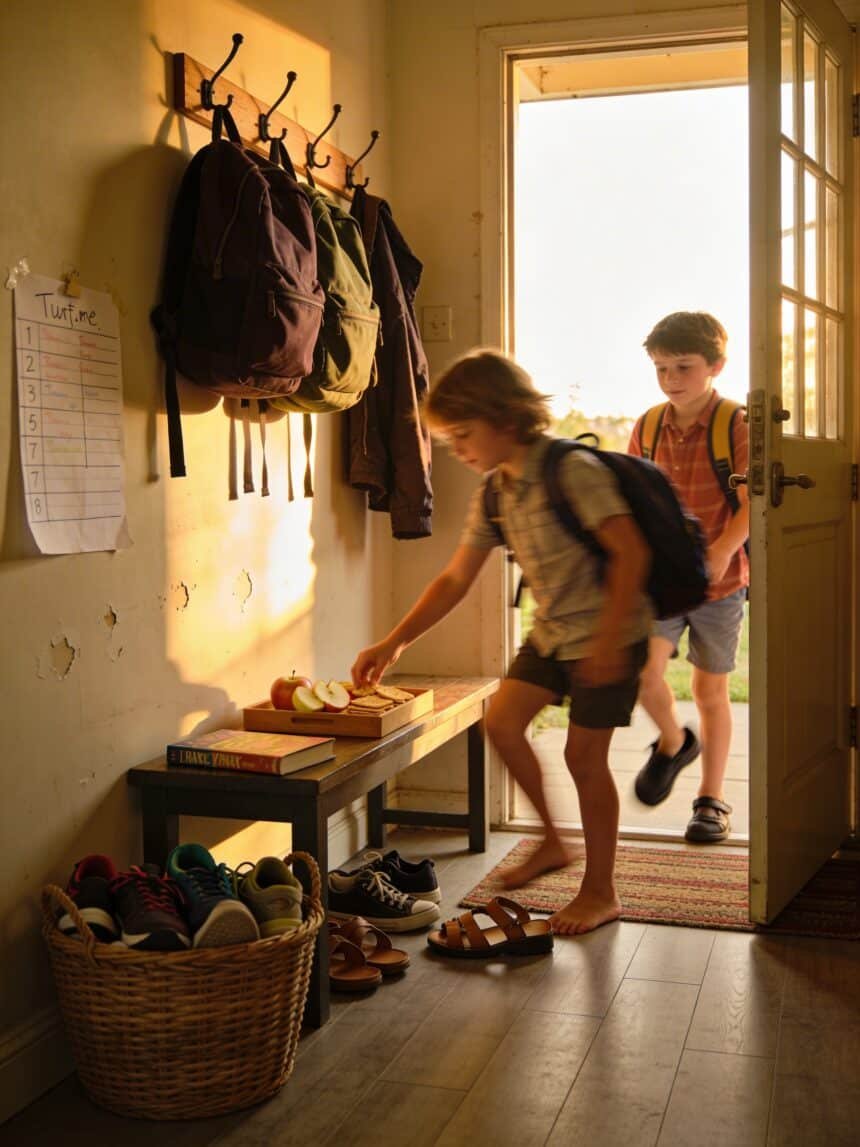
The hardest part of the day in a lot of homes is not bedtime. It is that stretch right after school.
Everybody walks in carrying something. The kids are hungry, loud, tired, overstimulated, or somehow all three at once. You are already thinking about dinner, homework, laundry, and the thing you forgot to take out of the freezer. Then somebody reaches for a screen, somebody else starts arguing, and the whole house shifts into that familiar after-school spiral.
That is exactly why a screen-free routine helps so much.
Not because screens are evil. Not because every family has to run like a military academy. Just because that window between school and evening usually goes better when kids land in the house before they disappear into devices.
The American Academy of Pediatrics keeps coming back to the same basic idea: build a family media plan around your real routines, create screen-free times and places like meals, homework, and bedtime, and cut things like autoplay and extra notifications that make it harder for kids to stop. Their updated family media guidance also recommends a “one screen at a time” approach so devices are not stacking distraction on top of distraction.
What has worked best in real life is a short landing routine kids can follow almost without thinking.
First comes the reset. Shoes off. Backpacks down. Lunchboxes to the counter. Water bottle out. Papers in one spot. This part matters more than people think because it stops the front door from becoming a daily explosion zone. If your house has been running on scattered papers and random school junk, this fits naturally with the simple command center that keeps our family organized because the after-school routine works a lot better when there is already a home for the chaos.
Next comes the snack.
I love a snack that does not invite a second whole mess. Something quick, filling, and easy to repeat. Apple slices and peanut butter. Yogurt and granola. Crackers, cheese, and fruit. Leftover muffins. Nothing fancy. The point is to close the hunger gap before everybody starts acting like the world is ending over a math worksheet.
Then comes movement.
This does not have to be a full backyard boot camp. It can be ten minutes outside. A scooter lap. Basketball in the driveway. Jump rope. Walking the dog. Tossing a ball. Even a quick dance break in the living room counts. A lot of kids need to physically shake school off before they can sit down and be decent humans again. Honestly, a lot of adults do too.
After that comes the quiet part.
Homework, reading, coloring, Lego, puzzles, drawing, or helping with one small task in the kitchen. That middle stretch is where the routine either holds or falls apart. If the screen comes too early, it usually becomes the whole evening. If the routine stays simple, the house has a better shot at staying calm. That is one reason I still like linking this kind of rhythm to after-school routine for kids that keeps the peace and afterschool routine that actually works. The details may change by age, but the shape of the afternoon matters.
The mistake a lot of parents make is trying to force the perfect routine all at once. That almost never works. Start smaller than that. Pick four repeatable steps and make them boring in the best way. For example: come in, snack, move, settle. Or come in, change clothes, snack, homework. Kids do better when they know what happens next, and parents do better when they are not reinventing the whole afternoon every day.
If screen time is part of your evening, that is fine. This is not about pretending screens do not exist. It is about using them later and more intentionally. The AAP guidance is practical here too. Predictable media routines work better than random yes-and-no decisions, especially for younger kids. Timers, fewer notifications, and clearer limits make transitions easier.
That is also why this routine pairs well with screen time rules that actually work if your house is stuck in constant negotiation mode. Kids usually push hardest when the rules feel random. They calm down faster when the pattern is familiar.
If your kids are older, the routine does not have to feel babyish. It just needs structure. Middle schoolers might need snack, shower, homework, and free time. Younger kids may need snack, outside play, reading, and dinner help. The point is not to make everybody do the same thing. The point is to stop the after-school hours from sliding straight into overstimulation and conflict.
And if your afternoons are already loud and messy, that does not mean you failed. It probably just means the house needs a softer landing.
A good after-school routine is not about control. It is about recovery.
School takes a lot out of kids. Noise, transitions, social pressure, sitting still, listening all day, keeping up, holding it together. Home should not feel like another performance. A simple screen-free routine gives them a place to come down before the evening picks up again.
Sometimes that is all the difference between a rough afternoon and one that actually feels manageable.