







The small home problem no one warns you about
Living small sounds cute until you’re tripping over shoes at the door, wrestling pans out of a cabinet, and side‑eyeing the pile of “stuff with no home” on the floor. It’s not that you’re messy. It’s that your space is doing zero heavy lifting.
- The small home problem no one warns you about
- Step 1: Fix the “drop zone” near the door
- Step 2: Turn your couch into storage
- Step 3: Give your tiny kitchen fake extra cabinets
- Step 4: Tame closet chaos without a full remodel
- Step 5: Use vertical pantry and bathroom space
- Step 6: Hide cables and tech clutter
- Step 7: Add storage without making it look cluttered
- Step 8: Make your kitchen ADHD‑ and mom‑friendly
- Step 9: Pair storage with decluttering (or the stuff just moves)
- Step 10: Give every item a “home,” not a vibe
- FAQs
Here’s the part nobody tells you: most small homes don’t need more bins. They need smarter spots.
So instead of giving you a random list of products, I want to walk through real small‑space headaches and the under‑$50 storage solutions that actually fix them. These are the kinds of things I wish I’d known before I bought fifteen mismatched baskets and still felt cluttered.
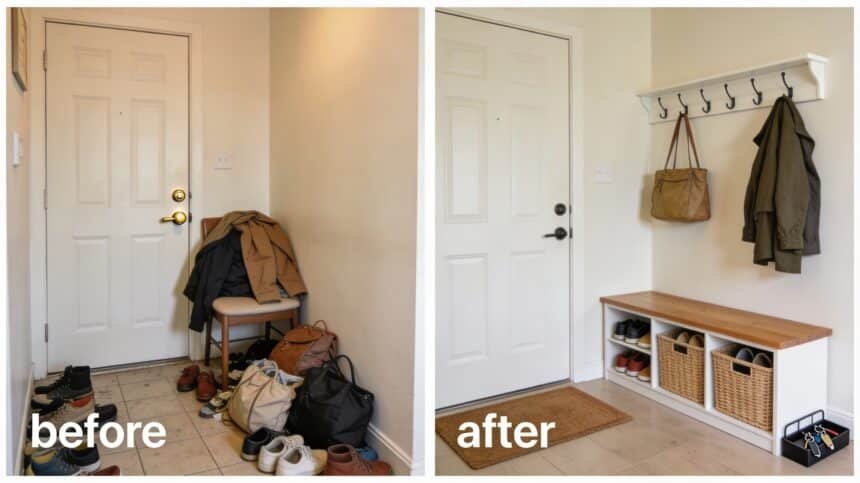
Step 1: Fix the “drop zone” near the door
If you have a small home, your entry might be… a wall. Or nothing at all. Which means:
- Shoes pile up in a corner
- Bags get dropped wherever
- Mail and keys float around like chaos
Under‑$50 fixes that actually work:
- A slim wall‑mounted coat rack or row of adhesive hooks
- A small bench or ottoman with storage for shoes
- A narrow tray or mat to corral footwear
If you can’t screw into the wall, strong adhesive hooks still change everything. Think of this as your “command center lite,” similar to your simple command center that keeps our family organized.
Suddenly shoes, bags, and keys have a home. Your floor sighs with relief.
Step 2: Turn your couch into storage
In a small living room, the couch takes up a huge chunk of space. If it’s just sitting there looking pretty and not storing anything, that’s wasted real estate.
Options under $50:
- Under‑sofa storage bins on wheels
- A storage ottoman that doubles as a coffee table
- Slim baskets tucked along the side for blankets and remotes
This is where your multifunctional furniture storage small homes philosophy shines. Furniture should be doing at least two jobs whenever possible.
Use under‑sofa bins for off‑season decor, extra blankets, or kids’ toys you don’t want to stare at all day.
Step 3: Give your tiny kitchen fake extra cabinets
Small kitchens can make you feel like you’re losing your mind. No pantry. One sad cabinet. Nowhere for your spices to live. I get it.
Instead of dreaming about a full remodel, layer smart storage:
- Cabinet shelf risers so you can stack plates and bowls without teetering towers
- Over‑the‑door racks for pantry doors or under‑sink cabinets
- Slim rolling cart that slides between the fridge and wall
- Magnetic spice racks or knife strips on the side of the fridge
Your organize small kitchen zero storage breaks down how to turn dead corners into working space. Pair that with clear bins and labels like in your pantry organization method that actually stays organized, and suddenly the same kitchen feels twice as big.
Step 4: Tame closet chaos without a full remodel
Closets in small homes are famous for being useless. One pole. One shelf. That’s it. Then you’re told to “just be more organized.” Cool, thanks.
Under‑$50 solutions that behave like extra built‑ins:
- Hanging fabric shelves for sweaters, jeans, or kids’ clothes
- Over‑the‑door shoe organizers for shoes, cleaning supplies, or small items
- Slim hanging rod extender to create a second row for shorter clothes
- A few matching slim hangers to actually fit more clothes
Your closet organization system that finally ended my morning chaos shows how powerful small upgrades can be. None of these require drilling or permanent changes, which is perfect for renters.
Step 5: Use vertical pantry and bathroom space
Pantries and bathrooms are where clutter hides. Things fall over in tall cabinets, get lost in the back, and suddenly you own eight half‑used bottles of the same cleaner.
Low‑cost fixes:
- Stackable baskets or bins for snacks, grouped by type
- Turntables (lazy Susans) for condiments and bathroom products
- Under‑shelf baskets to “add” a second level in tall cabinets
- Clear bins so you can see what you actually have
Pair this with pantry organization on budget cheap fixes and your pantry organization method that actually stays organized. The key isn’t pretty labels. It’s giving every category its own parking spot.
Step 6: Hide cables and tech clutter
Cord chaos is such a small thing, but it makes a room feel messy even when everything else is clean.
Cheap fixes that genuinely help:
- Cord clips that stick to desks and side tables
- Cable sleeves that bundle multiple cords into one
- Small baskets or boxes to hide routers and power strips while still allowing airflow
If your digital life feels chaotic too, pairing these physical fixes with your digital decluttering for moms photos files email makes your whole space feel calmer.
Step 7: Add storage without making it look cluttered
Here’s where a lot of people get stuck. They buy storage, but the storage itself becomes visual clutter. The trick is to choose pieces that blend into your space and match your actual routines.
Think about:
- Baskets that match your couch or rug instead of random colors
- A storage bench that looks like normal furniture
- A ladder shelf or wall shelf that holds decor and storage boxes
Your organize home on budget no expensive bins is perfect here. You don’t need influencer‑level acrylic systems. You need a few sturdy, neutral pieces that work hard.
Step 8: Make your kitchen ADHD‑ and mom‑friendly
If your brain runs a little spicy, or you’re just tired all the time, your systems need to be forgiving. That’s where the ADHD kitchen organization system that actually works comes in.
Under‑$50 helpers for that style:
- Open bins you can toss things into instead of delicate stacking
- Visible canisters for daily items instead of hiding everything
- A small rolling cart for “today’s cooking stuff” that you can wheel over and shove back when you’re done
The goal is not perfection. It’s making “good enough” the easiest option.
Step 9: Pair storage with decluttering (or the stuff just moves)
Storage without decluttering is just rearranging your stress. Before you buy anything, do a quick pass using what to declutter first easy wins biggest difference. Get obvious junk and unused things out.
Then, once you’ve added new storage, use your broke mom’s 30-day home reset guide to keep the momentum going so the clutter doesn’t creep back in.
Step 10: Give every item a “home,” not a vibe
This sounds cheesy, but it’s the true secret. Tiny homes feel chaotic when items don’t have a clear home. You’re forever moving the same pile from counter to table to bed and back.
When you bring in any new storage under $50, ask:
- What exact category lives here?
- Can my tired future self put things away in two seconds?
If the answer is “I’ll figure it out later,” that storage piece probably won’t help. If it’s “this is where lunchboxes go” or “this is where winter hats live,” you’re on the right track.
FAQs
How many storage products do I actually need in a small home?
Probably fewer than you think. Start by decluttering, then add storage only where you hit real friction: the entry, kitchen, closets, and one or two hot‑spot surfaces. It’s better to have a few well‑used pieces than a dozen bins that don’t fit your routines.
What’s the first storage upgrade I should make on a tiny budget?
Fix your entry. A couple of sturdy hooks and a small shoe solution (mat, basket, or bench) instantly lowers daily stress. You tackle clutter at the door instead of letting it spread through the home.
How do I avoid making my small space look even more cluttered with storage?
Stick to a simple, consistent color palette for baskets and bins, and choose closed storage for visually noisy items. Use vertical space (walls, backs of doors) so floors stay more open. Your organize home on budget no expensive bins approach works perfectly here.
Are clear bins worth it or just an Instagram thing?
Clear bins are genuinely helpful in pantries, bathrooms, and kids’ spaces because you can see what’s inside without digging. They’re not required everywhere, but using them in a few high‑traffic spots keeps you from re‑buying things you already own.
How do I keep these storage systems from falling apart in a month?
Build routines around them. Use a quick 10 minute closing shift at night to reset key zones. Treat it like brushing your teeth: small daily effort instead of giant weekend cleanups.
What if my family won’t use the new storage the way I set it up?
Watch what they naturally do. If shoes land in the corner, put a basket or mat there instead of fighting it. Label bins with words or pictures, especially for kids. Involve them when you set up systems so they feel like co‑owners, not employees.
Can I organize a small home if I’m broke and exhausted?
Yes, but it needs to be gentle. Start with free decluttering, then add one $20–$30 storage upgrade at a time where it will help the most. Pair it with support like the broke mom’s 30-day home reset guide so you’re not doing this alone in your head.











What’s your go-to storage hack for small spaces? Check out these affordable ideas! #SmallSpaceSolutions #HomeOrganization #CozyCornerDaily