







My kitchen used to be the room that stressed me out most in my entire house. Every surface was sticky. The sink was always full of dishes. I’d have to clear off the counters just to make dinner, which meant dinner was automatically 20 minutes later than planned because I had to clean before I could even start cooking.
- Why “Clean As You Go” Never Worked For Me
- The Evening Kitchen Reset That Changed Everything
- Setting Up Zones That Actually Make Sense
- The Junk Drawer Situation
- Maintaining The Sink Drain
- The Scrub Brush That Lives In My Sink
- Morning Maintenance That Takes Two Minutes
- Getting Your Family On Board
- What About Deep Cleaning?
- When The Routine Breaks Down
- The Real Payoff
It was exhausting. And the worst part? I’d do a big cleaning session on Saturday, the kitchen would look amazing for like 36 hours, and then by Tuesday it was back to disaster status.
I finally figured out that the problem wasn’t my cleaning. The problem was I didn’t have any kind of system for maintaining it. I was just reacting to mess instead of preventing mess. Once I built an actual routine that worked with my real life, not some idealized version where I have unlimited time and energy, everything changed.
Why “Clean As You Go” Never Worked For Me
Everyone says clean as you go. Wipe down counters while cooking. Do dishes immediately. And yeah, that’s great advice for people who are naturally tidy or who have brains that work that way. My brain does not work that way.
When I’m cooking dinner, I’m focused on not burning the chicken and making sure the kids aren’t destroying the living room and trying to remember if I already added salt to the pasta water. I do not have spare mental bandwidth to wipe down counters between steps. I just don’t.
So I had to build a routine that acknowledged that reality instead of fighting it. My system is end-of-day focused, not throughout-the-day focused. I let the kitchen get messy during the day because that’s what happens when you actually use a kitchen. Then I do one concentrated reset at night that takes maybe 10 minutes.
This was a mental shift for me. I had to give myself permission to have a messy kitchen during the day without feeling like a failure. The goal isn’t a constantly perfect kitchen. The goal is a kitchen that’s clean when it matters most, which for me is in the morning when I’m trying to make breakfast and pack lunches.
The Evening Kitchen Reset That Changed Everything
Every night after dinner, I do what I call my kitchen reset. It’s the same steps in the same order every single time, which means I don’t have to think about it. My brain can be completely fried from the day and I can still do this on autopilot.
Step one is clearing the counters. Everything that doesn’t belong in the kitchen goes into a basket that lives by the door. Mail, kids’ homework, random toys, whatever. It all goes in the basket to be dealt with later. I’m not organizing the whole house right now. I’m just clearing the kitchen.
Step two is loading the dishwasher. All the dinner dishes, plus anything else that accumulated during the day. I run the dishwasher every single night whether it’s full or not. This was another mental shift. I used to wait until it was totally full, which meant I often didn’t have clean dishes in the morning. Now I just run it. Water and electricity are cheap. My sanity is expensive.
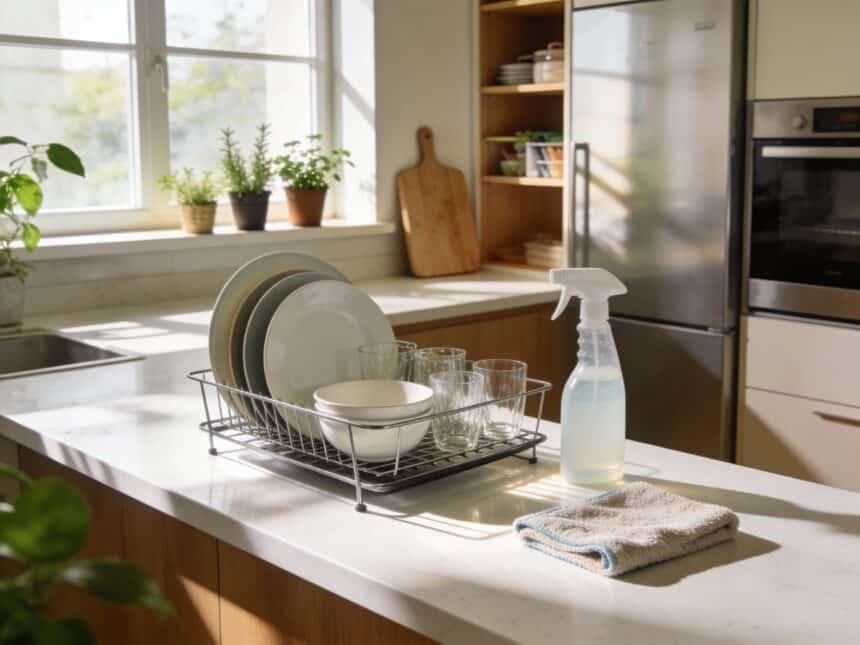
Step three is hand washing anything that can’t go in the dishwasher. I have a dish drying rack from Kitsure that’s been a game changer for this. It’s big enough to hold a decent amount of stuff but doesn’t take up my entire counter. The rack has a drainage spout that empties into the sink, so water doesn’t pool up and get gross. This matters more than I thought it would.
Step four is wiping down all the counters and the stove. I use Lysol Kitchen Degreaser for this because it actually cuts through the sticky cooking residue without requiring me to scrub for 10 minutes. One spray, one wipe, done. I keep it right next to my sink so I don’t have to go hunting for it.
Step five is sweeping the floor. I don’t mop every night. I’m not superhuman. But I do a quick sweep to get the crumbs and food bits. This keeps things from getting crunchy underfoot, which is a sensory nightmare for me.
The whole thing takes 10 to 12 minutes. Sometimes less if dinner wasn’t particularly messy. And it means I wake up to a clean kitchen every morning, which honestly might be the best part of my entire day.
Setting Up Zones That Actually Make Sense
One thing that helped my routine stick was organizing my kitchen into functional zones. I’d read about this concept before but I’d always overthought it. Now I keep it really simple.
Zone one is the dish zone. This is the area right next to my sink. I have my dish drying rack here, my dish soap in a pump dispenser, and a sink strainer that catches food bits before they go down the drain. Everything I need for dishes is in a two-foot radius.
The pump soap dispenser was one of those small changes that made a bigger difference than expected. You just put your hand under it and it dispenses soap automatically. This sounds like a dumb luxury but when your hands are covered in chicken grease or dough, not having to touch the soap bottle is actually really nice. Plus it looks cleaner than a regular soap bottle sitting there.
Zone two is the cleaning zone, which is the cabinet under my sink. I have an under-sink organizer that pulls out like a drawer so I can see what’s there without digging around in the back of a dark cabinet. It holds all my cleaning supplies. Dish soap refills, sponges, trash bags, my spray cleaner, everything.
Before I got that organizer, I’d have to kneel down and stick my entire upper body into the cabinet to find anything. Half the time I’d forget what I even had under there and buy duplicates. Now I can see my whole inventory at a glance. It’s made me way more likely to actually use my cleaning supplies instead of just buying more.
Zone three is trash and recycling. I have a trash can with a soft-close lid that sits next to my counter. The lid matters because otherwise the trash can becomes a gross open situation that smells and attracts fruit flies. I learned this the hard way last summer.
The Junk Drawer Situation
Let’s be honest for a second. You need a junk drawer. I know minimalists say you don’t, but you do. You need one place where the random small stuff lives. Birthday candles, rubber bands, takeout menus, that one weird battery size you only need once every three years.
The key is having ONLY ONE junk drawer and actually organizing it so it doesn’t become a black hole. I use kitchen drawer organizers to create little compartments in that drawer. Each type of thing has its spot. It’s not perfect but it’s functional.
I go through that drawer about once every three months and purge the stuff that doesn’t belong there anymore. This prevents it from becoming an actual disaster.
My other drawers are organized by category. Utensils in one. Cooking tools in another. Baking supplies in a third. Each drawer has dividers or organizers so things don’t shift around and get jumbled together. This means I can find what I need without digging, which during dinner prep is crucial.
If you’re setting up your kitchen from scratch or trying to figure out what actually matters, check out the first apartment cleaning kit guide. It breaks down the essentials without all the extra stuff stores try to sell you.
Maintaining The Sink Drain
Nobody talks about this but your sink drain can make or break your kitchen cleaning routine. If your drain is slow or clogged or smelly, everything about washing dishes becomes more annoying.
I use a sink strainer that catches food particles before they go down the drain. It’s one of those stainless steel mesh ones that sits right in the drain opening. Every night during my kitchen reset, I empty that strainer into the trash. Takes literally five seconds and prevents 90% of drain problems.
I also run really hot water down my drain after doing dishes, especially if I’ve washed anything greasy. Hot water helps flush grease through the pipes before it can solidify and cause clogs. Is this a perfect solution? No. But it helps.
Once a month I do a deeper drain clean with baking soda and vinegar. I dump about half a cup of baking soda down the drain, follow it with a cup of white vinegar, let it bubble for 15 minutes, then flush with hot water. This keeps things flowing and prevents that gross smell that kitchen drains can get.
The Scrub Brush That Lives In My Sink
I keep a scrub brush with a handle right in my sink at all times. This sounds like such a small thing but it’s made me way more likely to actually scrub pots and pans instead of letting them soak for three days.
When the scrub brush is right there, already in the sink, there’s no friction to using it. I don’t have to go get it from under the sink or find a sponge or anything. It’s just there. So when I’m loading the dishwasher and I come across a pot with stuck-on food, I can scrub it right then and be done with it.
I replace the brush heads every month or so because they do get gross. You can’t just keep using the same brush forever. It stops cleaning effectively and starts just spreading around bacteria.
Morning Maintenance That Takes Two Minutes
My evening routine is the big one, but I also do a tiny maintenance check in the morning. While my coffee is brewing, which takes about two minutes, I do a quick scan of the kitchen.
Are there dishes in the drying rack that need to be put away? I do that. Is there anything on the counter that shouldn’t be there? I move it. Did someone leave a cup out? I put it in the dishwasher.
This morning maintenance keeps the kitchen from accumulating mess during the day. It’s not a deep clean. It’s just a quick tidy. And because I’m standing there waiting for coffee anyway, it doesn’t feel like extra work.
This is pretty similar to the 5-minute kitchen reset that saves my mornings. Short bursts of maintenance prevent the big overwhelming messes that make you want to just give up.
Getting Your Family On Board
If you live with other people, your kitchen routine only works if everyone participates at least a little bit. This was a huge source of frustration for me until I figured out how to make it easier for everyone to help.
I labeled everything. Which cabinet has plates. Which drawer has utensils. Where the trash bags live. This sounds excessive but it means my kids and my partner can actually put things away in the right place instead of just setting them on the counter and walking away.
I also assigned one specific task to each kid. My older daughter empties the dishwasher in the morning. My younger one sets the table before dinner. They’re small tasks but it takes those things off my plate and teaches them to contribute to the household.
My partner does the trash. Takes it out, puts in a new bag, done. He’s in charge of it so I don’t have to think about it or remind him. This division of labor means the kitchen maintenance doesn’t all fall on one person.
What About Deep Cleaning?
This kitchen routine keeps things clean and functional on a daily basis. But it’s not deep cleaning. I’m not scrubbing baseboards or organizing the pantry or cleaning out the oven every night. That stuff still needs to happen, just not every day.
I have a rotating monthly schedule for deeper kitchen tasks. Week one is cleaning out the fridge and wiping down cabinet fronts. Week two is organizing one cabinet or drawer. Week three is cleaning the oven and microwave. Week four is baseboard and floor deep clean.
This spreads the deeper work out so it’s not overwhelming. And honestly? Some months I don’t get to all of it and that’s fine. The daily routine keeps things from getting gross in the meantime. The deep cleaning is just maintenance on top of that.
If you want a more detailed cleaning schedule that covers everything, not just the kitchen, I wrote about the daily cleaning schedule that actually works. It’s the same philosophy applied to your whole house.
When The Routine Breaks Down
There are gonna be days when you don’t do your kitchen routine. You’re sick. You had a terrible day at work. The kids were up all night. Life happens.
This used to derail me completely. I’d skip one night, then the kitchen would be messy the next morning, which made me not want to deal with it, so I’d skip another night, and suddenly it’s been a week and my kitchen is a disaster again.
Now when I skip a night, I just reset the next evening. I don’t try to catch up on multiple days at once. I don’t feel guilty about it. I just do that night’s routine like normal, which gets things back to baseline.
The routine only works if it’s flexible enough to survive real life. Some days you’re just in survival mode and that’s okay. The goal is consistency most of the time, not perfection all the time.
The Real Payoff
The best part of this kitchen routine isn’t even that my kitchen stays cleaner, though that’s obviously great. The best part is that I don’t stress about the kitchen anymore.
I used to have this constant low-level anxiety about the state of my kitchen. I’d notice the dirty counters or the piled-up dishes and feel guilty that I wasn’t dealing with it. Or I’d have people coming over and panic clean for an hour beforehand.
Now? I don’t worry about it. I know I’ll do my 10-minute reset tonight and the kitchen will be fine. If someone randomly stops by, cool. The kitchen is clean enough. Not perfect, but functional.
That mental relief is worth so much more than the actual clean surfaces. I got my evening stress back. I don’t dread cooking anymore because I’m not starting from a disaster state.
Ten minutes a night gave me my peace of mind back. That’s the real reason this routine stuck when nothing else did.
If you’re dealing with other areas of your home too, the 10-minute closing shift that makes mornings peaceful expands this concept to your whole living space. Same idea, just bigger scope.
Amazon Disclosure:
As an Amazon Associate, I earn from qualifying purchases. This means if you click on an Amazon link and make a purchase, I may receive a small commission at no extra cost to you. I only recommend products I actually use and believe will help you.










What’s your go-to tip for keeping the kitchen clean? Check out this routine! #CleaningTips #HomeHacks #CozyCornerDaily