


I used to call someone for every single thing that broke in my house.
- Why You Should Learn Basic Repairs Even If You’re Not Handy
- Repair #1: Caulk Gaps Around Tubs, Sinks, and Windows (Saves $100-150)
- Repair #2: Unclog a Drain Without Chemicals (Saves $75-150)
- Repair #3: Tighten Loose Doorknobs and Cabinet Handles (Saves $50-100)
- Repair #4: Replace a Showerhead (Saves $100-200)
- Repair #5: Stop a Running Toilet (Saves $100-150)
- When You Actually Need to Call Someone
- How I Learned These Repairs
- The Confidence You Gain Is Worth More Than the Money
- Start With One Repair
- Frequently Asked Questions
- You Can Do This
Leaky faucet? Call a plumber. Gap around the window letting in cold air? Call someone. Loose doorknob? Call a handyman.
I genuinely thought I couldn’t fix things myself. I didn’t have tools. I didn’t have experience. And I definitely didn’t have the skills.
Then one year I spent over $800 on repair calls for stuff that turned out to be super simple. Like embarrassingly simple. The kind of repairs that took the person 10 minutes but cost me $100.
I decided to try learning the basics. And it turns out most small home repairs don’t require special skills or a bunch of tools. You just need to know what to do.
Here are five repairs I learned to do myself with zero experience and almost no tools. They’ve saved me hundreds of dollars.
Why You Should Learn Basic Repairs Even If You’re Not Handy
I’m not naturally handy. I don’t enjoy DIY projects. I’m not one of those people who finds home repair fun.
But I learned these repairs anyway because:
Repair calls are expensive. Most charge a service fee just to show up, usually $75 to $150, before they even fix anything.
Simple repairs shouldn’t cost $100. When someone charges you $100 to spend 10 minutes caulking a gap, that’s frustrating.
You can’t always wait for someone. If your toilet is clogged at 10 PM on Sunday, you’re not calling a plumber. You need to fix it yourself.
It’s empowering. Honestly, being able to fix stuff in your own house just feels good. You’re not helpless anymore.
These five repairs are the perfect starting point because they’re genuinely easy and don’t require special tools.
Repair #1: Caulk Gaps Around Tubs, Sinks, and Windows (Saves $100-150)
This is the easiest home repair you can learn and it makes such a difference.
Gaps around your tub, sink, or windows let in cold air, moisture, and bugs. They also make your house look messy.
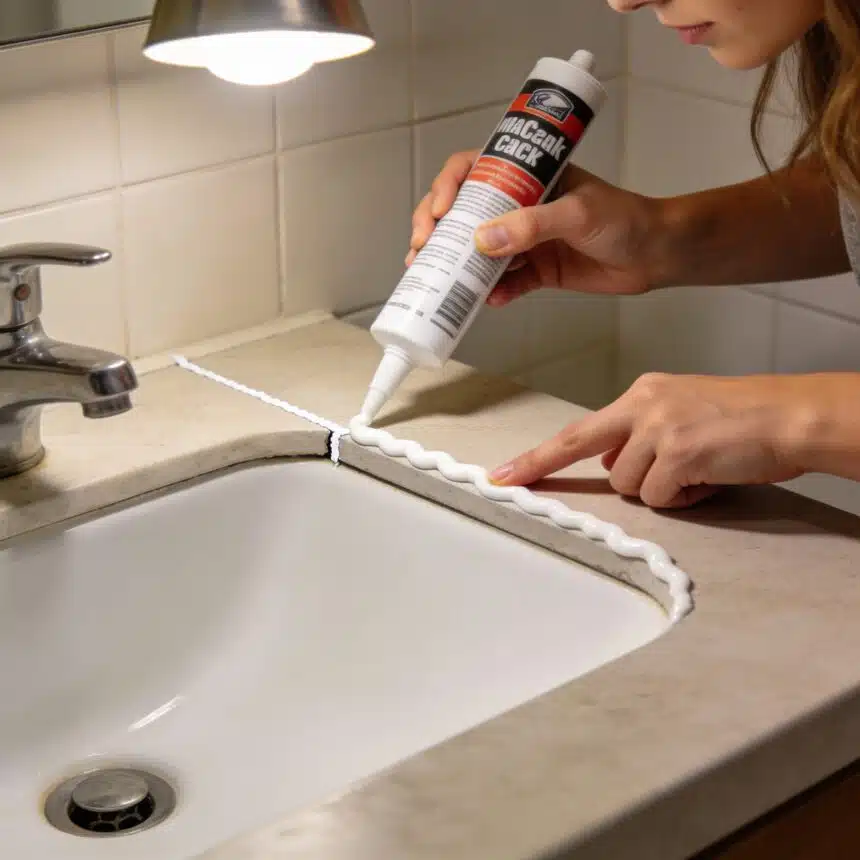
Caulking those gaps takes about 15 minutes and costs maybe $5 for a tube of caulk.
What you need:
- One tube of caulk (get the squeeze tube kind, not the gun kind)
- Paper towels
- Your finger
That’s it. No tools.
How to do it:
Clean the area where you’re caulking. Wipe away old caulk, dirt, or moisture. Let it dry.
Cut the tip of the caulk tube at an angle. Start with a small opening.
Squeeze a continuous line of caulk along the gap. Move slowly and steadily.
Wet your finger slightly and smooth the caulk line. This pushes it into the gap and makes it look clean.
Wipe away excess with a paper towel.
Let it dry overnight.
I did this around my bathtub and it immediately looked cleaner. Also stopped water from seeping behind the tub, which was causing mold.
A plumber quoted me $120 to do this. I did it myself for $5.
Pro tip: Use white caulk for bathrooms and clear caulk for windows. It blends better.
Repair #2: Unclog a Drain Without Chemicals (Saves $75-150)
Clogged drains are so common and so expensive to fix if you call someone.
But most clogs can be fixed in 10 minutes without calling anyone or using harsh chemicals.
What you need:
- Boiling water
- Baking soda
- Vinegar
- A plunger (you probably already have one)
How to do it:
Pour a pot of boiling water down the drain. This loosens gunk.
Pour half a cup of baking soda down the drain.
Pour one cup of vinegar down the drain. It’ll fizz. That’s good. Let it sit for 15 minutes.
Pour another pot of boiling water down the drain.
If it’s still clogged, use a plunger. Cover the drain completely and plunge up and down about 10 times.
This works for about 80 percent of clogs. Hair, soap scum, food buildup, most of it will clear.
I’ve done this probably 10 times in the last year. Saved me from calling a plumber every single time.
The only time you need to call someone is if the clog is deep in the pipes or nothing you try works.
What NOT to do: Don’t use chemical drain cleaners like Drano regularly. They can damage your pipes over time.
Repair #3: Tighten Loose Doorknobs and Cabinet Handles (Saves $50-100)
Loose doorknobs and cabinet handles are annoying. They wiggle when you use them. They eventually fall off completely.
But tightening them takes literally 2 minutes.
What you need:
- A screwdriver (if you don’t have one, borrow from a neighbor or buy a basic set for $10)
How to do it:
Look for the small screw on the side or bottom of the doorknob or handle.
Use a screwdriver to tighten it. Turn clockwise (righty tighty).
If there are two screws, tighten both.
Test the handle. It should feel solid now.
That’s it. Seriously.
I called a handyman once to fix a loose kitchen cabinet handle. He tightened two screws and charged me $75 for the service call.
Never again.
Now I just walk around with a screwdriver every few months and tighten anything that feels loose.
Repair #4: Replace a Showerhead (Saves $100-200)
This one surprised me. I thought replacing a showerhead required a plumber.
Nope. It’s literally just unscrewing the old one and screwing on the new one.
What you need:
- A new showerhead (I got a handheld one for $25 on Amazon)
- A cloth or old towel
- Maybe pliers (but probably not)
How to do it:
Turn off the water to be safe (or just don’t turn it on).
Unscrew the old showerhead by turning it counterclockwise. Use your hand. If it’s stuck, wrap a cloth around it and use pliers for grip.
Clean the threads on the pipe. Wipe away old tape or gunk.
Wrap the threads with plumber’s tape if you have it (optional but helps prevent leaks). Wrap it clockwise.
Screw on the new showerhead by turning it clockwise. Hand-tight is usually enough.
Turn on the water and check for leaks. If it leaks, tighten a bit more.
I replaced our old low-pressure showerhead with a handheld one. Took me 10 minutes. A plumber quoted $150 to do it.
Full guide here: How to install a handheld showerhead yourself.
Repair #5: Stop a Running Toilet (Saves $100-150)
A toilet that keeps running after you flush is wasting water and driving up your bill.
But it’s usually a super easy fix.
What you need:
- Nothing, or maybe a $5 replacement flapper from the hardware store
How to do it:
Take the lid off the toilet tank. Set it aside carefully.
Flush the toilet and watch what happens inside the tank.
Usually, the problem is the flapper (the rubber thing at the bottom that opens when you flush). If it’s not sealing properly, water keeps running.
Check if the chain is tangled or too long. Adjust it so there’s a little slack but not too much.
If the flapper looks old or damaged, replace it. Turn off the water valve behind the toilet. Flush to empty the tank. Pull off the old flapper and snap on the new one. Turn water back on.
Test by flushing. The running should stop.
This fixed our running toilet that was keeping me awake at night. Took 5 minutes.
A plumber quoted me $125. I spent $5 on a replacement flapper.
When You Actually Need to Call Someone
I’m all for DIY, but some things genuinely require a professional:
Anything electrical beyond changing a light bulb. Don’t mess with wiring.
Gas leaks. Call the gas company or a professional immediately.
Major plumbing issues like burst pipes or sewer line problems.
Structural repairs to walls, foundation, or roof.
Anything you’re truly uncomfortable with. If it feels dangerous or too complicated, call someone.
But these five repairs? They’re safe, simple, and genuinely beginner-friendly.
How I Learned These Repairs
YouTube. Seriously.
Every time something broke, I searched “how to fix [problem]” on YouTube. Watched two or three videos. Then tried it myself.
Most of the time, it worked. The few times it didn’t, I just called someone like I would have anyway.
But I saved money on probably 80 percent of small repairs by learning to do them myself.
Here’s my story: Home repairs I learned from YouTube that saved me $800.
The Confidence You Gain Is Worth More Than the Money
Saving money is great. But the confidence you gain from fixing stuff yourself is even better.
You stop feeling helpless in your own home. When something breaks, you don’t panic. You just look up how to fix it and try.
Sometimes it works. Sometimes it doesn’t. But at least you tried before spending $100 on a repair call.
I went from someone who called for everything to someone who at least attempts to fix it first. That shift has saved me so much money and stress.
Start With One Repair
Pick the easiest one from this list. For most people, that’s either caulking gaps or tightening loose doorknobs.
Find a gap that needs caulking or a doorknob that’s loose. Watch a 3-minute YouTube video on how to do it. Then just try.
You’ll probably mess it up a little the first time. That’s fine. It’s still better than spending $100 for someone else to do it.
And once you successfully fix one thing, you’ll feel brave enough to try the next repair.
Before you know it, you’re saving hundreds of dollars a year on repair calls.
For more beginner-friendly home repairs, check out:
Frequently Asked Questions
Do I really not need any tools for these repairs?
For caulking and unclogging drains, you truly need zero tools. For tightening doorknobs, you need a basic screwdriver (about $3). For the showerhead, you might need pliers but usually you can do it by hand. For the toilet, no tools needed. These are the most beginner-friendly repairs possible.
What if I try to fix something and make it worse?
That’s rare with these five repairs because they’re so simple. Worst case, you call a professional like you would have anyway. But honestly, it’s hard to make caulking, unclogging, or tightening screws worse. These aren’t risky repairs.
How do I know if I should try to fix something myself or call someone?
If it involves electricity, gas, major plumbing, or structural issues, call someone. For small leaks, clogs, loose hardware, gaps, and cosmetic stuff, try it yourself first. If you’re uncomfortable or it doesn’t work after one attempt, then call a pro.
Where do I learn how to do these repairs?
YouTube is the best resource. Search “[your problem] how to fix” and watch 2-3 videos. Pick the one that explains it most clearly. Pause and rewatch as needed. Most repairs have dozens of tutorial videos.
Can I really save hundreds of dollars doing this?
Yes. Each repair call costs $75-$150 minimum just for someone to show up. If you do 5 small repairs yourself over a year instead of calling someone, that’s $375-$750 saved. Plus you’ll gain confidence to try other repairs too.
What basic tools should I own as a beginner?
Start with a basic screwdriver set (flathead and Phillips head), a small hammer, pliers, and a plunger. That covers 90% of small home repairs. You can buy a basic toolkit for under $20 at Walmart or hardware stores.
You Can Do This
I know it feels intimidating. I was intimidated too.
But these repairs are genuinely easy. If I can do them with zero experience and minimal tools, you absolutely can too.
Pick one repair from this list. Watch a YouTube video. Try it.
Even if it takes you twice as long as it should or looks a little messy, you still did it yourself. You still saved $100.
And next time something breaks, you’ll be a little braver about trying to fix it.
Start this weekend. Find one gap that needs caulking or one loose doorknob. Fix it. Feel proud.
You’ve got this.
For the tools and materials needed for this project, Amazon has everything you need delivered to your door.





