


Furniture scratches are one of those tiny home problems that somehow feel bigger than they should. They are not emergencies. Nobody is calling the fire department because the side table got scraped by a toy bin or the dining chair picked up another long pale line from getting dragged too fast across the floor. But they still bug you. You notice them every time you walk past. They make a decent room feel a little worn down. And if you have an ADHD brain, there is a good chance they live in that irritating category of things you keep meaning to fix, never quite fix, and then feel weirdly guilty about for six months.
That is exactly why I like low-friction furniture scratch fixes. They give you a way to do something about the damage without turning it into a hardware-store errand, a three-hour research spiral, or a complicated refinishing project that sits in your head until next spring. Most furniture scratches do not need a dramatic solution. They need a quick, practical one that helps the piece look better now.
The first thing that changed my whole mindset was realizing that not every scratch deserves a perfection-level repair. That sounds obvious, but it matters. If the only repair you consider “real” is sanding, staining, sealing, and making the piece look factory fresh, you are probably not going to start. Not because you are lazy. Because the task is too big for the actual problem. A lot of everyday scratches just need softening, darkening, or blending so your eye stops getting yanked toward them every time you walk into the room.
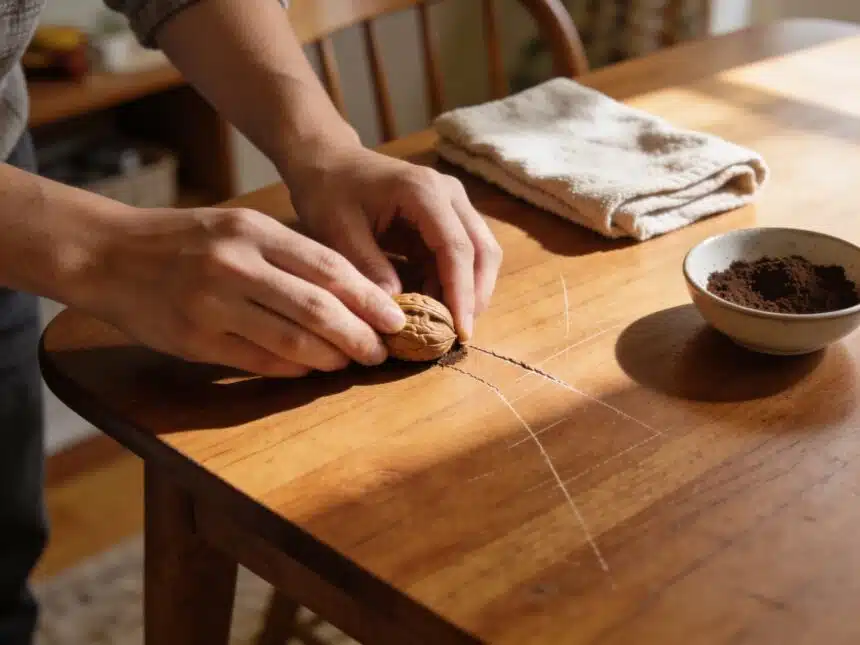
That is where common household supplies come in. A walnut is the classic one for a reason. If the furniture is medium to dark wood and the scratch is light and surface-level, rubbing a walnut over the mark can help darken it and make it far less obvious. It is not magic. It is not a museum restoration technique. But it works surprisingly well for that shallow, annoying kind of scratch that makes wood furniture look tired before it is actually damaged. The best part is that you can do it in less time than it would take to decide whether the trip to the store is “worth it.”
Coffee grounds can help too, especially on darker wood, though I think people sometimes overdo it. A tiny bit mixed into a light paste or used carefully with a cotton swab can camouflage lighter marks on darker surfaces, but the key word there is carefully. This is about blending, not painting your end table with breakfast leftovers. A little patience goes a long way. And because it is so low-stakes, it feels much more approachable than a full repair kit.
That kind of low-barrier home fix is honestly perfect for ADHD households. The fewer steps between “this bothers me” and “I can improve it,” the better. It is the same reason fixing sticky doors and squeaky floors with what you already have feels so satisfying. You are not building a whole weekend around one tiny repair. You are using momentum while you have it.
I would start by figuring out what kind of scratch you are dealing with. A white or pale surface scratch is different from a deep gouge. A shallow mark in the finish often just needs blending. A deeper scratch that has actually cut into the wood might need filler, a stain marker, or at least a more layered approach. But even then, you can still improve the look fast without committing to a full restoration. The goal is not always “like new.” A lot of the time, the goal is “no longer distracting.”
One thing that helps is cleaning the area first. I know that sounds boring, but a surprising number of “bad scratches” look worse because there is grime sitting inside them or around the finish. Wipe the piece down gently before you do anything else. That is also why I always like practical maintenance articles that deal with the basics first. The same logic behind organizing cleaning supplies so they actually get used applies here too. When the cloth and cleaner are easy to reach, you are much more likely to do the quick prep that makes the repair work better.
After cleaning, try the easiest fix first. Walnut. A little matching color from coffee grounds for darker finishes. A bit of olive oil and vinegar on a cloth for some dull scuffed areas, though I would test that carefully and sparingly rather than sloshing it all over. Sometimes a scratch stands out less once the surrounding finish has a little life back in it. And that matters, because ADHD-friendly repairs work best when they give you a visible payoff early. Early payoff keeps you moving.
That is also why I would keep your expectations human. You are not refinishing heirloom furniture in a workshop with a podcast on and six uninterrupted hours. You are standing in a real house, probably with other things going on, trying to make the bench, dresser, table, or chair look less beat up than it did ten minutes ago. That is a perfectly valid goal. In fact, I think a lot more home fixes would get done if people stopped acting like “not perfect” means “not worth doing.”
Furniture scratches also tend to show up in the exact parts of the home that already catch a lot of visual stress. The dining table. The coffee table. The bedside table. The console by the door. So when you soften those scratches, the room often feels calmer in a way that is bigger than the repair itself. That is one reason the bedside table organization system that actually stays put matters so much. Surfaces do a lot of emotional work in a home. When they look less chaotic and less beat up, the whole room feels better.
If the scratch is deeper, you can still stay practical. A wax fill stick, a stain marker, or a dab of matching wood filler may be worth keeping around if your home has a lot of wood furniture that sees real use. But even then, I would keep the repair kit small and approachable. ADHD-friendly home maintenance is all about removing barriers. If your “furniture repair station” becomes a complicated box with twelve products, extra sanding pads, gloves, brushes, and three different YouTube tutorials to compare, you have already lost half the battle.
That is why I like keeping these repairs in the same mental category as other small, confidence-building wins around the house. They belong with the home repairs you cannot keep ignoring, five home repairs that saved real money, and the kind of builder-grade eyesores you can fix over a weekend. Not because a scratched table is a crisis, but because every small repair you actually finish makes the home feel more handled.
And that matters emotionally too. A lot of ADHD home stress comes from accumulated visual loose ends. A scratch here. A pile there. A squeaky hinge. A sticky door. A scuffed dresser. None of it is huge on its own, but together it creates that low-grade feeling that the house is always one step ahead of you. Small practical fixes fight that feeling. So does decluttering, honestly. If the room itself already feels overloaded, every flaw lands harder. That is why the doom pile audit that finally clears hidden clutter and what clutter is really costing you matter alongside cosmetic repairs. The calmer the room, the less every imperfection screams for attention.
There is also something satisfying about using normal household stuff to solve a problem that had been nagging at you. It makes the home feel less precious and more workable. You stop waiting for the ideal conditions. You stop treating every scuff like a future project that needs its own budget and weekend slot. You just pick a low-effort fix and do it.
That same mindset is a huge part of why practical home care tends to stick. It works with the way real people function. If you are already trying to make your house feel less heavy and more manageable, these quick furniture fixes belong right alongside spring home refresh ideas that cost under fifty dollars, organizing a home on a budget without expensive bins, and the day you finally get sick of tripping over stuff and start taking your space back. They are not glamorous, but they do make home feel better.
So if you have been staring at that scratched side table or dinged dining chair and telling yourself you will deal with it when you have more time, more energy, or the perfect repair kit, I would lower the bar and start now. Clean the area. Grab a walnut. Try a little coffee-ground blending on darker wood if it makes sense. Use the easiest thing that improves the scratch without turning the job into a whole event. You are not trying to win a refinishing competition. You are trying to make your home feel a little calmer, a little more cared for, and a lot less annoying to look at.
And honestly, that counts. In a busy house, small visible wins count a lot.
For the tools and materials needed for this project, Amazon has everything you need delivered to your door.







Have you tried fixing scratches with household items? Check out these tips! #DIY #HomeImprovement #CozyCornerDaily