






Pantries get weird fast. One month they look manageable enough, and the next month you are finding three half-used bags of pasta, two expired cans hiding behind oats, a stale snack nobody remembers buying, and enough duplicate seasoning packets to survive a minor spice emergency. The problem is not usually laziness. It is visibility. Pantries become black holes when the system asks you to remember what is hidden instead of showing you what is there.
That is especially true with ADHD. Out of sight really does become out of mind, and when food disappears into dark corners and tall stacks, it stops existing until it is too late. Then the pantry turns into a guilt zone. You waste food, buy duplicates, and feel vaguely irritated every time you open the door. That is why I stopped aiming for a perfect Pinterest pantry and started doing pantry audits around one much more useful question: can I actually see and use what I already have?
The first shift was dropping aesthetic perfection as the main goal. A pantry does not need matching jars and impossible calm to work well. It needs clear categories, open visibility, and a layout that makes the most-used food the easiest food to find. Once I accepted that, the whole system got lighter. I did not need a makeover. I needed less hidden inventory.
The audit itself starts with one annoying but necessary step. Pull it out. Not every shelf in one dramatic all-day ordeal if that will make you quit. One zone at a time is fine. Breakfast shelf. Snack shelf. Canned goods. Baking items. Spices. Whatever you can actually finish. That strategy works for the same reason one-room-at-a-time decluttering works. Smaller zones create more follow-through than one giant overwhelming reset.
Once the food is out, expired stuff and clearly stale items go first. No guilt speech. No dramatic reflection on your buying habits. Just out. The point is not to shame yourself for having forgotten crackers from 2023. The point is to create a pantry that is useful now.
Then comes grouping. I like categories based on real-life use, not grocery-store logic. Quick breakfasts together. Easy lunches together. Dinner base ingredients together. Baking together. Grab-and-go snacks together. Emergency meals together. That kind of grouping supports actual cooking and actual tired weekdays much better. It also pairs naturally with the five-dinner plan that ends dinner panic, ADHD-friendly meal planning for real families, and the one-tray ADHD meal prep shortcuts that lower friction. Food systems work better when the pantry supports the way you really cook.
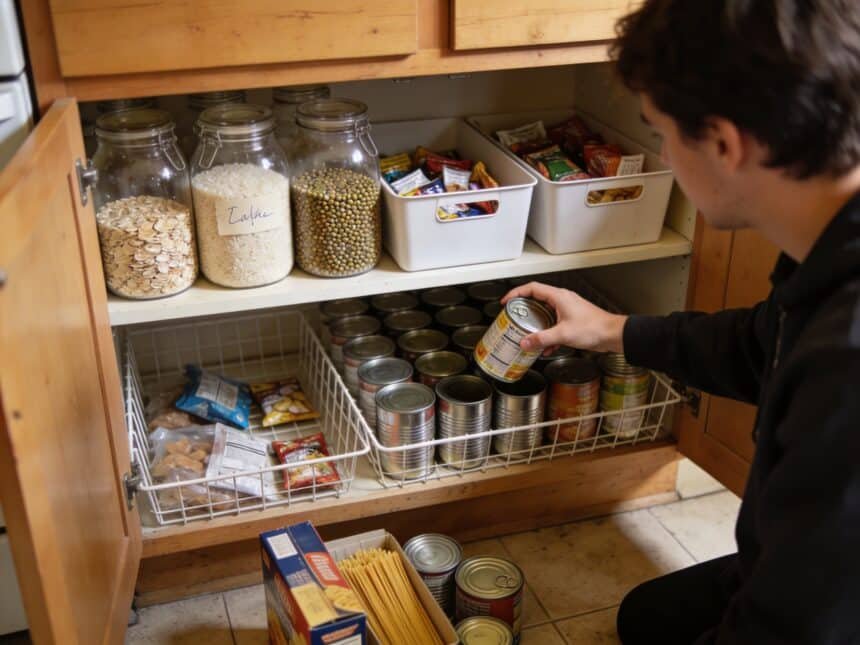
Transparent bins help a lot here. So do low open containers and tiered shelves for canned goods or spices. The goal is to reduce visual hiding. If one can sits directly behind another and everything is the same height and color, the back row may as well not exist. A simple riser changes that fast. Open bins for snack bars, packets, and pouches do too. This is not about looking fancy. It is about stopping food from quietly rotting in plain sight.
Labels help, but only if they are honest and functional. “Breakfast.” “Lunch add-ons.” “Soup and pasta.” “Bake first.” “Use soon.” Those kinds of labels help tired brains far more than cute vague labels that sound good but do not actually guide decisions. I also like one very obvious use-first zone right at eye level. Anything close to expiring, anything opened that needs finishing, or anything I keep forgetting goes there. That single shelf can save a lot of money and frustration.
And yes, money is part of this. Food waste is not only annoying. It is expensive. A cluttered pantry makes it much easier to buy duplicates, overstock the wrong things, and let perfectly usable ingredients expire because nobody remembered they existed. That is why this topic overlaps so strongly with the grocery trick that saved two hundred dollars, the pantry starter list for stocking a pantry on a budget, and cutting the grocery bill without eating boring food. A usable pantry is a budgeting tool, not just a storage zone.
I also think pantry audits work best when they connect to freezer and fridge systems too. Otherwise the food clutter just migrates. That is why the ADHD freezer bin system that stops losing leftovers and the doom fridge reset for sensory-friendly food systems belong in the same ecosystem. Your pantry cannot carry all the order if the rest of the food storage setup is chaos.
One thing that surprised me is how much calmer cooking became after the audit. Not easier in a magical way, but less mentally sticky. I could see the ingredients. I knew what needed using. I stopped wondering whether we had something somewhere. That shift reduced decision fatigue fast. It also made no-cook and low-energy meals easier because the options were visible. That ties in beautifully with the three-minute emergency meal plan for no-cook days and zero-prep high-protein breakfasts from pantry staples. Food becomes more usable when it stops hiding.
The sustainable side matters too. A pantry that shows you what you have wastes less. Less expired food. Less duplicate buying. Less random “maybe this will help” grocery clutter. Less shame-fueled tossing of things you never even got a fair chance to use. That kind of system is sustainable because it respects the food, the money, and the attention it took to bring it home.
An ADHD pantry audit is not about creating a showroom shelf. It is about building a visual system that cooperates with the way your brain works. Clear zones. Open storage. Honest labels. Use-first shelf. Smaller categories. Regular mini-audits instead of huge shame spirals. That is how a pantry stops being a guilt cabinet and starts becoming a functional part of feeding a household.
And honestly, once that happens, the whole kitchen feels a little easier to trust.










How often do you check your pantry for expired food? Discover tips in the link! #ADHD #FoodWaste #PantryAudit #CozyCornerDaily