





Gutters are one of those parts of the house that almost nobody feels excited about until they start failing in a way that costs real money. When they work, they disappear into the background. When they do not, suddenly you are dealing with splashback, muddy flower beds, soft trim, peeling paint, pooling water near the foundation, and that uncomfortable feeling that the house is quietly losing a fight you did not even know was happening. It is not dramatic at first. That is part of the problem. Water damage usually starts as a low-grade nuisance before it turns into a bill.
That is why I stopped thinking of gutter maintenance as one more annoying outdoor chore and started treating it as basic protection for the whole house. Gutters are not there to look tidy. They are there to move water away from the parts of your home that should not be soaking in it. If they are clogged, sagging, leaking, or spilling over, the house pays for it in ways that often show up weeks or months later. Wet fascia boards. Rotting trim. Damp siding. Erosion around the foundation. A suspicious stain where rainwater has been sneaking behind something too long.
The good news is that most gutter problems start with a few fixable issues. Debris builds up. Water starts backing up. Seams loosen. Downspouts stop carrying runoff where it should go. A quick weekend reset can prevent a lot of ugly follow-up work later, especially if you are willing to keep the process simple and consistent instead of waiting until the whole system looks like it is begging for help.
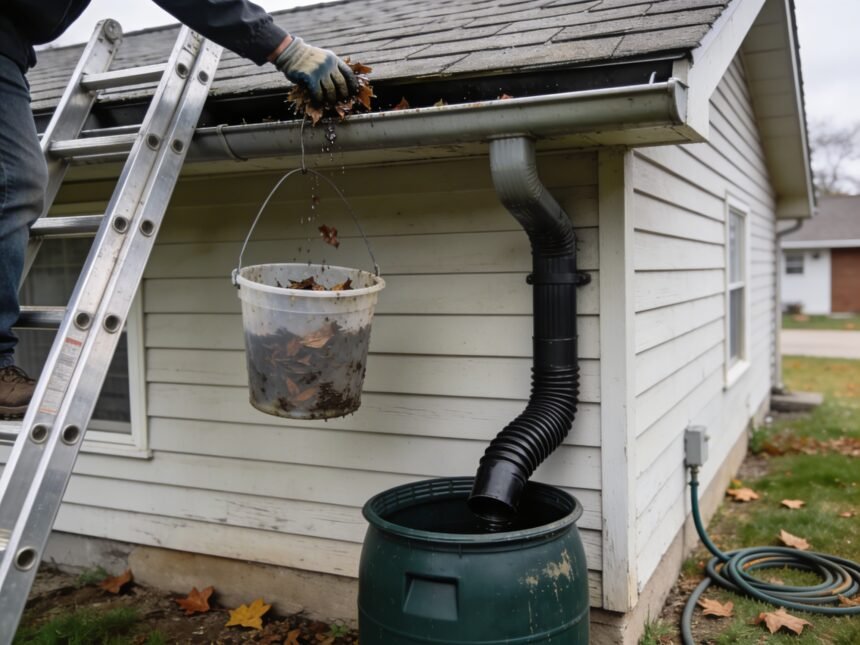
The first step is boring but important. Clear the debris all the way out. Leaves, roof grit, twigs, seed pods, little clumps of sludge, all of it. You cannot tell what shape the gutter is actually in until the junk is gone. I use gloves, a scoop, and a bucket rather than pretending I am above touching wet leaf mush if it means protecting the house. The rhythm matters. Move section by section, clear it out, then run water through to see how it behaves. It is very similar to spring dust cleanup that actually helps. The satisfying part comes after the dull part, but the dull part is still the thing that makes the whole result possible.
Once the gutters are clean, you can finally see whether the problem was mostly clogging or whether the system itself is failing in places. Tiny seam leaks are common, especially on older runs. If water is dripping through joints or small cracks instead of flowing toward the downspout, that is where a non-toxic, plant-based exterior sealant can help. I like lower-odor options when possible because if I am already doing outdoor maintenance near windows and doors, I do not need the whole place smelling like industrial adhesive for two days. The point is durability, not drama. A well-placed seal on a clean, dry seam buys you a lot more than another round of ignoring it.
Water direction matters just as much as leak repair. A gutter that technically holds water but dumps it right at the foundation is still doing a bad job. That is why downspout extensions and runoff direction need attention too. If you are getting puddling around the base of the house, or the soil near the walls is always too wet after rain, the system needs a better exit plan. This is where gutter maintenance connects directly to bigger water-cost and water-damage conversations like hidden water leaks that raise your water bill and the water bill reset for busy families. Water that is not being managed well almost always shows up somewhere else later.
I also think this is where sustainability gets practical instead of performative. An eco-friendly gutter system is not just about avoiding one harsh product. It is about helping rainwater move intelligently instead of letting it erode soil, rot wood, or pound the same muddy patch beside the house every time the weather turns. Adding a simple rain barrel, redirecting downspouts into a collection system, or even just extending runoff to a better drainage spot can turn wasted water into something more useful. If you already care about low-waste home habits, this fits naturally alongside the low-waste home repair kit for real household emergencies and vertical gardening in small spaces. Water is easier to respect when you stop treating it like it disappears the second it leaves the roof.
Another thing worth checking is pitch. Gutters do not need a dramatic slope, but they do need enough angle to move water toward the downspout instead of letting it sit. If one section always seems to hold water long after the rain stops, it may be sagging or misaligned. Sometimes that is a bracket issue. Sometimes the weight of repeated clogs has slowly pulled the section out of shape. Either way, standing water is bad news. It attracts grime, speeds up wear, and makes overflow more likely the next time heavy rain hits.
The wood around the gutter line tells a story too. If the fascia looks soft, stained, or swollen, that is a sign water has been where it should not be. It is worth checking because the gutter may be only half the problem. Overflowing or leaking gutters often damage the surrounding trim long before anyone notices. That is why I think this kind of maintenance sits in the same family as the home repairs you really cannot keep ignoring and simple home repairs every parent should learn. Catching the small stuff early is cheaper than pretending it is harmless.
I also like pairing gutter work with a quick walk around the house after a rain. Where is the water going? Is it splashing against siding? Is it carving little channels into the soil? Is it pooling near the porch, the air-conditioning unit, or the edge of the driveway? That five-minute walk tells you more than an hour of guessing when the weather is dry. A house will usually show you its weak spots if you pay attention at the right time.
If your home already struggles with dampness or mold, gutter problems can quietly feed that too. Poor runoff direction means wetter exterior walls, splashback, and more moisture stress near windows and lower trim. Over time, that can affect what is happening indoors as well. That is why I think exterior water management belongs in the same conversation as the low-effort humidity hack that helps stop hidden bathroom wall mold and the complete guide to getting rid of mold in the house. Moisture problems are rarely as isolated as we wish they were.
The best part of gutter maintenance is that once it becomes a rhythm, it stops feeling so big. Clear in the right seasons. Check seams. Watch the downspouts. Notice the runoff. Repeat. That is a much better system than waiting until the first violent storm reminds you the gutters exist. A lot of household peace comes from taking the low-level invisible jobs seriously before they turn visible and expensive.
So no, restoring your rain gutters is not the most glamorous way to spend part of a weekend. But it is one of the more useful ones. It protects the siding, the trim, the foundation, and the overall health of the house with a pretty modest amount of effort. And there is something genuinely satisfying about hearing rain move through a clean, working gutter system instead of watching it spill over the edge and hoping the ground below can take one more hit. That is not a flashy kind of home win. It is better. It is the kind that quietly prevents trouble before trouble has the chance to introduce itself.