



I used to think bathroom mold was mostly a cleaning problem. If I scrubbed harder, used the right spray, opened the door wider, wiped the walls down faster, maybe I could stay ahead of it. That was the theory anyway. Real life kept proving otherwise. I would clean the bathroom, feel pretty good about it for a week or two, and then spot that same sneaky little dark patch returning in a top corner, along the ceiling line, or near the edge of the wall where nobody touches unless they are already annoyed. It was like the room was quietly undoing my work while I was busy doing literally anything else.
That is when I finally realized the problem was not that I was bad at cleaning. The problem was that I was treating moisture after it had already done its damage. By the time you can see mold on a bathroom wall, the humidity has usually been winning for a while. Steam hangs around, settles into paint, corners, drywall, and trim, and keeps feeding the exact conditions mold likes most. Scrubbing can clean the evidence, but it does not always stop the cycle.
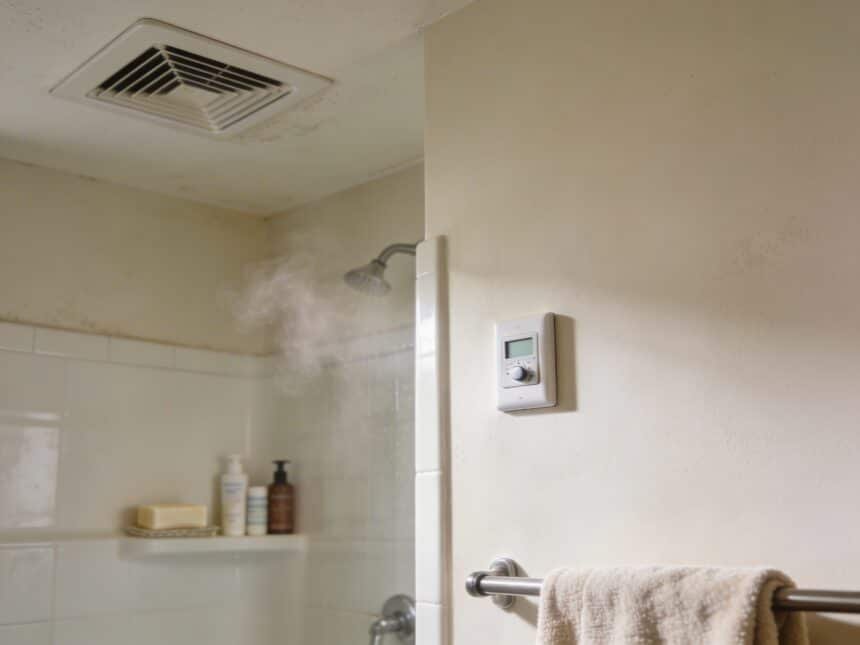
The fix that made the biggest difference in our house was not a new spray, a new sponge, or some intense weekly deep-clean routine. It was a humidity sensor switch for the exhaust fan. Simple as that. Once the bathroom fan started turning on automatically when the moisture level rose, the whole room got easier to manage. Not instantly magical, not movie-scene dramatic, but genuinely easier. It took one mental task off our plate and handled the moisture before it had time to settle into the walls.
That is why I think this is one of the best low-effort home fixes you can make if your bathroom always feels damp, foggy, or slightly musty no matter how often you clean it. It solves the right problem first. A lot of bathroom mold articles jump straight to cleaning products, but ventilation is the real foundation. If your fan is not running enough, or nobody remembers to turn it on, or it gets switched off too soon because everyone is rushing through their day, the room never really dries out the way it should. If that sounds familiar, it helps to read about fixing a bathroom fan that is not actually removing moisture because even a smart switch cannot save a weak or clogged fan.
The beauty of a humidity sensor switch is that it handles the exact part people forget. That is the point. Most of us are not forgetting on purpose. We are tired, distracted, wrangling kids, late for work, or trying to get everyone out of the bathroom before another argument starts. The fan switch becomes one more tiny decision in a house already packed with tiny decisions. A humidity sensor strips that part out. The steam rises, the sensor catches it, the fan kicks on. No lectures. No sticky note. No mental effort.
And honestly, reducing that kind of mental load matters more than people give it credit for. A house becomes easier to maintain when systems quietly do some of the remembering for you. That same idea is why the shared mental-load strategy for overwhelmed parents makes so much sense in family life. If something can be handled by a system instead of by one tired person trying to remember everything, that is usually the better move.
The first thing I noticed after the humidity switch went in was how much faster the room stopped feeling wet after showers. The mirror cleared sooner. The walls did not stay damp so long. Towels dried better. That overall sticky bathroom feeling eased up. The second thing I noticed was that the corners and upper walls stopped looking like they were quietly brewing trouble. That mattered because those are the places mold likes to start when the room stays humid too long. It is rarely the part you wipe every day. It is the part that gets ignored because nobody can see it until it gets bad enough to notice.
There is also a money angle here. Hidden moisture is not just ugly. It can lead to peeling paint, soft drywall, damaged trim, and more serious repairs later if you let it ride too long. That is why I would never write this off as a cosmetic issue. A bathroom that stays damp is a bathroom that keeps working against you. If you have already had problems with damp floors, warped edges, or weird soft spots near the tub or toilet, you should also read about hidden water leaks that wreck bathroom floors because sometimes wall mold and floor damage are two parts of the same moisture problem wearing different faces.
The good part is that a humidity sensor switch is not one of those fixes that asks you to become a whole different person. That is why I like it. It does not depend on perfect habits. It does not ask every family member to suddenly care deeply about ventilation science. It just steps in when the room gets steamy and gives the fan a fair chance to do its job. That is the kind of home fix that tends to last, because it does not rely on motivation.
Now, to be fair, this is not a magic solution for every mold problem. If you already have active mold growth deep in drywall, a hidden leak, failed caulk, or a fan that vents poorly, the switch alone is not going to fix all of that. It is a prevention move and an ongoing support move, not a cover-up. If the mold problem is already established, you still need to clean it safely and figure out where the moisture is really coming from. For a bigger picture, this complete guide to getting rid of mold in the house is worth keeping handy.
That said, for the everyday bathroom where the main issue is normal family steam and inconsistent ventilation, this one upgrade can do a lot. It is especially helpful in homes where one person has been carrying the whole “remember the fan, crack the door, wipe the wall, check the ceiling” routine in their head for years. If you are tired of being the only one who notices bathroom moisture before it becomes a project, this is exactly the sort of fix that gives you a little peace back.
It also pairs really well with a simpler bathroom upkeep routine overall. Once moisture is being handled earlier, the rest of the bathroom gets easier to keep in decent shape. Soap scum still exists. Toothpaste still lands where it should not. Hard water will still do what hard water does. But the room stops feeling like it is quietly growing a problem behind your back. That is a huge difference. And it works nicely alongside the bathroom reset that stops the buildup because a bathroom stays cleaner longer when the environment itself is less damp and hostile.
I would also say this plainly. If your bathroom smells musty even when it looks clean, take that seriously. A clean-looking bathroom can still be holding onto moisture in ways you are not seeing yet. That is one reason I pay attention to smell more now. A stale, damp smell is often the room telling you ventilation is not keeping up. The same way fixing a smelly dishwasher with nontoxic DIY steps starts with finding the source instead of just masking the odor, bathroom air quality improves when you solve the moisture problem underneath it.
And if you are worried this all sounds expensive or overly technical, it really does not have to be. A humidity sensor switch is one of those practical upgrades that lands in the sweet spot between useful and realistic. It is not as overwhelming as a full bathroom renovation. It is not as temporary as constantly buying anti-mold sprays and hoping for the best. It is just a smarter way to let the fan do the thing it should have been doing consistently all along.
That is also why I think small home fixes like this are so worth learning about. Not because everybody needs to become a DIY superhero, but because a lot of home stress comes from little repeat problems that quietly wear you down. When one simple change removes one repeat frustration, you feel it. That is the same energy behind simple home repairs every parent should learn and home repairs you can handle even with zero experience. You do not need to master everything. You just need enough practical wins to make your home stop fighting you so much.
The best part of this humidity hack is that it works in the background. You shower, the moisture rises, the fan turns on, and the room gets help drying out before you even think about it. That kind of set-it-and-forget-it support is gold in a busy house. It protects the walls, cuts down on hidden mold opportunities, and takes one more responsibility off your already crowded brain.
So no, I would not promise this stops bathroom wall mold “forever” in some dramatic absolute sense. Homes are still homes. Leaks can happen. Fans can fail. Humidity can still build if the underlying setup is bad. But if the main problem is everyday steam and inconsistent ventilation, a humidity sensor switch is one of the smartest low-effort ways to finally break that exhausting scrub-and-bleach cycle. It fixes the moisture before the mold gets comfortable, and that is the kind of quiet home win I will take every single time.