



I’m just gonna say it. Groceries in 2026 are kind of ridiculous.
- Why Traditional Meal Planning Doesn’t Work
- The Flexible Five Meal Planning Method
- Step 1: Shop What You Have First
- Step 2: Pick Your Five Flexible Meals
- Step 3: Build Your Grocery List Around Those Five Meals
- The $50 Per Week Meal Plan Example
- How This Saves You $150 to $200 Per Month
- The Biggest Mistakes I Made With Meal Planning
- What About Lunch and Breakfast?
- How to Get Your Family On Board
- Meal Planning on a Really Tight Budget
- Frequently Asked Questions
- Start With Just One Week
I was spending close to $200 a week for our family of four, and half the time we’d still end up ordering pizza on Thursday because I didn’t plan anything. Or I’d buy ingredients for a recipe I never made, and they’d go bad in the fridge. Basically throwing money in the trash twice over.
Then I figured out a meal planning system that actually works for real life. Not the Pinterest version where you plan 21 different meals and batch cook for six hours on Sunday. The realistic version where you have five flexible meals, shop what you already have first, and don’t lose your mind if plans change.
We’re now spending about $130 to $150 a week, wasting way less food, and I’m not scrambling at 5 PM wondering what’s for dinner. That’s saving us close to $200 a month. Maybe more.
Why Traditional Meal Planning Doesn’t Work
I tried meal planning the “right” way for years. I’d sit down every Sunday, plan out seven different dinners, make a detailed grocery list, spend two hours at the store, and feel very accomplished.
Then Wednesday would hit. Someone had practice. I forgot to defrost the chicken. The recipe took way longer than I thought. We ended up eating cereal for dinner and I felt like a failure.
The problem wasn’t me. The problem was that traditional meal planning is too rigid. Real life doesn’t work like that. You need flexibility, not perfection.
The Flexible Five Meal Planning Method
Here’s the system I use now. Instead of planning seven specific meals for seven specific nights, I plan five flexible meals for the week. That’s it.
Five meals I can make with ingredients that overlap. Five meals that don’t all require fresh ingredients that go bad quickly. Five meals my family will actually eat without complaining.
Then during the week, I pick which meal to make based on what’s happening that day. Busy night? I make the 20-minute pasta. Got extra time? I make the slower recipe. Someone’s not home for dinner? We do breakfast for dinner.
It takes the pressure off. You’re not locked into “Taco Tuesday” when Tuesday turns out to be chaos.
Step 1: Shop What You Have First
Before you make any grocery list, check what you already have. This was the game changer for me.
I started keeping a running list on my phone of what’s in my pantry, fridge, and freezer. Not everything. Just the main stuff. Pasta, rice, canned goods, frozen meat, whatever.
Then when I’m planning meals for the week, I start with those ingredients. What can I make with what I already have? Do I have ground beef in the freezer? Okay, one meal is tacos or spaghetti. Do I have chicken? Okay, another meal is chicken and rice or chicken stir fry.
You’d be surprised how many meals you can make before buying anything new.
We were literally throwing away about $50 worth of food every month because I kept buying new ingredients without using what we had. Now that almost never happens.
Step 2: Pick Your Five Flexible Meals
Your five meals should have these things in common:
They use some of the same ingredients. If you’re buying bell peppers for one meal, use them in two meals. Same with ground beef, rice, pasta, whatever.
At least two meals should be fast. Under 30 minutes. For the nights when everything falls apart.
At least one meal should use shelf-stable ingredients. Pasta with jarred sauce and frozen vegetables. Beans and rice. Something you can make even if you didn’t get to the store.
They should be things your family actually eats. This is not the time to experiment with new recipes. Save that for when you have extra time and money.
Here’s an example of my typical five meals:
Meal 1: Tacos or burrito bowls
Ground beef, rice, beans, cheese, salsa, whatever toppings we have. Takes 20 minutes.
Meal 2: Spaghetti with meat sauce
Same ground beef as the tacos, pasta, jarred sauce, frozen garlic bread if I have it. Takes 25 minutes.
Meal 3: Chicken stir fry
Chicken, frozen stir fry vegetables, rice, soy sauce. Takes 30 minutes.
Meal 4: Breakfast for dinner
Eggs, toast, maybe bacon or sausage if I have it. Takes 15 minutes and my kids love it.
Meal 5: Slow cooker or one-pot meal
Usually chicken and potatoes, or chili, or soup. Takes 5 minutes to prep, cooks all day.
Notice how I use ground beef twice? Chicken twice? Rice three times? That’s on purpose. I’m buying less variety but using everything completely.
Step 3: Build Your Grocery List Around Those Five Meals
Once you know your five meals, you make your list. Only buy what you need for those meals, plus basic staples you’re out of (milk, bread, eggs).
Do not wander the aisles. Do not buy random stuff that looks good. Stick to your list. This is where people blow their budget.
I also stopped shopping hungry. That was a big one. I’d go to the store starving and come home with chips, cookies, fancy cheese, and random stuff we didn’t need. Now I shop after breakfast or lunch. Way less impulse buying.
The $50 Per Week Meal Plan Example
People always ask if it’s actually possible to feed a family on $50 a week. Honestly? It’s tight. We usually spend closer to $130 to $150. But I did it for a month as an experiment and it’s doable if you’re careful.
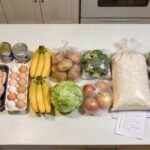
Here’s what a $50 week looked like for us (prices are approximate based on 2026 costs):
Ground beef (2 lbs): $10
Chicken thighs (3 lbs): $9
Pasta (2 boxes): $3
Rice (1 bag): $4
Canned beans (3 cans): $3
Jarred pasta sauce: $3
Eggs (1 dozen): $4
Bread (1 loaf): $3
Frozen vegetables (2 bags): $4
Cheese (1 block): $4
Milk (1 gallon): $3
Total: $50
With those ingredients, here were my five meals:
- Spaghetti with meat sauce (ground beef, pasta, sauce)
- Tacos (ground beef, beans, cheese)
- Chicken and rice (chicken, rice, frozen veggies)
- Breakfast for dinner (eggs, bread)
- Bean and rice bowls (beans, rice, cheese)
It’s not fancy. We ate a lot of the same things. But we didn’t go hungry and we didn’t order takeout.
Now that we have a bit more room in the budget, I spend extra on fresh fruit, more variety in vegetables, and better quality meat. But knowing we can do $50 a week if we need to? That’s a good feeling.
How This Saves You $150 to $200 Per Month
Here’s the math. When I wasn’t meal planning, we were:
Spending about $200 a week on groceries
Throwing away $50 worth of food that went bad
Ordering takeout twice a week ($60 to $80)
That’s like $310 to $330 a week. Over $1,200 a month.
Now we’re:
Spending $130 to $150 on groceries
Throwing away maybe $5 to $10 of food
Ordering takeout maybe once a week ($30 to $40)
That’s about $165 to $200 a week. Around $700 to $800 a month.
We’re saving $400 to $500 a month. Even if you only save half that, it’s still $200 a month you didn’t have before.
The Biggest Mistakes I Made With Meal Planning
I used to make all these mistakes. If you’re making them too, you’re not alone.
Mistake 1: Planning too many meals
You don’t need seven dinners. You need five, maybe six. Life happens. You’ll eat leftovers one night, or someone will bring home pizza, or you’ll just have a bowl of cereal. Planning seven different meals is setting yourself up to waste food.
Mistake 2: Buying ingredients for recipes I’d never made before
New recipes are fun, but they’re also risky. If your family doesn’t like it, that’s $15 worth of groceries in the trash. Stick to what you know works, at least for your regular rotation.
Mistake 3: Not accounting for busy nights
I used to plan complicated recipes on weeknights, then get home exhausted and give up. Now I save anything that takes more than 30 minutes for weekends or slow cooker meals.
Mistake 4: Forgetting to check what we already had
I’d buy pasta when we had three boxes in the pantry. Or chicken when we had two pounds in the freezer. I stopped doing that by checking before I plan meals. Simple but it saves so much money.
Mistake 5: Not using leftovers
We used to make a meal, eat half, and let the rest go bad in the fridge. Now leftovers are lunch the next day, or we intentionally make extra and freeze half for a future busy week.
What About Lunch and Breakfast?
I don’t meal plan breakfast or lunch the same way. It’s too much.
Breakfast is pretty much the same every day. Eggs, toast, cereal, oatmeal, whatever. We rotate through like four options and I keep those ingredients stocked.
Lunch is leftovers from dinner, sandwiches, or random stuff we have around. Sometimes it’s mac and cheese from a box. Sometimes it’s scrambled eggs again. I’m not trying to be creative with lunch.
The only meal I seriously plan is dinner, because that’s the one that stresses me out and where we waste the most money if I don’t have a plan.
How to Get Your Family On Board
If your family is used to eating whatever they want whenever they want, meal planning is going to be an adjustment.
Here’s what worked for us. I let everyone pick one meal for the week. My husband picks one, the kids each pick one (within reason), and I pick the other two or three.
That way they feel like they have input, and I know they’ll eat at least one or two meals without complaining.
I also stopped trying to make everyone happy every night. If someone doesn’t like what we’re having, they can make themselves a sandwich or have cereal. I’m not a restaurant. That sounds harsh but honestly it cut down on so much stress.
Meal Planning on a Really Tight Budget
If you’re living paycheck to paycheck and money is tight, here are the foods that stretch furthest:
Rice and beans. So cheap, filling, and you can season them a hundred different ways.
Eggs. Breakfast for dinner is one of the cheapest meals you can make.
Pasta with jarred sauce. One box of pasta and one jar of sauce can feed a family for under $6.
Frozen vegetables. Just as nutritious as fresh, way cheaper, and they don’t go bad.
Chicken thighs instead of breasts. Usually half the price and honestly taste better.
Store brand everything. I stopped buying name brand stuff and nobody noticed.
You can also check out my full guide on living paycheck to paycheck with a family, which has more ideas for stretching your food budget when money is really tight.
Frequently Asked Questions
How do I meal plan if I don’t know how to cook?
Start with really simple meals. Tacos, spaghetti, chicken and rice, breakfast for dinner, sandwiches. You don’t need to be a chef. If you can follow basic instructions, you can make these meals. Also check out my guide on 20-minute weeknight dinners for super easy recipes.
How long does meal planning take each week?
It takes me about 15 to 20 minutes now. I check what we have, pick five meals, make a grocery list. When I first started it took longer, maybe 30 minutes, because I was figuring out the system. But once you get in the habit, it’s quick.
What if my family won’t eat the same things?
Make the base meal flexible. Like with tacos, some people can have hard shells, some soft. Some add lots of toppings, some keep it plain. With pasta, you can add meat to some portions and leave others plain. Or honestly, if someone doesn’t like what’s for dinner, they can make themselves something simple. You’re not a short-order cook.
How do I stop wasting food?
Shop what you have first before buying new stuff. Use ingredients in multiple meals. Freeze leftovers instead of letting them sit in the fridge. And plan only five meals instead of seven so you have buffer room for life happening. Those four things cut our food waste by probably 80 percent.
Is it cheaper to meal plan or just buy whatever’s on sale?
Meal planning is almost always cheaper because you’re not buying random stuff you won’t use. Even if something’s on sale, if you don’t have a plan for it, it’s wasted money. That said, I do build my meals around what’s on sale sometimes. If chicken is on sale, I plan two chicken meals that week.
What’s the best day to meal plan?
I do it on Saturday or Sunday before I grocery shop. Some people like Friday so they can shop over the weekend. Pick whatever day works consistently for you. The key is doing it before you shop, not after, so you know exactly what to buy.
Start With Just One Week
If this feels overwhelming, just try it for one week. Pick five meals, make your list, shop once, and see how it goes.
You don’t have to be perfect. You don’t have to suddenly become a meal planning expert. Just try the flexible five method for one week and see if it makes dinner less stressful.
For me, it completely changed how we eat and how much we spend. I’m not dreading dinner every night. I’m not throwing away food. And we’re saving enough money that it actually makes a difference in our budget.
If you want the complete system I use, including how to batch cook on Sundays, how to freeze meals, and more meal ideas, I put it all in my 30-day home reset guide. There’s a whole section on kitchen systems and meal planning that breaks it down even more.
But honestly, just starting with these five flexible meals this week will make a huge difference. Pick your meals tonight, shop tomorrow, and you’re already ahead of where you were last week.
And if you want more money-saving tips beyond just groceries, check out my guide on stopping the Amazon spending spiral. Between meal planning and fixing my Amazon habit, I’m saving close to $400 a month now. It adds up fast.