


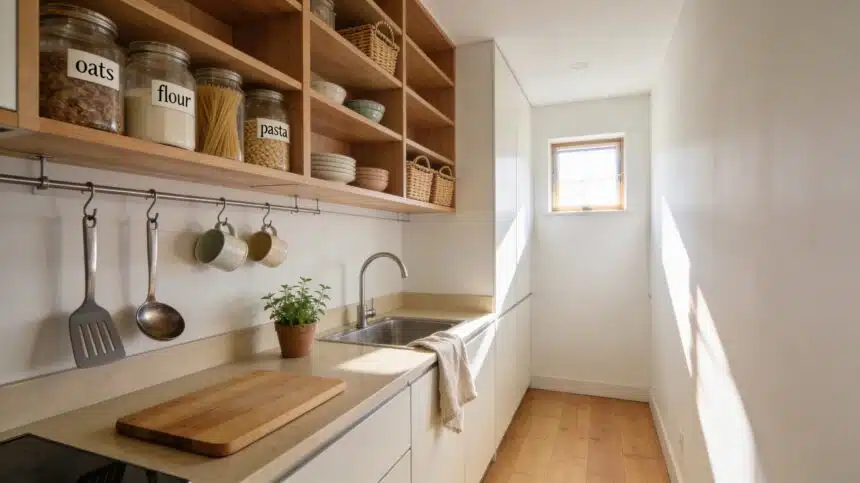
If you have ever opened your tiny kitchen cabinets, had three lids fall on your head, and thought “there is literally no more space in here,” you are in good company. My first small kitchen had six cabinets total, no pantry, and a counter so narrow I could not set out a cutting board and the coffee maker at the same time. Every dream kitchen photo I saw just made me feel worse.
- Before you add anything: clear the fake storage
- Ideas 1 to 4: make your cabinets work harder
- Ideas 5 to 7: use the back of every door
- Ideas 8 to 11: take storage all the way up the wall
- Ideas 12 to 14: let your fridge do double duty
- Ideas 15 to 18: rethink drawers and weird gaps
- Ideas 19 to 21: turn counters into stations, not storage
- Ideas 22 to 24: sneaky storage outside the kitchen
- Make your small kitchen work with your life, not against it
- FAQs about small kitchen storage in 2026
Here is what I learned the hard way. Small kitchens are not automatically doomed. They just cannot afford useless stuff or wasted space. Once I stopped trying to organize like a giant Pinterest kitchen and started treating my kitchen like what it actually was, things finally clicked. The same mindset shift that helped me build an organizing system for a small kitchen with zero storage is exactly what we are going to use here.
In this guide I am sharing 24 small kitchen storage ideas that actually work in real life, not just in styled photos. These ideas come from what is trending in 2026 for small kitchens and from things I tried in our own home and in reader kitchens that made the biggest difference. You do not need a pantry. You do not need more cabinets. You just need to make every inch do a job.


Before you add anything: clear the fake storage
Everyone wants to jump straight to cute bins and clever organizers, but if your cabinets are full of stuff you never use, no product in the world is going to save you. The small kitchens that look great in trend forecasts all have one thing in common: less clutter and more intentional categories, not more containers.
Give yourself one afternoon to do a ruthless but gentle edit. I like to start with the “why do I own three potato mashers” items. If you are totally overwhelmed, follow the same approach I use in my post on what to declutter first for the biggest difference and just clear the easy wins: duplicates, broken gadgets, and the stuff you hate using anyway.
Once you can actually see what needs to live in the kitchen, then you are ready for real storage ideas.
Ideas 1 to 4: make your cabinets work harder
Most small kitchen storage guides now start inside the cabinets, because that is where the hidden space is. A few simple upgrades can easily double what fits in there.
1. Shelf risers for dishes and pantry items. If you have tall shelves with one sad stack of plates in the middle, you are wasting vertical space. Add simple metal or bamboo shelf risers so you can store plates under and bowls or mugs on top. It is the same principle I use in my pantry organization method that actually stays organized. Every shelf gets levels, not piles.
2. Under shelf baskets for wraps and flat items. Slide on wire baskets that hang from your existing shelf. They give you a perfect spot for foil, parchment, cutting boards, or paper plates. This keeps all the flat, slippery items from sliding all over everything else.
3. Pull out baskets for deep cabinets. Deep base cabinets become a black hole in small kitchens. Pull out baskets or sliding organizers mean you can reach the back without crawling on the floor. Even one pull out in the cabinet where you keep pots or snacks can feel like a complete upgrade.
4. Turntables in corner cabinets. Lazy susans are everywhere in small kitchen storage roundups for a reason. Put one in an awkward corner and use it for oils, sauces, or baking supplies. Spin, grab, done. No more avalanche every time you want soy sauce.
Ideas 5 to 7: use the back of every door
The backs of cabinet and closet doors are prime small kitchen real estate. A lot of tiny kitchen organizing videos show people turning plain doors into mini pantries or lid organizers.
5. Over the door pantry organizers. Even if you do not have a real pantry, you probably have a door somewhere near the kitchen. A coat closet, utility closet, or basement door all count. An over the door organizer with deep pockets can hold snacks, spices, foil, paper towels, or cleaning supplies. It is a great workaround if you are still figuring out grocery spending with systems like my five meals a week grocery reset.
6. Lid racks on cabinet doors. Pot lids are the worst space wasters. Mount a slim rack or stick on hooks inside a cabinet door and stand the lids vertically. That frees up an entire stack worth of space on your shelves.
7. Wrap and cutting board storage. Narrow vertical racks attached to the inside of a door are perfect for plastic wrap, foil, parchment, and cutting boards. These are the items that usually slide around and make you hate opening that cabinet. Getting them upright immediately calms things down.


Ideas 8 to 11: take storage all the way up the wall
One of the biggest small kitchen trends for 2026 is treating the walls like storage, not just decoration. Vertical space is your best friend when floor space is limited.
8. Wall mounted pot rack or rail. Instead of stuffing pots into a cabinet, hang them. A simple rail with hooks or a compact wall mounted pot rack can hold everyday pans, strainers, and even mugs. This works especially well for renters who cannot add more cabinets but can handle a few screw holes that will be easy to patch later.
9. Magnetic knife strip. Getting the knife block off the counter is huge in a small kitchen. A magnetic strip on the wall or the side of a cabinet holds knives safely and frees up precious counter inches. It also keeps sharp blades away from tiny hands better than a messy drawer.
10. Floating shelves for daily dishes. Instead of hiding your everyday plates and glasses in cabinets, put them on one or two open shelves. Almost every tiny kitchen design trend article shows some version of this. Keep only the pieces you actually use daily up there so it stays neat.
11. Hooks under cabinets. Small adhesive hooks or screw in cup hooks under upper cabinets can hold mugs, measuring cups, or utensils. It is a miniature version of the “use the whole wall” idea and works even if you are renting and nervous about bigger holes.
Ideas 12 to 14: let your fridge do double duty
The side of the fridge shows up in almost every “no pantry” kitchen solution right now. It is vertical, it is strong, and it is usually completely empty.
12. Magnetic shelves for spices and oils. Strong magnetic shelves can hold spices, oils, and cooking sprays. That frees up cabinet space for bulkier items. If you cook often, keeping these at arm’s reach near the stove speeds up dinner, which is very helpful when you are trying to stick to twenty minute weeknight dinners instead of defaulting to takeout.
13. Magnetic paper towel holder. Instead of a roll taking up counter space, use a magnetic holder on the side of the fridge. That is one less thing sitting out near your tiny workspace.
14. Magnetic bins for snacks. Smaller magnetic bins can hold kids’ snacks, tea, or coffee pods. This makes a mini snack zone or drink station that is easy to access without taking up a full shelf somewhere else.
Ideas 15 to 18: rethink drawers and weird gaps
Drawers and little in between spaces are where small kitchens either shine or fall apart. When they are organized, everything feels calmer. When they are not, the whole room feels chaotic.
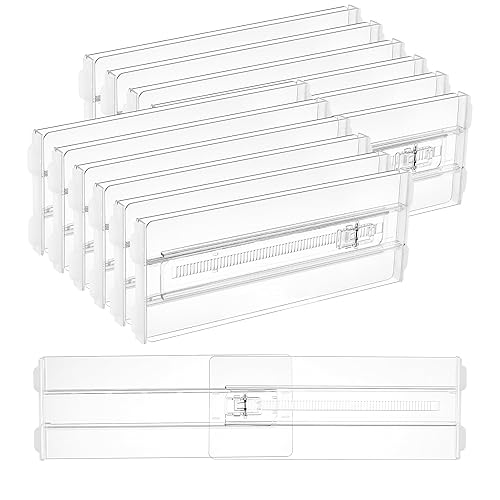
15. Drawer dividers with strict zones. Instead of one big everything drawer, give each drawer a job. Use expandable dividers for utensils, baking tools, and gadgets. When each tool has a slot, it is easier to put things back, which is half the battle if you struggle with ADHD or just general chaos. I use the same “one job per zone” idea in my ADHD friendly kitchen drawer system.
16. Use shallow drawers for flat items only. Shallow drawers are perfect for things like pot lids standing on their sides, baking sheets, cutting boards, or foil and bags. If something is too tall to sit flat in the drawer, it probably belongs in a cabinet or on a wall instead.
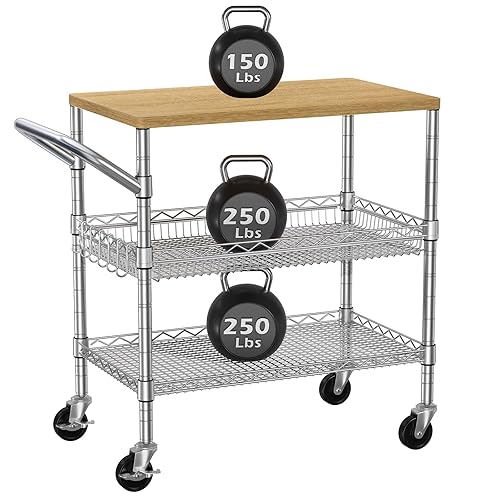
17. Slim rolling cart in dead space. That awkward six inch gap between the fridge and the wall can become a pull out pantry. A narrow rolling cart turns that dead space into storage for cans, bottles, or spices.
18. Tension rods under the sink. Under sink space gets wasted fast. A simple tension rod can hold spray bottles while stacking bins or small drawers take the bottom. It is the same vibe as my cleaning caddy system. You want grab and go, not a pile up.
Ideas 19 to 21: turn counters into stations, not storage
Small kitchen trend pieces talk a lot about stations now. Coffee. Prep. Baking. The idea is that each spot has one purpose instead of random clutter spread everywhere. You may not have much counter, but you can make the little you have work smarter.
19. Coffee or drink station. Group your coffee maker, mugs, sugar, and spoons on one tray or small shelf. When everything has a corral, the counter still looks calm. This also keeps you from scattering drink stuff in every cabinet.
20. One cutting board that lives out. In a tiny kitchen, it is often easier to keep one large cutting board on the counter and clear everything under it in a quick cleaning sweep. This makes it more realistic to do fast meal prep for things like twenty minute dinners or Sunday batch cooking.
21. Vertical file for trays and cookbooks. Use a magazine holder or file organizer on the counter or in a cabinet to stand up sheet pans, cooling racks, and cutting boards. Standing them vertically uses far less space and keeps you from wrestling the whole stack every time you bake.
Ideas 22 to 24: sneaky storage outside the kitchen
Here is the secret no one likes to say out loud. In very small homes, not everything kitchen related has to live in the kitchen. Many real life small kitchen tours show people storing overflow dishes, bulk food, or appliances in nearby rooms.
22. Dining room or hallway pantry cabinet. A simple cabinet or bookshelf just outside the kitchen can act as a pantry for bulkier or rarely used items. Use baskets or bins so it still looks intentional. This is especially helpful if you are trying to stop food waste and actually see what you have, like I talk about in the story where we realized we were throwing two hundred dollars of food in the trash every month.
23. Appliances on a covered cart. If your counters are full of rarely used appliances, move them to a rolling cart or shelving unit in a nearby hallway, dining area, or closet. Bring them out when needed, then roll them back. This keeps your everyday workspace clear, which matters a lot when you are tired and still trying to cook at home to protect your budget.
24. Seasonal and rarely used items elsewhere. Holiday platters, giant punch bowls, or the slow cooker you use twice a year do not need prime cabinet space. Store them in a bedroom closet, garage shelf, or storage bin. A tiny kitchen simply cannot hold everything all year. That does not mean you are failing. It just means you are using the whole home as your storage system.
Make your small kitchen work with your life, not against it
If your kitchen is genuinely tiny, you are not doing anything wrong. You just need systems that match the size of the room and the season of life you are in. That might mean saying no to buying more gadgets, yes to a simple weekly reset, and yes to small storage upgrades spread over a few months instead of one huge shopping trip.
When in doubt, start with one cabinet, one drawer, or one corner. Use the same mindset as you would for any home reset. Do the easiest, highest impact thing first. That might be a single lazy susan, a magnetic shelf on the fridge, or one over the door organizer. Let that one win give you momentum before you move on to the next thing.
FAQs about small kitchen storage in 2026
What should I declutter first in a tiny kitchen?
Start with duplicates, broken gadgets, and items you actively dislike using. Then move to someday appliances you have not touched in a year. Clearing easy stuff first makes it much easier to decide what organizers you actually need. It follows the same logic as my advice on what to declutter first in the rest of your home.
How do I add storage if I rent and cannot drill much?
Lean on over the door organizers, adhesive hooks, tension rods, and freestanding shelves or carts. Use magnetic storage on the fridge, under shelf baskets, and turntables inside cabinets. All of those usually come with you when you move and leave minimal marks behind.
Is it worth buying organizers if my budget is really tight?
I think it can be, if you go slowly and buy only what solves an obvious problem. Start with one or two high impact pieces such as a shelf riser, a lazy susan, or an over the door organizer. You can plan them into your budget the same way you would a no spend weekend or the forty eight hour cart rule. No adding to cart without a clear spot and job for the item.
How often should I reset a small kitchen so it stays usable?
Daily is ideal, but it does not have to be long. A five to ten minute reset at night, dishes handled, counters cleared, things back in their zones, keeps a tiny kitchen from tipping into disaster. Pair that with a deeper reset once a week or at the start of a new month, similar to how I handle broader home resets and cleaning routines.
Can a tiny kitchen ever actually feel enough?
Yes. Usually that happens after you stop trying to make it behave like a big kitchen. When every item has a job, every cabinet has a clear category, and your systems match your energy, a small kitchen can be surprisingly calm. You may not get the giant island, but you can absolutely get a space that lets you cook simple meals, pack lunches, and live your life without feeling like the room is attacking you.
For the cleaning products and tools mentioned here, Amazon has everything you need delivered to your door.






Which idea surprised you the most? Check out the link for some clever solutions! #KitchenHacks #HomeOrganization #CozyCornerDaily