







Stop Amazon Spending: Save $200/Month (Real System)
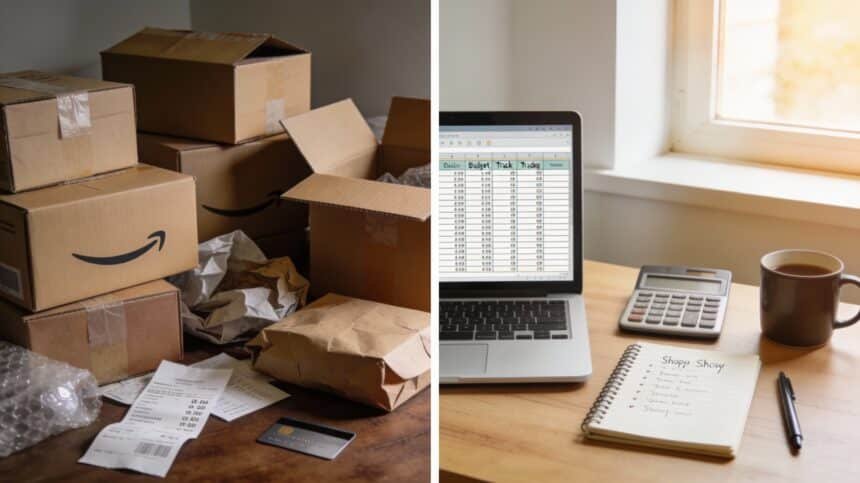
Last March I did something I’d been avoiding for like six months. I actually looked at my credit card statement. Not just the total at the bottom where I pay the minimum. I went through it line by line.
- The Real Problem Nobody Talks About
- What I Was Actually Doing Wrong
- The Rules That Actually Worked
- Delete the App (This Is Non-Negotiable)
- The 48-Hour Rule Changed Everything
- One Shopping Day Per Week
- The Budget Cap That Keeps Me Honest
- No Night Shopping Ever
- What This Actually Looks Like In Real Life
- The Money I Actually Saved
- The Part Nobody Warns You About
- What to Do When You Slip Up
- The Stuff I Didn’t Expect
- If You’re Ready to Try This
Amazon. Amazon. Amazon Prime. Amazon. Over and over.
$387 in one month.
I felt physically sick looking at that number. And here’s the really messed up part. I went through my past purchases to see what I’d even bought. At least 60% of it? I didn’t remember ordering it. Didn’t need it. Hadn’t used it. Some of it was still in the packaging just sitting in my closet.
I’d spent almost $400 on stuff I literally forgot I owned.
That was my breaking point. Because it wasn’t just about the money. Although yeah, the money was a huge problem. It was that I felt completely out of control. Like I couldn’t stop myself even though I knew what I was doing was making everything worse.
If you’re reading this and thinking “oh god that’s me,” I get it. I was there. And I’m gonna tell you exactly what finally worked for me. Not tips. Not “be more mindful” or any of that vague advice. Actual rules I had to follow that saved me over $3,300 in one year.
The Real Problem Nobody Talks About
Here’s what I didn’t understand for way too long. Amazon isn’t just convenient. It’s designed specifically to make you spend money. Like they’ve hired thousands of behavioral psychologists and run millions of tests with one goal: remove every possible barrier between you seeing a product and you buying it.
One-click ordering isn’t a convenience feature. It’s a weapon pointed at your bank account.
Think about how shopping used to work. You’d realize you needed something. You’d add it to a list. You’d wait until you had time to go to the store. You’d drive there, park, walk through aisles, find the item, maybe compare prices, carry it to checkout, wait in line, physically hand over money, load it in your car, drive home.
Every single one of those steps gave your brain time to reconsider. “Do I really need this? Is this worth the trip? Can this wait?”
Amazon eliminated all of that. You’re lying in bed at 11:30pm scrolling because you can’t sleep. You see something. One click. Bought. Dopamine hit. Scroll to the next thing.
There’s no time for your rational brain to catch up. The purchase is done before you even really think about it.
And if you have ADHD like me? Or anxiety? Or you’re just really tired at the end of the day? That lack of friction is dangerous. Our brains are already working against us when it comes to staying organized. We don’t need a shopping platform making it even easier to make bad decisions.
What I Was Actually Doing Wrong
I’d be scrolling at night when I was exhausted. See something that seemed useful in that moment. Click. Bought. The little dopamine burst felt good for about 30 seconds. Then I’d scroll to something else and forget I’d even made a purchase.
The next day I wouldn’t remember ordering anything until I got the shipping notification. Then I’d feel guilty. But not guilty enough to return it because returning stuff is effort and I already spent the money anyway, right?
That’s the trap. And I fell for it constantly.
The worst part? I started hiding packages from my husband. I’d wait until he left for work to bring boxes in from the porch. Or I’d intercept the delivery driver and sneak them in through the garage. I’d throw away the packaging immediately so he wouldn’t see how many deliveries we’d gotten that week.
That’s not normal behavior. That’s addiction behavior. And I had to admit that to myself before I could fix it.
The Rules That Actually Worked
I tried the whole “just be more mindful” thing for months. Didn’t work. I tried limiting myself to a certain amount per week. Didn’t work. I tried only buying things I “needed.” Didn’t work because my brain could justify anything as a need at 11pm.
What finally worked was creating rules with zero wiggle room. Here’s exactly what I did.
Delete the App (This Is Non-Negotiable)
I deleted the Amazon app from my phone. Just completely removed it.
If I want to shop on Amazon now, I have to open a web browser on my computer, type in the URL, and log in. Those extra steps create just enough friction to make me pause.
The first week was brutal. I reached for the app probably 30 times out of habit. Seeing it wasn’t there made me realize how often I was mindlessly opening Amazon. Not because I needed something. Just because I was bored or anxious or avoiding something else.
After two weeks the habit broke. I stopped reaching for it. I stopped thinking about Amazon constantly.
This one change cut my Amazon spending in half immediately. I’m not exaggerating. Half.
The 48-Hour Rule Changed Everything
If I think I need something, it goes on a list. Not in my cart. On a physical list on paper.
Then I wait 48 hours before I can buy it.
I keep a notepad on my kitchen counter. When I think “I should order X,” I write it down with the date. Two days later I look at the list and decide if I still need it.
You know how many things I actually still want after 48 hours? Maybe 20%. The rest get crossed off because I realize I already own something similar or I don’t actually need it or I forgot why I even wanted it.
The 48-hour wait gives your brain time to shift from emotional decision-making to rational decision-making. The dopamine-seeking part calms down and the logical part can actually evaluate whether you need the thing.
I learned this the hard way after buying three garlic presses in two months because I kept forgetting I already had one buried in my chaotic kitchen drawers.
One Shopping Day Per Week
I only allow myself to shop on Amazon one day per week. For me it’s Sunday afternoon.
The rest of the week, Amazon is off-limits. Even if I remember something I need, it goes on the list and waits until Sunday.
This prevents the constant browsing that led to constant buying. When Amazon was available 24/7 I’d end up on there multiple times a week “just looking.” And I’d always buy something.
One day per week means I batch all my shopping into one session. I go through my list, evaluate what actually passed the 48-hour test, and order it all at once. Then I’m done for the week.
This rule alone probably saved me $100/month because I wasn’t constantly exposed to the site showing me things I didn’t know I “needed.”
The Budget Cap That Keeps Me Honest
I created a specific line item in my budget for Amazon spending. $80 per month. That’s it.
Once I hit $80 I’m done for the month. No exceptions.
I track it in a simple spreadsheet. Three columns. Date, item, cost. When I hit $80 the cell turns red. Visual reminder that I’m done.
The first month I hit the cap on the 15th. I had to wait two weeks before I could order anything else. That sucked. But it taught me to be way more thoughtful about what I was actually buying.
Now I rarely hit the cap at all. Most months I spend $50-60. Because I’m only buying things I actually need instead of filling a cart with impulse purchases.
Having a hard number forces you to prioritize. Is this random gadget more important than the thing I actually need? If buying this uses up my budget, what else will I have to skip this month?
I don’t know, maybe I’m overthinking this but I think most budgeting advice fails because it’s too vague. “Spend less” doesn’t mean anything. “$80 per month, tracked in a spreadsheet, hard stop when you hit it” is specific enough to actually follow.
No Night Shopping Ever
I’m not allowed to add things to my list or shop on Amazon after 8pm. My decision-making is too compromised when I’m tired.
I looked back at my purchase history and did the math. 78% of my impulse purchases happened between 9pm and midnight. That’s not a coincidence. That’s when my brain was too exhausted to protect me from myself.
Now if I think of something after 8pm, I write it on a sticky note to add to my list in the morning. By morning half the time I realize I don’t actually need it.
This is similar to how I finally got my evening routine under control. Certain decisions just can’t be made when you’re running on fumes at the end of the day.
What This Actually Looks Like In Real Life
Sunday at 2pm I sit down at my computer with my list. I go through each item that’s been on there for at least 48 hours. I search for the specific items. I compare prices. I add what I actually need to my cart. I check out. I update my tracking spreadsheet. I close Amazon.
Total time? Like 15-20 minutes.
The rest of the week if someone asks “can you order X from Amazon?” the answer is “I’ll add it to the list for Sunday.”
At first my husband thought I was being ridiculous. Now he sees how much money we’re saving and he’s on board. We even started applying the same concept to how we talk about money with our kids.
The Money I Actually Saved
Before this? $340 per month on average. Some months hit $400.
After implementing these rules consistently? $62 per month on average.
That’s $278 saved every single month. Over a year that’s $3,336.
Let me say that again. I saved over $3,000 in one year just by following these five rules.
I used that money to pay off credit card debt from all the previous Amazon spending. Then I built up a $500 emergency fund. Then I saved for Christmas so I didn’t have to put gifts on a credit card. Now I’m saving for a family vacation.
That vacation money feels so much better than any of the random junk I used to buy at midnight.
The Part Nobody Warns You About
The first month sucks. I’m not gonna lie.
You’ll want to quit. You’ll think “this is too restrictive” or “I’m being too hard on myself.” Your brain will come up with so many justifications for why you should make an exception just this once.
Don’t.
I reached for the app constantly. I had actual physical discomfort when I wanted to buy something and couldn’t. I had to sit with the feeling of wanting something and not getting it immediately. That’s uncomfortable if you’re used to instant gratification.
But it’s temporary. By week three it got way easier. By week four it felt normal. By month two I couldn’t believe I used to shop the old way.
The meltdowns get shorter. The urges get weaker. You start to realize you don’t actually want most of the stuff you used to buy. You wanted the feeling of buying something. The dopamine hit. The sense of control. The temporary relief from stress or boredom.
This is actually really similar to what happened when I finally figured out how to reduce my kids’ screen time without constant battles. The first two weeks were rough. Then it became the new normal and we couldn’t imagine going back.
What to Do When You Slip Up
About six weeks in I had a terrible day. Work was awful. Kids were difficult. Dinner burned. I felt completely overwhelmed.
And I opened my computer, went to Amazon, and bought $73 worth of organizational products I definitely didn’t need.
I felt horrible. Like I’d failed. Like the whole thing was pointless if I couldn’t even follow it for two months.
But here’s what I learned. One slip-up doesn’t erase six weeks of progress.
I returned most of what I bought. I figured out what triggered the slip (exhaustion and stress). I added a new rule (no Amazon on days when I’m feeling overwhelmed, period). Then I got back on track.
You’ll probably slip up too. When it happens don’t spiral into shame. Just return what you can, figure out what triggered it, adjust your rules if needed, and start following them again immediately.
The same thing happened when I was trying to stick to a new cleaning routine. I’d miss a few days and think I’d ruined everything. Then I realized consistency matters more than perfection.
The Stuff I Didn’t Expect
Saving $3,000 is great. Obviously. But that’s not actually the best part.
The best part is I got my mental space back. When I was constantly shopping, part of my brain was always thinking about Amazon. Checking for deliveries. Tracking packages. Wondering if I should buy that thing I saw yesterday. Feeling guilty about packages that arrived.
That’s cognitive load. My brain was using energy on Amazon that could have gone to literally anything else.
Once I stopped, I got that space back. I could focus on work. I could be present with my kids. I could go to bed without scrolling for 30 minutes first.
My brain felt quieter. Less cluttered.
Also, my house got calmer. I have ADHD and visual clutter makes my brain feel chaotic. When I was constantly bringing stuff in, my house was always messy. Now it’s manageable. Not perfect, but manageable.
And my relationship with my husband got better. I wasn’t lying anymore about packages. He could see the budget if he wanted. We didn’t fight about money the way we used to.
That trust and honesty is worth more than any kitchen gadget I ever impulse-bought.
If You’re Ready to Try This
Start today. Not Monday. Not next month. Today.
Delete the app right now. Set up your physical shopping list. Pick your Amazon day. Decide on your budget cap.
The first week will be hard. Push through it.
By month two you’ll have saved probably $200-300. By month six you’ll look back and think “how did I ever shop that way?”
I’m not naturally good with money or disciplined. I just got tired of feeling out of control. If I can do this, you can too.
And if you need help with other areas where you’re feeling overwhelmed, I’ve written about getting your budget under control, organizing your mornings so they don’t feel like chaos, and cutting your grocery bill without using coupons.
But start with Amazon. Because once you prove to yourself you can control this, everything else gets easier.
Want the complete step-by-step guide with troubleshooting for every excuse your brain will make? I put together a detailed guide with the full implementation plan, tracking templates, and the exact rules that saved me $3,336 in one year. Get it here for $12.
Also check out:
- The ADHD Kitchen Organization System That Actually Works ($12)
- The Screen Time System That Stops Meltdowns ($12)
- Quietly Becoming: A Soothing Companion for Life’s Uncertain Turns ($6+)
You’re not alone in this. And you can fix it. I promise.










How did you curb your Amazon spending habits? Share your tips below and check out ours in the link! #MoneySaving #Budgeting #CozyCornerDaily